How to Value a Domain Name Before Buying or Selling?
Ask three people what a domain name is worth and you may get three answers that differ by a factor of ten. Unlike a house, a domain has no standard appraisal process, no official registry of sale prices, and no physical features to measure. Yet buyers and sellers agree on prices every day, and there are reliable ways to arrive at a sensible range. This guide explains the factors that drive domain value, the methods professionals use to estimate it, how to research a specific name with a few commands, and how to turn all of that into a buying limit or an asking price. If you are about to approach an owner, pair this with how to buy a domain name that's already taken.
Why Domain Valuation Is Hard
A domain's value depends heavily on who is buying it. A generic name like a common product category might be worth a modest amount to an investor, but far more to a company already selling that product, because it saves them years of brand building and could capture direct traffic. That is the central tension in every valuation:
- Market value is what a typical buyer in the open market would pay, based on what similar names have sold for.
- End-user value is what a particular business would pay because the name fits its brand or plan.
Sellers tend to price toward end-user value. Investors and resellers tend to buy near market value, or below it. Knowing which number you are estimating avoids a lot of confusion.
The Factors That Drive Domain Value
Extension
The top-level domain matters more than almost anything else. .com remains the most widely recognized extension and generally commands the highest prices for equivalent names. Country-code TLDs can be valuable in their own markets, and some new gTLDs have strong niches, but the same word usually sells for much less outside .com. For background on the differences, see .com vs .net vs .org.
Length and Simplicity
Shorter is generally more valuable, because short names are easier to remember, type, and fit on a logo. Two- and three-letter .com names are scarce, since every combination is already registered. Beyond length, a good name should pass the radio test: if you hear it spoken once, can you spell it correctly?
Keywords and Commercial Intent
Names built around words that businesses spend money on, such as insurance, loans, hosting, or software, tend to be worth more than names around words with little commercial activity. One rough signal is the cost-per-click advertisers pay for the keyword in search advertising tools, since it reflects how valuable a visitor searching for that term is. Keep in mind that search engines no longer give keyword domains much special treatment, so SEO claims from sellers deserve skepticism.
Brandability
Some of the most valuable names are not dictionary words at all, but short, pronounceable, memorable inventions. Brandable names are harder to value because there are fewer direct comparables, and their worth depends on finding the right buyer.
Hyphens and Numbers
Hyphens and numbers usually reduce value, because they are easy to mistype and hard to communicate verbally. There are exceptions, such as numbers that are culturally meaningful in certain markets.
Traffic and Revenue
A domain that already receives type-in traffic, has an operating website, or earns revenue can be valued partly as a business asset rather than just a name. Verify any traffic or revenue claims with real analytics access, not screenshots.
Backlinks and History
Existing backlinks from reputable websites can add value for SEO purposes, while a history of spam, malware, or penalties can reduce it sharply. Age alone has a smaller effect than many people assume; see how domain age affects SEO.
Legal Risk
A name that contains a trademark owned by someone else may be worth very little to a legitimate buyer, because it carries the risk of losing it in a dispute. Trademark risk is a value killer, not a bonus.
Summary of Value Drivers
| Factor | Raises value | Lowers value |
|---|---|---|
| Extension | .com, strong ccTLD in its home market | Obscure or low-trust extensions |
| Length | Short, one or two words | Long phrases, awkward combinations |
| Spelling | Passes the radio test | Misspellings, ambiguous spelling |
| Keywords | Commercial terms with active advertisers | Words with little commercial use |
| Characters | Letters only | Hyphens, unexplained numbers |
| Traffic | Verified type-in traffic or revenue | No traffic, or traffic from unreliable sources |
| History | Clean history, quality backlinks | Spam, malware, penalties, blacklists |
| Legal | No conflicting trademarks | Contains someone else's brand |
Valuation Methods
No single method is reliable on its own. Professionals combine several and look for a range where they overlap.
1. Comparable Sales
This is the most important method. Find names that are similar in extension, length, keyword type, and quality, and look at what they actually sold for. Several marketplaces and industry publications report sales, though not all sales are public, and reported prices skew toward notable deals.
When using comparables:
- Match the extension. A
.comsale tells you little about a.ioname. - Match the type. Compare keyword names with keyword names, and brandables with brandables.
- Use sold prices, not asking prices. Listings with high asking prices that never sell are not evidence of value.
- Prefer recent sales. Market conditions change.
2. Cost of Alternatives
For a buyer, a name is worth at most the cost of the next-best option plus the value of the difference. If an acceptable alternative costs very little, a high asking price is hard to justify. If the only alternatives are clumsy or require a rebrand later, the original is worth more to you.
3. Income Approach
For domains with real revenue, such as an established website, value can be estimated as a multiple of annual profit, similar to valuing a small online business. The multiple depends on how stable and transferable the income is. Parking revenue is usually small and unstable, so be cautious about valuations based on it alone.
4. Automated Appraisals
Several services generate an instant estimate using algorithms trained on sales data. They are useful as a quick sanity check, but they have clear limits:
- They cannot know who might want the name or why.
- They struggle with brandable names and new extensions.
- Different tools can return very different numbers for the same domain.
- Sellers sometimes quote the highest automated estimate as if it were a professional appraisal.
Treat an automated appraisal as one data point, never as the answer.
5. Professional Appraisal
Experienced brokers and appraisers can give a more informed opinion, especially for high-value names. Ask how they arrived at their figure, which comparables they used, and whether they have a financial interest in the sale.
Researching a Specific Domain
Before you settle on a number, collect facts about the name itself.
Registration Data
Check the creation date, expiry date, and status with RDAP:
curl -sL https://rdap.org/domain/example.com \
  | jq '{status, events: [.events[] | {(.eventAction): .eventDate}] | add}'
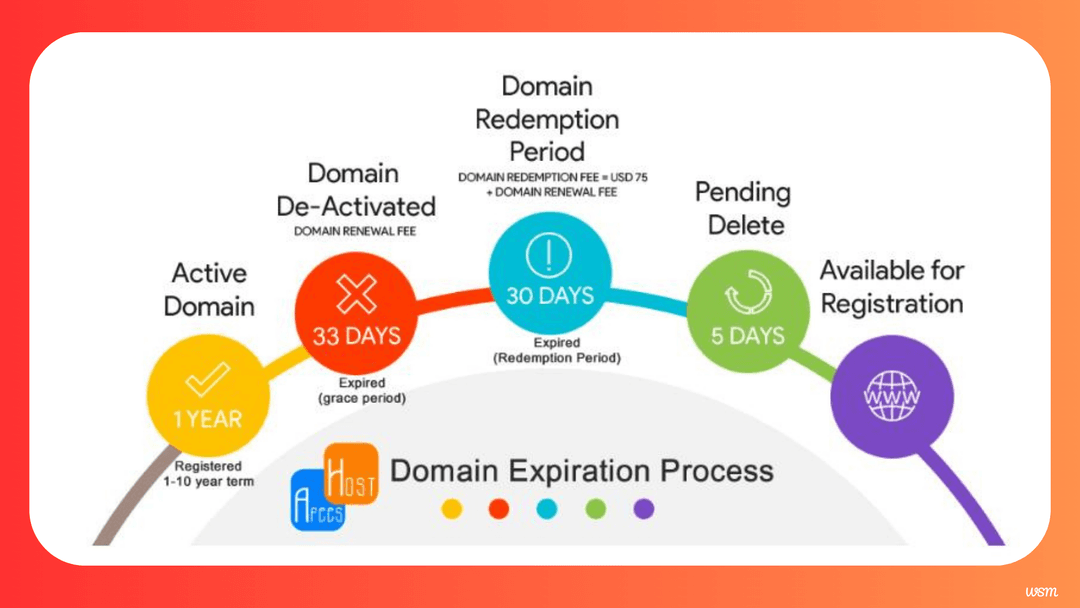
An older registration date shows the name has been held for a long time, which can indicate an owner who values it. A domain close to expiry, or in redemption, may be available more cheaply through a backorder instead. See what domain backordering is.
Current Use and Email
dig +short example.com A
dig +short example.com MX
dig +short example.com NS
Active MX records suggest the domain carries email for someone, which usually means a higher price and a more careful migration.
History
Check the Wayback Machine for past content and search the domain name in quotes to see what the web says about it. A thorough checklist is in how to check a domain's history.
A Simple Scoring Script
A structured scorecard will not give you a price, but it forces you to assess each factor consistently and makes it easy to compare names side by side. This Python script scores a domain on the structural factors that can be measured automatically, and leaves room for your own judgment on the rest:
import re
import sys

PREMIUM_TLDS = {"com": 3, "net": 1, "org": 1, "io": 1, "co": 1}


def score_domain(domain, keyword_value=0, brandable=0, clean_history=True):
    """Return a 0-20 score. keyword_value and brandable are your own 0-3 ratings."""
    name, _, tld = domain.lower().partition(".")
    score = 0
    notes = []

    score += PREMIUM_TLDS.get(tld, 0)
    notes.append(f"extension .{tld}: +{PREMIUM_TLDS.get(tld, 0)}")

    length = len(name)
    length_points = 5 if length <= 4 else 4 if length <= 6 else 3 if length <= 8 else 2 if length <= 12 else 0
    score += length_points
    notes.append(f"length {length}: +{length_points}")

    if "-" in name:
        score -= 2
        notes.append("hyphen: -2")
    if re.search(r"\d", name):
        score -= 1
        notes.append("contains digits: -1")
    if re.search(r"[bcdfghjklmnpqrstvwxz]{4,}", name):
        score -= 1
        notes.append("hard-to-pronounce consonant cluster: -1")

    score += keyword_value * 2
    notes.append(f"keyword value rating {keyword_value}: +{keyword_value * 2}")
    score += brandable
    notes.append(f"brandability rating {brandable}: +{brandable}")

    if not clean_history:
        score -= 4
        notes.append("problematic history: -4")

    return max(0, min(score, 20)), notes


if __name__ == "__main__":
    domain = sys.argv[1] if len(sys.argv) > 1 else "example.com"
    total, details = score_domain(domain, keyword_value=2, brandable=2)
    print(f"{domain}: {total}/20")
    for line in details:
        print("  -", line)
Run it as python3 score.py cloudpantry.com. Adjust the weights to suit your market. The value of a script like this is consistency, not precision: two names with very different scores should not command the same price.
Valuing as a Buyer
- Estimate market value from comparable sales.
- Estimate your own value based on what the name does for your business, and what your best alternative costs.
- Set a target and a maximum. Your maximum should not exceed your own value, even if a seller says the market value is higher.
- Account for extra costs, such as escrow fees, broker commissions, and migration work. Moving an existing website to a new domain also needs redirects and careful planning.
Valuing as a Seller
- Be honest about market value. Most domains in most portfolios never sell, and pricing far above comparables usually means waiting indefinitely.
- Decide on a pricing strategy:
- Fixed price (buy now): Clear, fast, and attractive to end users who do not want to negotiate.
- Make an offer: Lets you discover demand, but many buyers will not start a negotiation.
- Minimum offer: A middle ground that filters out unserious inquiries.
- Lease-to-own: Spreads the cost for the buyer and can achieve a higher total price.
- Factor in holding costs. Every year you wait, you pay renewal fees. A sale today at a fair price may be better than a hypothetical higher sale years from now.
- Use escrow for the transaction so that both sides are protected. See how to use a domain escrow service.
Common Valuation Mistakes
- Trusting a single automated appraisal.
- Using asking prices as comparables.
- Confusing end-user value with market value.
- Ignoring trademark issues.
- Overvaluing domain age or parked traffic.
- Forgetting renewal and transaction costs.
Domain Valuation FAQ
Look at recent sales of comparable names in the same extension, assess the name's length, keywords, and brandability, check its history and traffic, and compare with the cost of alternatives. Use automated appraisals only as a rough sanity check.
They give a quick estimate but are not reliable on their own. They cannot see who might want the name, they struggle with brandable names, and different tools often disagree significantly for the same domain.
Age can indicate a well-established name and may come with backlinks, but age alone adds less value than many sellers claim. Search engines do not treat age as a strong ranking factor by itself.
It is the most widely recognized extension, so people tend to assume a business uses .com and type it by default. That demand and familiarity make equivalent .com names sell for more.
Market value is what a typical buyer, such as an investor, would pay based on comparable sales. End-user value is what a specific business would pay because the name fits its brand, which is often much higher.
For high-value names it can be worthwhile, as long as the appraiser explains their reasoning and comparables and has no financial stake in the sale. For inexpensive names, your own research is usually enough.
Start from comparable sales, decide whether you are targeting investors or end users, and choose a fixed price, minimum offer, or make-offer listing. Remember that renewal fees accumulate while you wait for a buyer.
Conclusion
Domain valuation is part research and part judgment. The extension, length, keywords, brandability, traffic, history, and legal risk set the foundation, and comparable sales are the strongest evidence of what a name is likely to fetch. Cost of alternatives and income-based methods add useful perspective, while automated appraisals are a quick check rather than a verdict.
Whether you are buying or selling, the most important step is to separate market value from end-user value and to set your limits before negotiations begin. Do the research, write down a range, verify history and trademarks, and close the deal through escrow. That discipline matters more than any single number.
Here are some useful references for going deeper on evaluating domain names:
- ICANN: Registration Data Lookup Tool — ICANN's official tool for checking a domain's registration data.
- Internet Archive: Wayback Machine — browse historical snapshots of a domain's website.
- WIPO: Global Brand Database — check whether a name conflicts with registered trademarks.
- Google Search Central: Google Search Essentials spam policies — explains practices, including expired domain abuse, that can affect a domain's search history.