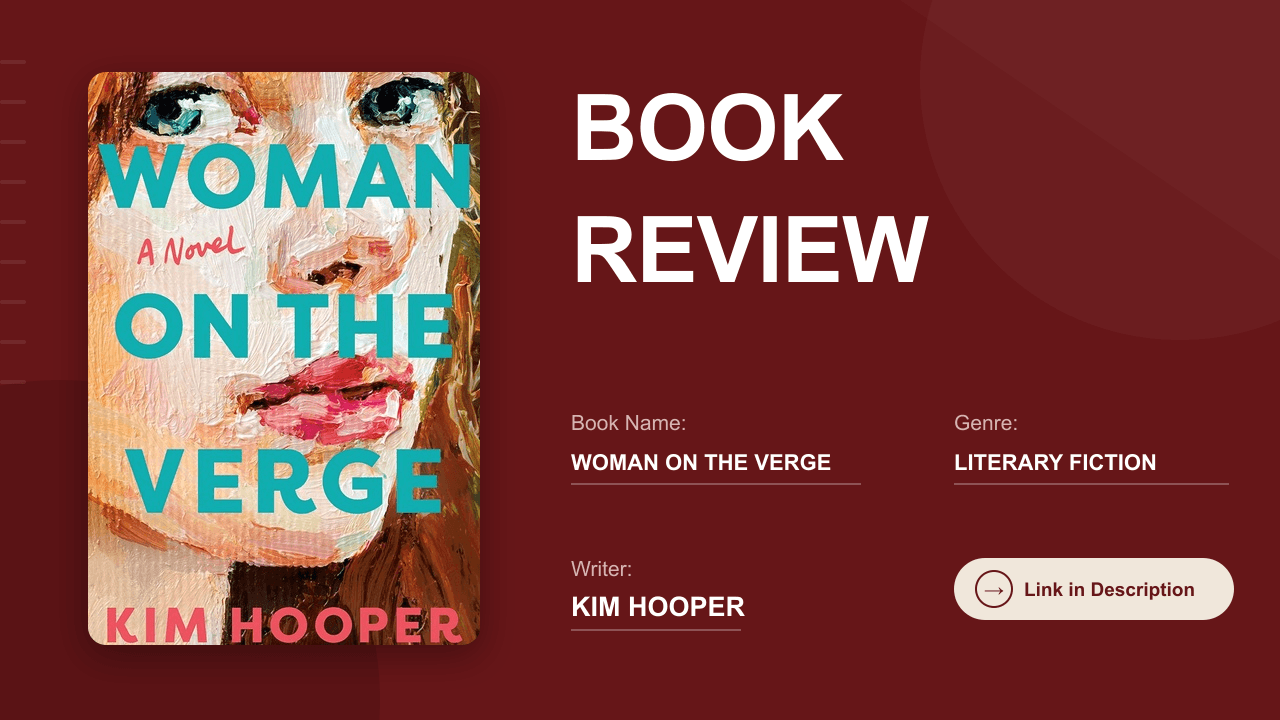
Woman on the Verge Review: A Novel About Loving Your Children and Resenting Your Life
- Sajjad
- Book Reviews
- 14 Sep, 2026
Most novels about motherhood pick a side, either the exhausted honesty of how hard it is or the redemptive warmth of how worth it it all turns out to be. Woman on the Verge refuses to pick, and that refusal is exactly the point. Kim Hooper builds her entire novel around maternal ambivalence, the genuinely uncomfortable, culturally unspeakable truth that a woman can love her children completely and still resent nearly everything motherhood has taken from the rest of her life, and she gives that ambivalence to three different women across three different decades without ever softening it into something more palatable.
I went into "Woman on the Verge" expecting a fairly familiar multi-perspective domestic novel about women feeling trapped by their choices. What I got was something rawer and more specific than that, a book willing to sit inside the actual, unglamorous texture of resentment, caregiving, and desire without rushing any of its three women toward easy resolution, right up until an ending that a significant portion of its readers feel undercuts everything the book built before it.
In this review, I'll walk through Nicole's involuntary retreat into stay-at-home motherhood while she cares for her dying father, Katrina's affair with a younger man and the impulse that sends it sideways, Rose's 1980s housewife diary chronicling ambitions she's not supposed to have, and the twist that eventually ties all three women's stories together. I'll also talk honestly about the ending, because it's the single most divisive element of this book, and readers deserve to know that going in.
Overview: What Woman on the Verge Is About
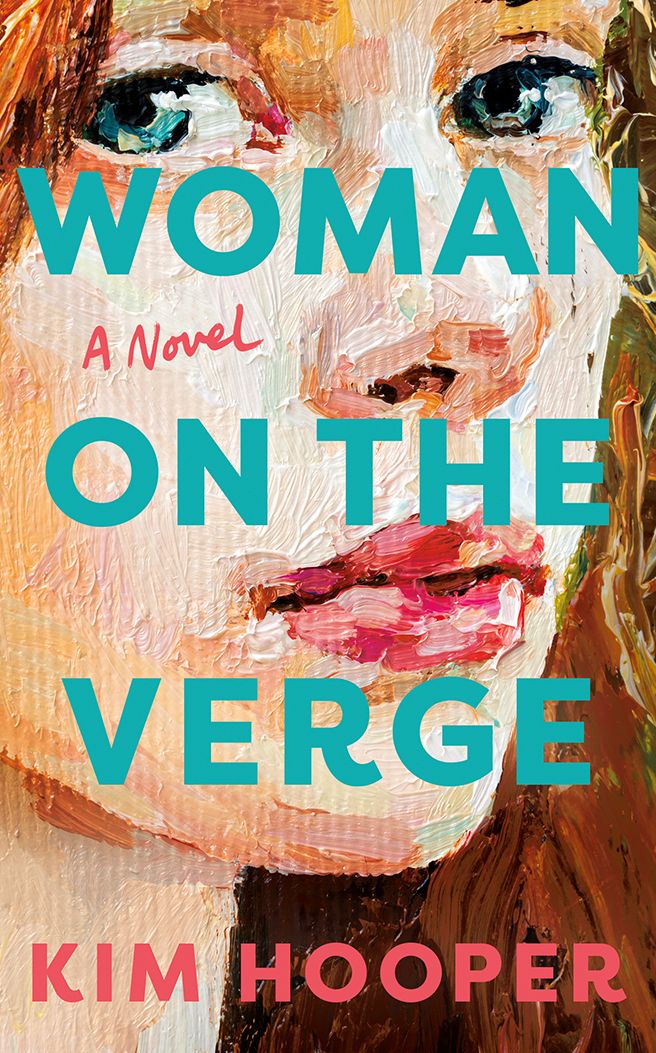
"Woman on the Verge" follows three women confronting the gap between what motherhood was supposed to feel like and what it actually feels like. Nicole, a former photographer, never wanted to be a stay-at-home parent, but losing her job left her with no real alternative, and now she's stretched between her toddlers' constant demands, a husband who's grown quietly distant, and her father's deteriorating health as he faces a terminal brain disease that's slowly requiring more of her time and care than she has left to give.
Katrina is caught in a similarly dissatisfied life when a flirtation with a handsome stranger at a bar escalates into an actual affair with a younger man, an attempt to reclaim some version of desire and pleasure that motherhood and marriage have steadily crowded out. When the affair goes sideways in a way she doesn't see coming, she's forced to reconcile the reawakened parts of herself with the domestic life she still has to return to. Running alongside both contemporary storylines is Rose, a housewife in the 1980s venting her mounting restlessness into a private diary of ambitions she's not supposed to have, eventually acting on that restlessness by walking away from her family to pursue the career she'd shelved. In a twist that arrives late and lands hard, the three women's lives turn out to be intertwined in ways neither they nor most readers see coming.
Nicole: Grief, Caregiving, and the Identity She Lost
Nicole's storyline carries the book's most emotionally precise material. Hooper doesn't treat her involuntary transition into stay-at-home motherhood as a simple career setback; it's rendered as a genuine loss of identity, a former photographer whose creative life has been quietly replaced by a schedule dictated entirely by other people's needs. Layering her father's terminal illness and hospice care on top of that loss gives Nicole's arc real, compounding weight, she's not just grieving the life she thought she'd have, she's actively losing a parent while raising children who need her just as much, with a husband who's emotionally checked out of carrying any of that weight alongside her.
Reviewers have specifically singled out Nicole's characterization as the book's most authentic, and it's easy to see why. Hooper doesn't ask the reader to simply pity Nicole or root for her escape; she asks the reader to sit inside the specific, exhausting math of loving people who need more from you than you have left to give, without ever pretending that math resolves cleanly.
Katrina: Reclaiming Desire, and What It Actually Costs
Katrina's thread takes on the harder-edged, more overtly transgressive version of the book's central theme. Her affair isn't rendered as simple escapism; it's framed as a genuine, if reckless, attempt to reclaim a version of herself that motherhood and domestic routine have steadily eroded, desire, spontaneity, the sense of being wanted for something other than caretaking. When that impulse goes wrong in ways the book doesn't soften, Katrina's reckoning with the fallout gives the novel its most explicit exploration of how maternal ambivalence can curdle into something genuinely destructive rather than just quietly unhappy.
It's worth noting plainly that this thread includes explicit content that won't be for every reader, and Hooper doesn't shy away from rendering Katrina's desire, and its consequences, with real physical specificity.
Rose: A Diary, a Decade, and a Decision That Costs Everything
Rose's 1980s storyline gives the book its clearest historical throughline, and it's also where Hooper makes her boldest choice: rather than simply having Rose fantasize about a different life in her diary, the book eventually has her act on it, walking away from her family to pursue the academic ambitions she'd set aside. That choice, and its aftermath, gives "Woman on the Verge" real stakes beyond the interior discomfort Nicole and Katrina experience in the present day; Rose's decision has consequences that ripple forward, which is precisely how her storyline ends up connecting to the other two women's lives.
Placing Rose a full generation earlier also lets Hooper make an implicit argument about how little has actually changed: the same suffocating expectations Rose battles in the 1980s are still shaping Nicole and Katrina's lives decades later, just with different cultural vocabulary layered on top.
The Twist: A Bold Swing That Doesn't Land for Everyone
I'd be underselling this review if I didn't address the single most divisive element of "Woman on the Verge" directly: the late-book revelation connecting all three women. Without spoiling its specifics, the connection is genuinely unexpected, more than one reviewer has noted they didn't see it coming, and it recontextualizes everything that came before it. For some readers, that recontextualization is the book's crowning achievement, the moment that retroactively deepens Nicole, Katrina, and Rose's individual stories into something larger about generational inheritance and repeated patterns.
For a meaningful number of other readers, it's the opposite: a twist that feels engineered rather than earned, one that several reviewers felt cheapened the emotional weight the book had spent hundreds of pages building. One reader described dropping their rating from five stars to two entirely because of how the final twenty percent landed for them. That's a genuinely significant split in reader response, and it's worth going in with your expectations calibrated accordingly, this is a book whose ending will likely define your overall opinion of it more than its middle section does.
Where the Prose Occasionally Oversells Its Point
Beyond the ending, the most consistent secondary criticism involves how the book delivers its feminist themes. Several reviewers felt Hooper's commentary on gendered expectations, the pressure toward domestic and physical perfection, the invisibility of maternal labor, occasionally states its case more directly and more frequently than the narrative strictly needs, resulting in passages that read as didactic rather than fully dramatized. It's a fair critique of a book that otherwise trusts its characters' interiority to carry its themes; the moments where Hooper steps back to underline the point explicitly are the moments where the novel's grip loosens slightly.
Kim Hooper's Craft: Emotional Precision, Structural Ambition
None of that undercuts what Hooper does well here. Her prose captures the specific, uncomfortable texture of maternal ambivalence with real precision, generating passages readers have described as genuinely gasp-inducing and worth highlighting. Hooper, whose debut novel "People Who Knew Me" was adapted into an award-winning podcast starring Rosamund Pike and Hugh Laurie, brings real structural ambition to weaving three timelines toward a single connective revelation, even where that structural gamble doesn't land for every reader the way it clearly did for others.
Her handling of Nicole's father's decline deserves particular mention: hospice care and terminal illness are rendered with a specificity and emotional honesty that avoids both sentimentality and clinical detachment, giving the book's grief thread real weight independent of its broader motherhood themes.
How Woman on the Verge Compares to Hooper's Other Work
Readers familiar with Hooper's earlier novels, "People Who Knew Me," about a woman who fakes her own disappearance after 9/11, and "Cherry Blossoms," centered on a man planning both a trip to Japan and his own suicide, will recognize her recurring interest in characters contemplating drastic, identity-altering choices under the weight of lives that no longer fit them. "Woman on the Verge" extends that interest specifically into motherhood and domestic life, and its multi-generational structure marks a genuine escalation in ambition compared to her earlier, more singularly-focused narratives.
About Author Kim Hooper
Kim Hooper is the author of six previous novels, including her acclaimed debut "People Who Knew Me" and "Tiny," which won Silver in General Fiction at the 2019 INDIE Awards from Foreword Reviews. "Woman on the Verge," published by Lake Union Publishing in July 2025, continues her consistent interest in women confronting the gap between the lives they're expected to want and the lives they actually have, applied here to motherhood specifically with real emotional precision and genuine structural risk-taking.
Critical Reception and Reader Response
"Woman on the Verge" holds a strong 4.08-star average across more than 6,300 Goodreads ratings and over 600 written reviews, with a large majority of ratings landing at four or five stars. Readers have consistently praised the book's raw emotional honesty, with one reviewer noting it "will probably make you feel VERY uncomfortable, especially if you are a mother," and many highlighting the nuanced handling of grief and parental decline through Nicole's storyline specifically.
The criticism that surfaces most consistently, and most sharply, centers on the ending: several reviewers described feeling genuinely let down by the final stretch, with the connective twist striking some as unearned or emotionally cheapening relative to the substantial groundwork the book laid beforehand. A secondary but consistent complaint involves the book's more overt feminist commentary reading as occasionally heavy-handed, and readers sensitive to explicit sexual content should know Katrina's storyline includes it directly.
Key Takeaways from Woman on the Verge
Maternal ambivalence is treated with genuine, unflinching honesty. The book refuses to resolve the tension between loving your children and resenting your life, and that refusal is its central strength.
Nicole's dual grief, her lost identity and her dying father, is the book's most affecting thread. Reviewers consistently single out her characterization as the most authentic of the three.
Rose's decision to actually leave, not just fantasize, gives the historical thread real stakes. Her choice ripples forward in ways that eventually connect to the present-day storylines.
The late twist is genuinely divisive. It elevates the book for some readers and undermines it for others, and it will likely define your overall reaction more than anything else in the novel.
The feminist commentary occasionally states its case too directly. A handful of passages read as didactic relative to a book that otherwise trusts its characters to carry the theme.
Conclusion: Is Woman on the Verge Worth Reading?
"Woman on the Verge" is a genuinely brave, emotionally precise examination of maternal ambivalence, willing to sit inside the uncomfortable, culturally unspeakable truth that loving your children and resenting your life can coexist without canceling each other out. Nicole's dual reckoning with grief and lost identity gives the book its most powerful material, and Kim Hooper's willingness to weave three generations of women's dissatisfaction into a single connective structure shows real ambition, even if that structure's ultimate payoff won't work for every reader.
The ending is a genuine gamble, one that recontextualizes everything before it for some readers and undercuts it for others, and the book's feminist commentary occasionally tips into stating its point more directly than the dramatized material needs. But as a raw, resonant portrait of what motherhood actually costs, and what it's culturally forbidden to admit costing, "Woman on the Verge" earns the discomfort this review's title promises. You can pick up a copy of "Woman on the Verge" on Amazon and decide for yourself whether its ending recontextualizes everything or undoes it.