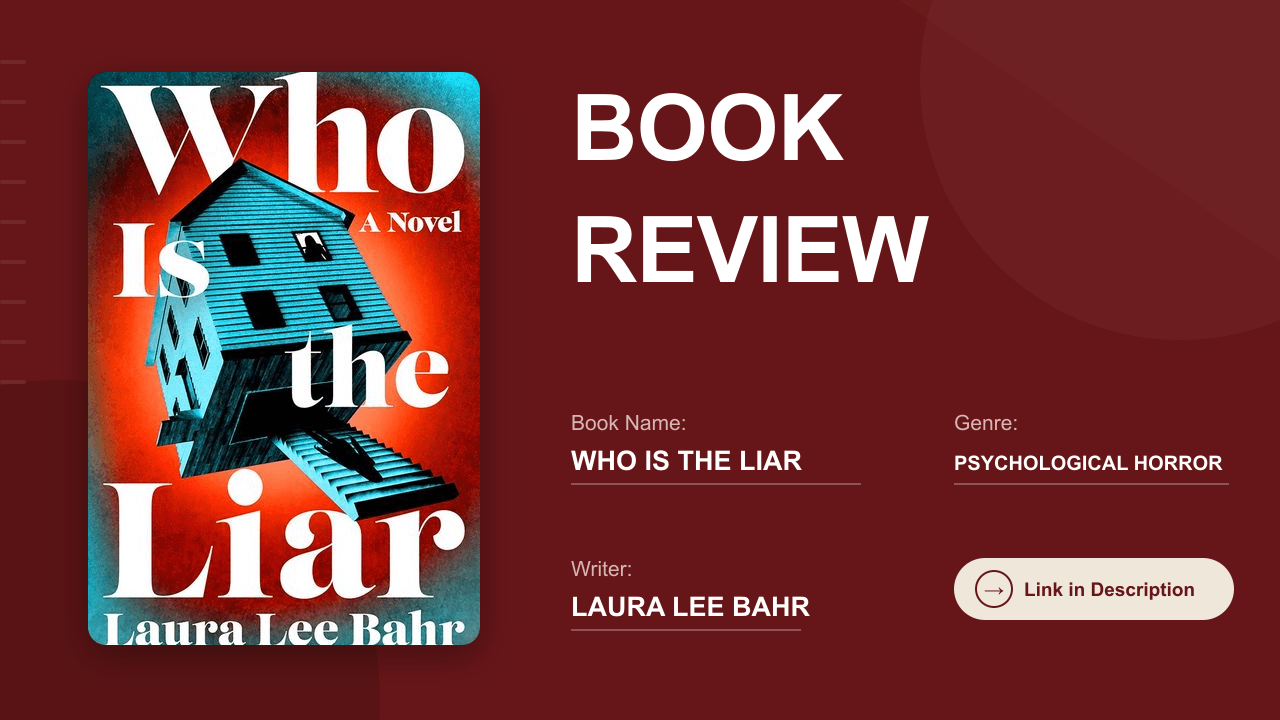
Who Is the Liar Review: Satanic Panic Horror Told by a Child Who Can't See the Whole Picture
- Sajjad
- Book Reviews
- 14 Sep, 2026
Some horror novels get their dread from what's hiding in the dark. Who Is the Liar gets its dread from who's telling the story. Laura Lee Bahr hands the narration of a novel about a bound, bloodied man in a basement to a ten-year-old girl who doesn't have the context, the vocabulary, or the authority to actually figure out what's happening around her, and then builds an entire book out of watching the reader understand more than she does, faster than she does, and being powerless to do anything about it.
I went into "Who Is the Liar" expecting a fairly straightforward Satanic Panic thriller, the kind where a small town's paranoia about a child killer eventually collides with the truth. What I got instead was something narrower and more claustrophobic: a story confined almost entirely to a child's understanding of her own household, where the real horror isn't a masked killer, it's watching a ten-year-old try to reason her way through a moral crisis that no adult bothered to prepare her for.
In this review, I'll walk through the setup that puts Topaz in an impossible position, how her relationship with her older sister Ruby drives the entire plot, the way Bahr uses the 1980s Satanic Panic as more than just period dressing, and where the book's commitment to its child's-eye-view creates real narrative tension and where it strains credibility. I'll also talk about the ending, because how this book resolves (or doesn't) is exactly the kind of thing that will make or break it for different readers.
Overview: What Who Is the Liar Is About
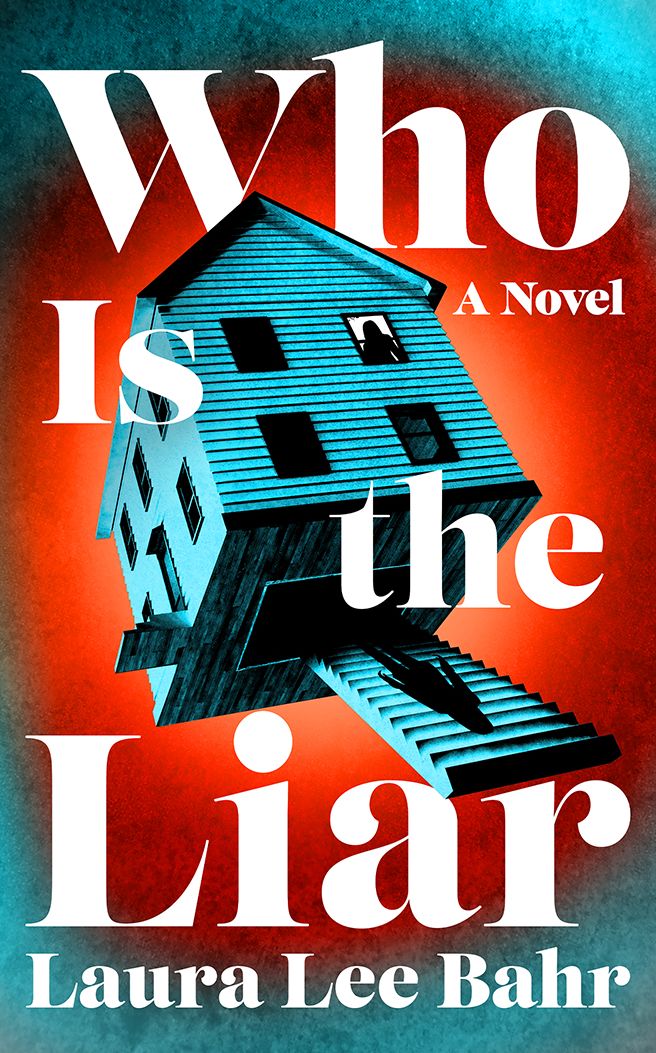
"Who Is the Liar" is set in a small, faith-centered American town in the early 1980s, at the height of the Satanic Panic, when a string of missing and murdered children has the whole community locked into curfews and whispered rumors about who might be responsible. Ten-year-old Topaz, the youngest of four sisters given a matching set of gemstone and flower names, is pulled into the center of it all when her older sister Ruby tells her she's found and captured "the Beast," the killer terrorizing their town, and is holding him prisoner in their basement.
The accused is Brother Johnson, the pastor who teaches Topaz's own Sunday School class. Topaz doesn't believe Ruby at first. Then she goes down to the basement and finds a man who is very real, very bloodied, and very bound, insisting he's innocent while Ruby insists he isn't. From there, the book becomes a pressure cooker: Topaz has to decide whether to trust her sister, whether to trust a desperate, bleeding man's protestations, and what she's willing to do, or not do, to protect the people she loves while an entire town searches for answers she's sitting on top of.
A Basement, a Bound Man, and an Impossible Choice
The core setup here is deceptively simple, and that simplicity is exactly what makes it work. Bahr doesn't spend a lot of time on elaborate plotting; she spends her time on the specific, sickening weight of the decision she's put on a child's shoulders. Does Topaz tell an adult and risk exposing Ruby to whatever consequences come from either being right or catastrophically wrong? Does she keep guarding the secret and let her sister decide Brother Johnson's fate, slowly, by starvation, while the town keeps searching for a killer who might already be found, or might not be the killer at all?
What keeps this from feeling like a gimmick is how seriously the book takes Topaz's inability to actually resolve the question. She's ten. She doesn't have access to police reports, alibis, or adult reasoning; she has a bleeding man's word against her sister's, and neither of those is a reliable narrator by any conventional definition. Bahr uses that unresolvable uncertainty as the engine of the entire book, and it's a more effective source of dread than a more straightforward killer-on-the-loose plot would have been.
Topaz and Ruby: Sisterhood as the Real Battlefield
The relationship between Topaz and Ruby is the book's emotional core, and it's also where Bahr does her most interesting character work. Ruby is established early as a bully, someone Topaz has learned to be wary of long before any of this starts, which complicates the reader's ability to simply trust her version of events even as Topaz is forced to depend on her. That dynamic, a younger sibling who has every reason to doubt her older sister and no real choice but to follow her anyway, gives the book a tension that exists independently of whatever is or isn't true about Brother Johnson.
The novel gets real mileage out of the specific texture of sisterhood under this kind of pressure: shared history, learned deference, the particular helplessness of being the youngest in a household where the older siblings have already decided how things are going to go. Topaz's other two sisters exist in the periphery of the story, but it's the Topaz-Ruby relationship that Bahr keeps circling back to, and it's strong enough to carry the book even in the stretches where the central mystery slows down.
The Satanic Panic as More Than Set Dressing
Bahr doesn't use the Satanic Panic as a costume for a story that could have been set anywhere. The book is specifically interested in what that particular moment in American cultural history did to families and communities that were already primed for suspicion: the curfews, the whispered accusations, the way a faith-centered small town processes the idea that a trusted authority figure, a pastor, no less, might be capable of something monstrous. Topaz's world is one where the adults around her are frightened and looking for someone to blame, and that atmosphere of sanctioned paranoia is exactly what makes it plausible that a child could end up making a life-or-death decision without a responsible adult ever finding out.
It's a smart use of the period. The Satanic Panic wasn't just a moment of moral panic about crime, it was a moment when communities gave themselves permission to believe the worst about people on thin evidence, and Bahr's book quietly asks whether Ruby, in her own way, is doing exactly what the adults around her are doing: deciding someone is guilty because the fear in the air makes that conclusion feel true.
A Child's-Eye View: The Book's Best and Riskiest Trick
The defining structural choice in "Who Is the Liar" is keeping the reader locked entirely inside Topaz's limited understanding, and it's both the most impressive thing about the book and its biggest gamble. Bahr captures the specific way a ten-year-old processes an adult crisis: the gaps in her reasoning, the details she fixates on that an adult narrator would skip past, the way she reaches for childish logic to make sense of something that doesn't have a clean answer. Readers consistently point to this as the novel's strongest asset, the sense that they understand more of what's actually happening than Topaz does, and that dramatic irony is where most of the book's suspense actually lives.
That commitment to a child's perspective also means the book withholds information the way a real child narrator would withhold it, not through contrived plot mechanics but through genuine limitation. You don't get adult context for Ruby's behavior, you don't get outside confirmation of Brother Johnson's guilt or innocence until the story is ready to give it to you, and you're stuck, just like Topaz is, making judgment calls on incomplete information. It's a genuinely well-executed piece of unreliable narration, built on limitation rather than dishonesty.
Where the Premise Strains Credibility
I'd be underselling this review if I didn't flag where that same commitment to a child's narrow perspective starts to work against the book. The central premise, that a man can be held captive in a family's basement for an extended stretch without any of the adults in the house, or the town, ever noticing, asks for a significant suspension of disbelief, and it's the single most common complaint among readers. Once you start asking practical questions about how this situation actually stays contained, the book's grip loosens.
The characters outside the Topaz-Ruby dynamic also tend to stay thin. Brother Johnson himself is defined mostly by his desperation and his claims of innocence rather than by any deeper interiority, which makes sense given the narrow perspective the book commits to, but it does mean some of the surrounding cast reads as functional rather than fully realized. And there's a real repetition problem in the middle stretch, where Topaz's internal back-and-forth over what to do starts to cover the same ground more than once before the plot moves forward again. The ending, too, arrives more abruptly than the slow-burn setup earns, wrapping up faster than the moral weight of the premise seems to call for.
Laura Lee Bahr's Prose and Unreliable Narration
None of those criticisms undercut what Bahr does well here, which is write a genuinely addictive, hard-to-put-down book. Her prose stays tightly controlled inside Topaz's voice without ever condescending to it, and she's skilled at toying with reader expectations, letting you think you've figured out who's lying and then quietly complicating that certainty a chapter later. The naming convention for the four sisters, each one given a gem- or flower-inspired name, reads like a small, deliberate signal that this is a family built around appearances and inherited expectations, which tracks neatly with a plot about a child forced to decide what she actually believes versus what she's been told to believe.
Bahr's background as a filmmaker and performer shows up in how visually specific the basement scenes are; there's a controlled, almost theatrical claustrophobia to how the confrontations between Topaz and Brother Johnson are staged, given how few settings the book actually uses.
How Who Is the Liar Compares to Bahr's Other Work
Readers familiar with Bahr's earlier novel, "The Knocking," which Publishers Weekly praised as a "creepy gothic thriller," will recognize her interest in domestic spaces that turn threatening and in narrators whose grip on the truth is deliberately unstable. "Who Is the Liar" pushes that interest further by narrowing the narrator's age and knowledge even more aggressively, trading the atmospheric gothic dread of a haunted-house setup for the more grounded, and arguably more upsetting, horror of a real child stuck inside a real family's real capacity for self-deception. It's a bolder structural choice than a more conventional gothic thriller, and it mostly pays off, even where the plausibility gaps show more than they might in a story with more overt supernatural cover.
About Author Laura Lee Bahr
Laura Lee Bahr is an author, filmmaker, and performer whose fiction consistently returns to unreliable perspectives and domestic spaces that curdle into something dangerous. "Who Is the Liar," published in August 2025, continues the interests she established in "The Knocking," and her multidisciplinary background as a filmmaker shows up clearly in how tightly staged and visually controlled the book's central setting remains across its full length.
Critical Reception and Reader Response
"Who Is the Liar" holds a 3.38-star average across more than 5,000 Goodreads ratings and nearly 500 written reviews, a genuinely mixed reception that lines up closely with what I found reading it. Readers have called it "eerie, horrifying, and utterly original," and praised the atmosphere as "thrilling and scary," with several describing it as oddly bingeable despite its flaws.
The criticism clusters consistently around plausibility. Multiple reviewers pushed back on how long the central secret stays contained, and how implausible it feels that the adults in Topaz's life remain entirely unaware. Other recurring complaints include a supporting cast that leans one-dimensional, narrative repetition that saps some of the middle section's tension, and an ending that arrives more abruptly than the slow-building setup seems to promise. As one reader put it, the book is "oddly bingeable" even while having "plot choices and character choices I didn't care for," which is about as accurate a summary of the reading experience as you'll find.
Key Takeaways from Who Is the Liar
The child's-eye narration is the book's best trick. Keeping the reader locked inside Topaz's limited understanding generates real dramatic irony and genuine suspense.
The sisterhood dynamic carries the book. Topaz and Ruby's relationship, built on inherited wariness and a younger sibling's helplessness, is stronger than the central mystery itself.
The Satanic Panic setting is doing real thematic work. Bahr uses the era's sanctioned paranoia to make Ruby's rush to judgment feel like a smaller echo of what the whole town is doing.
The premise asks for a lot of suspended disbelief. A captive held in a family basement for an extended stretch without discovery is the book's biggest ask, and not every reader will grant it.
The ending resolves faster than the setup earns. After a slow, tension-building middle section, the conclusion arrives abruptly enough to leave some threads feeling underexplored.
Conclusion: Is Who Is the Liar Worth Reading?
"Who Is the Liar" is a tightly focused, genuinely unsettling piece of Satanic Panic horror that gets its power less from its killer and more from the impossible position it puts a ten-year-old girl in, and from how convincingly Laura Lee Bahr sustains that child's limited, anxious understanding across the whole book. The sisterhood at its center is the strongest thing about it, the period setting does real work instead of just decorating the plot, and the dramatic irony baked into Topaz's narration keeps the pages turning even when the premise starts to strain.
It isn't without real problems. The central secret asks you to overlook a lot of practical questions about how it stays hidden, some of the surrounding characters stay thin, and the ending lands faster and lighter than the story's buildup seems to deserve. But if you're drawn to horror that locates its dread in a child's inability to fully understand the adult crisis she's trapped inside, "Who Is the Liar" delivers that experience about as effectively as a book built on that premise can. You can pick up a copy of "Who Is the Liar" on Amazon and decide for yourself whether Topaz made the right call, and whether you'd have known any better in her place.