What Is a Country-Code TLD (ccTLD), and When Should You Use One?
If you have ever shopped on a site ending in .co.uk, read news on a .de domain, or used a startup on .io, you have used a country-code top-level domain, or ccTLD. Every country and many territories have one, and for millions of businesses they are the natural choice: local customers recognize and trust them, and search engines treat them as a strong signal that a site is meant for that country. But ccTLDs also come with their own registries, rules, and quirks that a .com never has. This article explains what ccTLDs are, who runs them, how they affect SEO and geotargeting, what eligibility rules to expect, and how to decide between a ccTLD and a generic extension. If you are still comparing the generic options, see .com vs .net vs .org.
What Is a ccTLD?
A country-code top-level domain is a two-letter TLD assigned to a country or territory. The codes come from the ISO 3166-1 alpha-2 standard, so Germany is .de (from Deutschland), Japan is .jp, Canada is .ca, and Brazil is .br.
There are a few well-known exceptions and oddities:
.ukis used for the United Kingdom, even though the ISO code isGB..gbexists but is not open for registration..euserves the European Union. It is not a country, but its code is exceptionally reserved in ISO 3166-1, which allowed IANA to delegate it.- Internationalized ccTLDs use non-Latin scripts, such as
.рфfor Russia or.中国for China. In the DNS they are stored in Punycode form, for examplexn--p1ai. See what internationalized domain names and Punycode are.
Not every TLD with two letters is used the way its country intended. Some smaller countries market their ccTLD globally because the letters spell something useful: .tv (Tuvalu), .io (British Indian Ocean Territory), .co (Colombia), .me (Montenegro), .ai (Anguilla). These are often called vanity or generic-use ccTLDs.
Who Runs a ccTLD?
Each ccTLD is delegated by IANA to a ccTLD manager, usually a national non-profit, a government agency, a university, or a contracted company. For example, Nominet runs .uk, DENIC runs .de, and CIRA runs .ca.
This is a key difference from generic TLDs. gTLD registries operate under contracts with ICANN and must follow ICANN consensus policies, such as the transfer policy and the UDRP. ccTLD managers are largely independent. They set their own:
- Eligibility and local presence requirements
- Pricing and renewal rules
- Transfer procedures and authorization codes
- Dispute resolution procedures (some adopt the UDRP, many have their own)
- Privacy rules for WHOIS or RDAP data
- Expiry, grace, and deletion timelines
You can look up the delegation for any ccTLD at IANA directly from your terminal:
whois -h whois.iana.org de | grep -iE "^(organisation|whois|nserver)"
The output names the managing organization, the registry's own WHOIS server, and the authoritative name servers. You can confirm the name servers with dig:
dig +short NS de.
dig +short NS uk.
Many ccTLD registries do not run RDAP yet, since RDAP is an ICANN contractual requirement for gTLDs but not for ccTLDs. To see which ccTLDs publish an RDAP service, check IANA's bootstrap file:
curl -s https://data.iana.org/rdap/dns.json \
  | jq -r '.services[][0][] | select(length == 2)' | sort | paste -sd' ' -
That prints every two-letter TLD listed in the bootstrap registry on one line. If a ccTLD is missing, use its registry's WHOIS server or web lookup instead.
Second-Level Structures: .co.uk, .com.au, and Friends
Some ccTLDs historically required registrations under a second-level category rather than directly under the TLD:
| ccTLD | Common second-level domains | Direct registration? |
|---|---|---|
.uk | .co.uk, .org.uk, .ac.uk | Yes, since 2014 (example.uk) |
.au | .com.au, .net.au, .org.au | Yes, since 2022 (example.au) |
.jp | .co.jp, .ne.jp, .or.jp | Yes (example.jp) |
.nz | .co.nz, .org.nz, .net.nz | Yes, since 2014 (example.nz) |
Policies like these change over time, so check the registry's current rules. When a registry opens direct registration, existing second-level holders often get a priority window to claim the matching name, as Nominet and auDA both offered.
Eligibility: Can You Register Any ccTLD?
It depends entirely on the registry. ccTLDs fall roughly into three groups:
- Open: anyone in the world can register. Many vanity ccTLDs work this way, and so do some national ones such as
.uk. - Presence required: you must be a citizen, resident, registered business, or trademark holder in the country.
.cahas Canadian Presence Requirements, and.aurequires an Australian connection..eurequires EU citizenship, or residence or establishment in the EU or EEA. - Restricted or government-controlled: tightly limited, sometimes only to local legal entities with documentation.
Some registrars offer local presence or trustee services where they act as the local contact on your behalf. Read the registry's terms carefully before relying on one. If you do not genuinely meet the registry's requirements, your registration may be challenged and deleted, and you may not be the legal registrant of the domain. Our article on who really owns your domain explains why the registrant contact matters so much.
ccTLDs and SEO
Geotargeting
Google uses a ccTLD as a strong signal that a site is intended for users in that country. A .de site is assumed to target Germany, and a .fr site to target France. That is helpful if it matches your audience, and limiting if it does not: a .de site will find it harder to rank in, say, Canada.
Google treats a set of ccTLDs as generic because they are widely used for non-country purposes. Examples include .io, .co, .me, .tv, .ai, and .fm. A .io startup site is not assumed to target the British Indian Ocean Territory. Google maintains the list in its documentation on multi-regional sites, and it can change, so check it before relying on a vanity ccTLD.
Generic TLDs like .com have no country association, so Google relies on other signals: content language, local addresses and phone numbers, hreflang annotations, and links from local sites. Search Console used to offer a manual International Targeting setting for generic domains, but Google retired that report, so these signals now carry the weight.
Using Multiple ccTLDs With hreflang
Large international businesses often run a separate ccTLD per market, such as example.de, example.fr, and example.co.uk. If those sites have equivalent pages in different languages or for different regions, tell search engines about the relationship with hreflang annotations. In the HTML head of each page:
<link rel="alternate" hreflang="en-gb" href="https://example.co.uk/pricing" />
<link rel="alternate" hreflang="de-de" href="https://example.de/preise" />
<link rel="alternate" hreflang="fr-fr" href="https://example.fr/tarifs" />
<link rel="alternate" hreflang="x-default" href="https://example.com/pricing" />
Every page must list all the alternates, including itself, and the annotations must be reciprocal across sites. With many pages, it is easier to put them in an XML sitemap:
<?xml version="1.0" encoding="UTF-8"?>
<urlset xmlns="http://www.sitemaps.org/schemas/sitemap/0.9"
        xmlns:xhtml="http://www.w3.org/1999/xhtml">
  <url>
    <loc>https://example.de/preise</loc>
    <xhtml:link rel="alternate" hreflang="de-de" href="https://example.de/preise"/>
    <xhtml:link rel="alternate" hreflang="en-gb" href="https://example.co.uk/pricing"/>
    <xhtml:link rel="alternate" hreflang="fr-fr" href="https://example.fr/tarifs"/>
    <xhtml:link rel="alternate" hreflang="x-default" href="https://example.com/pricing"/>
  </url>
</urlset>
If you build with Next.js, the framework can generate these for you; see how Next.js supports internationalization.
ccTLDs vs Subdirectories vs Subdomains
ccTLDs are one of three common structures for international sites:
| Structure | Example | Pros | Cons |
|---|---|---|---|
| ccTLD per country | example.de | Strongest country signal, local trust | Separate domains to buy, secure, and build authority for |
| Subdirectory on generic TLD | example.com/de/ | One domain, shared authority, simplest to run | Weaker country signal, relies on hreflang and content |
| Subdomain on generic TLD | de.example.com | Easy to host separately | Authority less clearly shared; still a weaker country signal |
For a closer look at the second and third options, see subdomain vs subdirectory for SEO.
When Should You Use a ccTLD?
A ccTLD is usually the right choice when:
- Your business serves one country and does not plan to expand soon. A local bakery, law firm, or tradesperson benefits from a familiar local extension.
- Local trust matters. In several European and Asian markets, consumers often prefer local domains for shopping and services.
- The matching
.comis unavailable, but the ccTLD is free and you are local. - You run separate country businesses with local teams, pricing, legal entities, and content.
A generic TLD is usually better when:
- You target multiple countries from one site, or plan to.
- You cannot meet a ccTLD's eligibility rules reliably.
- You want one domain to build authority on, rather than splitting effort across many.
And a vanity ccTLD like .io or .co makes sense when you want a short brandable name and your audience is comfortable with it, but remember that its rules are set by a national registry, and the country's policies, prices, or even the TLD's future can change in ways you do not control.
Practical Tips for ccTLD Owners
- Read the registry's policies on eligibility, renewal, transfer, and disputes before you register.
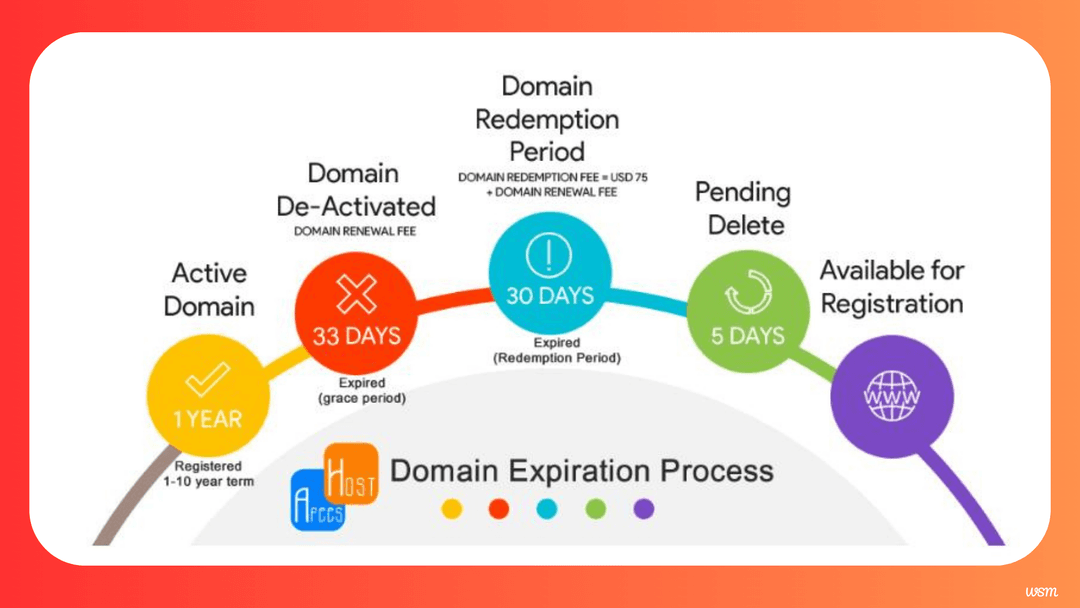
- Check expiry rules. Some ccTLDs have short or no grace periods compared with gTLDs. Turn on auto-renewal.
- Use a registrar that supports the ccTLD natively rather than through a reseller chain, so transfers and support go smoothly.
- Register defensively in key markets if you plan to expand, since good ccTLD names get taken too. See whether to buy multiple domain extensions.
- Keep your registrant details accurate, especially if eligibility depends on them.
Country-Code TLD FAQ
Country-code top-level domain. It is a two-letter domain extension assigned to a country or territory, based on the ISO 3166-1 alpha-2 codes, such as .de, .fr, or .jp.
It depends on the registry. Some, like .uk, are open to anyone. Others, like .ca and .au, require a local connection, and .eu requires EU citizenship or EU or EEA residence or establishment.
For a site targeting one country, a ccTLD sends a strong geotargeting signal that can help in that country. For international sites, a .com with subdirectories and hreflang is often simpler and spreads authority across markets.
No. Google treats a list of widely used ccTLDs, including .io, .co, .me, and .tv, as generic. They are not tied to a country for ranking purposes.
.uk was already in use when the ISO-based convention for ccTLDs was settled, so it was kept for historical reasons. The .gb ccTLD exists but is not open for new registrations.
Mostly not. ccTLD managers are independent and set their own policies on eligibility, transfers, disputes, and pricing. Some voluntarily adopt ICANN-style policies like the UDRP.
Yes. hreflang works across different domains, as long as each page lists all alternates, including itself, and the annotations are reciprocal.
Conclusion
A ccTLD is a two-letter extension tied to a country, run by an independent national registry with its own rules. For businesses that serve one country, it is often the most trusted and effective choice, and it sends search engines a clear signal about who the site is for. Vanity ccTLDs like .io and .co behave more like generic domains in search, but remain subject to their national registry's policies.
Before you register, confirm that you meet the eligibility rules, understand the expiry and transfer policies, and decide whether one country domain or a generic domain with localized sections fits your growth plans better. If you run several country sites, connect them with hreflang so search engines show each audience the right version.
Here are some useful references for going deeper on country-code TLDs:
- IANA: Root Zone Database — lists every ccTLD with its manager and contact details.
- ISO: ISO 3166 Country Codes — the standard behind ccTLD two-letter codes.
- RFC 1591: Domain Name System Structure and Delegation — the foundational document on how ccTLDs are delegated.
- Google Search Central: Managing Multi-Regional and Multilingual Sites — how Google uses ccTLDs and which ones it treats as generic.
- Google Search Central: Tell Google About Localized Versions of Your Page — the official hreflang documentation.