Unlikely Story Review: You've Got Mail, Rebuilt for the Google Docs Era
- Sajjad
- Book Reviews
- 14 Sep, 2026
Every generation gets the epistolary romance its technology deserves. AOL instant messages gave us Joe Fox and Kathleen Kelly. Unlikely Story gives its version of that same premise a Google Docs makeover, swapping "You've Got Mail" chimes for comment threads and suggested edits, and the update works better than it has any right to. Ali Rosen isn't just borrowing the shape of Nora Ephron's film, she's rebuilding its central trick, the person you're falling for online is already standing right in front of you, for a generation that flirts in the margins of a shared file instead of an inbox.
I went into "Unlikely Story" already knowing roughly where its central twist was headed, the marketing makes the mistaken-identity setup fairly transparent, and that's not really a criticism so much as an accurate description of how this particular romance formula is supposed to work. What surprised me was how much genuine emotional texture Rosen builds around that familiar mechanic, using Nora's dual identity as a therapist who's better at helping other people than helping herself to give the whole premise real thematic weight beyond the rom-com mechanics.
In this review, I'll walk through Nora's secret life as an anonymous advice columnist and her years-long, entirely text-based relationship with her editor J, how her combative new downstairs neighbor Eli complicates that arrangement before the book reveals exactly how, the found-family supporting cast that gives the story its warmth, and where the central coincidence strains credibility even for a genre built on convenient coincidences. I'll also talk about how deliberately, and how successfully, this book positions itself as a You've Got Mail update, because that comparison is doing a lot of the marketing's heavy lifting, and it's worth knowing whether the book actually earns it.
Overview: What Unlikely Story Is About
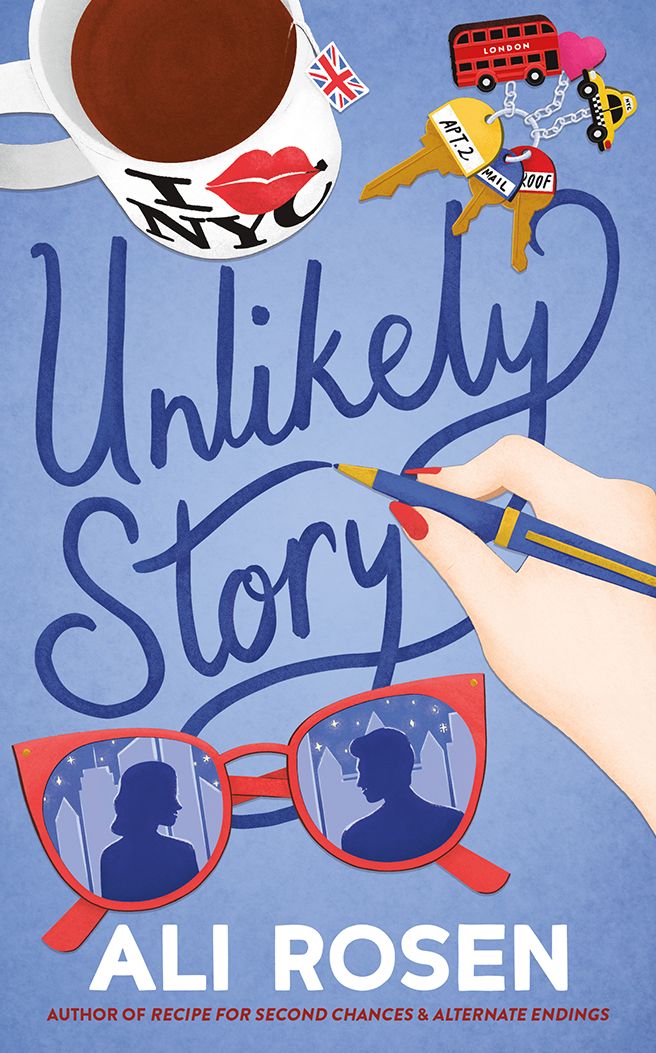
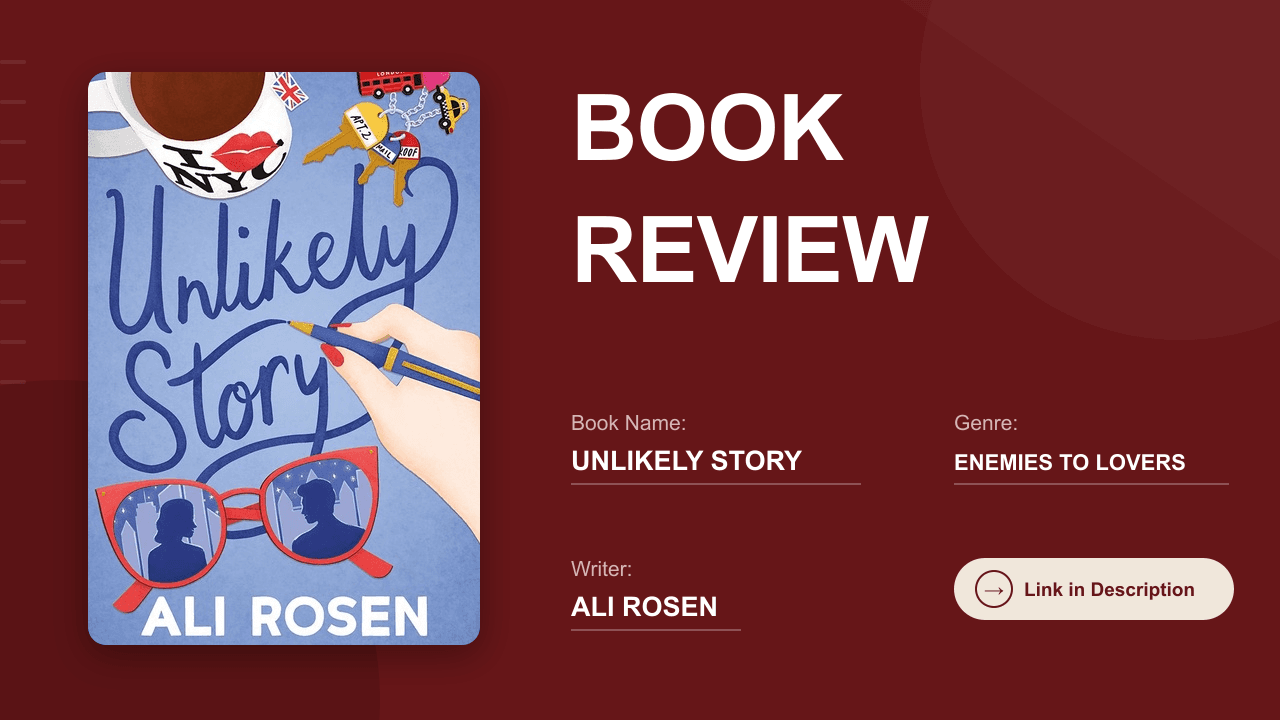
"Unlikely Story" follows Nora Fischer, a New York relationship therapist who spends her days helping clients navigate exactly the kind of emotional vulnerability she avoids in her own life. Nora's secret: for seven years, she's anonymously written a London newspaper's advice column under the pseudonym "Eleonora," communicating with her copyeditor, known to her only as J, entirely through comments on a shared document. Somewhere along the way, without ever having met him in person, Nora has fallen for J, a man she knows only through his editorial notes and his voice on the page.
That already complicated arrangement gets more tangled when Eli Whitman, a combative, standoffish Brit, moves into the apartment directly beneath Nora's, and turns out to be the ex-boyfriend of one of her therapy clients. Eli blames Nora for his breakup and seems determined to make her new neighbor experience as unpleasant as possible. The two get thrown together anyway, most notably after getting locked on their building's roof together, and start forming an unlikely, reluctant bond, one that becomes considerably more complicated once the book reveals that Eli and J are, in fact, the same person.
The You've Got Mail Homage, Done With Real Intention
Rosen doesn't bury the lede on what she's doing here, and that transparency is actually to the book's credit. "Unlikely Story" isn't quietly borrowing from "You've Got Mail," it's openly, deliberately reworking its central premise for a communication era built on shared documents rather than dial-up email, and the update is smarter than a simple technology swap. The comment-thread courtship between Nora and J captures something specific about how modern collaborative work tools can become intimate in ways email never quite was, the back-and-forth of edits and suggestions building a genuine rapport out of professional necessity, and Rosen leans into that specificity rather than just recreating the 1998 film beat for beat.
The mistaken-identity mechanic works for largely the same reason it worked in Ephron's film: the dramatic irony isn't really about surprising the reader, it's about watching two people slowly discover, through real-world friction, the same compatibility they'd already found through a screen, without either of them realizing it's the same person on both ends. Rosen executes that structure competently, even if, as with the source material, most readers will see exactly where it's headed well before the characters do.
Nora Fischer: A Therapist Who Can't Therapize Her Own Heart
The smartest choice in "Unlikely Story" is making its heroine a relationship therapist, and using that professional identity to add real thematic depth to what could otherwise be a straightforward rom-com setup. Nora spends her days helping clients be vulnerable and honest about their feelings while keeping her own emotional life locked safely behind a pseudonym and a screen, and that contradiction, someone whose job is emotional insight who can't apply any of it to herself, gives her arc genuine substance. The book's interest in "the masks we wear" across different contexts isn't subtext, it's explicitly the engine of Nora's own character journey, and having her professional expertise in therapeutic concepts woven naturally into the narrative voice keeps that theme from feeling heavy-handed.
Eli's parallel arc, a man whose combative exterior is masking real grief over his grandmother's death, complements Nora's journey well: both characters are, in their own ways, performing a version of themselves that keeps their actual vulnerability at arm's length, and their eventual reconciliation of their dual identities, both to each other and to themselves, is where the book's emotional payoff genuinely lands.
A Found-Family Supporting Cast That Earns Its Space
One of the book's quieter strengths is its supporting cast, given real texture rather than existing purely to shuttle the plot forward. Dane, Nora's straightforward best friend, provides grounded perspective without becoming a simple sounding board. Kwan and Gladys, elderly neighbors whose own late-life romance runs as a gentle parallel to Nora and Eli's story, and Tom and Meryl, a long-married couple modeling what enduring love actually looks like day to day, both add warmth and thematic resonance without overstaying their welcome. It's a well-assembled ensemble that reinforces the book's interest in what real, sustained connection looks like across different stages of life.
Rosen's use of food as a love language throughout, specific, sensory details like strawberry-rhubarb cornbread and black-and-white cookies, adds texture to both the New York and London settings, and her rendering of specific places, Greenwich Village, Union Square's farmers market, the Royal Botanic Gardens at Kew, gives the book a strong sense of place on both sides of the Atlantic.
Where the Coincidence Strains and the Middle Sags
I'd be underselling this review if I didn't flag where "Unlikely Story" runs into the same problems most mistaken-identity romances eventually hit. The central coincidence, that Nora's years-long online editor and her combative downstairs neighbor turn out to be the same person, asks for a real suspension of disbelief, and several readers have fairly noted that the twist is essentially obvious from the synopsis itself, which undercuts some of the dramatic tension the reveal is supposed to generate. The book leans on convenient timing more than once to keep its plot machinery working, and a reader inclined to poke at the logistics will find plenty to poke at.
The pacing also sags in the stretch before the reunion and reveal fully land, a common weak point in stories built around a big structural twist that both the reader and, eventually, the characters need time to process. A handful of reviewers have also flagged a lack of chemistry between the leads in places, and pointed to excessive therapy-monologue passages that occasionally slow scenes down rather than deepen them. Eli's father, introduced as a source of tension in his backstory, remains underdeveloped as an antagonist, more a plot device than a fully realized presence.
Ali Rosen's Voice: Wit and Emotional Depth in Balance
None of that undercuts what Rosen does well here, which is genuinely balance wit against real emotional substance. Her prose moves comfortably between banter and vulnerability without either register undercutting the other, and her incorporation of actual therapeutic concepts into Nora's voice and worldview feels organic rather than lecture-y, a difficult thing to pull off when your protagonist's profession is this central to the plot's themes. Rosen, the bestselling author of "Recipe for Second Chances" and "Alternate Endings," brings a confident, food-forward sensibility to the book's settings that keeps both New York and London feeling specific and lived-in rather than generic rom-com backdrops.
How Unlikely Story Compares to Its Source Material
The comparison to "You've Got Mail" is doing real marketing work here, and mostly earns it. Where Ephron's film kept its mistaken identity largely a secret from the audience until fairly late, Rosen's structure makes the twist more legible earlier, trading some of the original's dramatic surprise for a more sustained exploration of the emotional mechanics underneath it, why two people can fall for entirely different versions of the same person, and what happens when those versions collide. That's a reasonable trade-off for a genre novel more interested in emotional interiority than plot surprise, even if readers hoping for the original's slower-building reveal may find this version's transparency a little deflating.
About Author Ali Rosen
Ali Rosen is the bestselling author of "Recipe for Second Chances," praised by New York Times bestselling author Fern Michaels, and "Alternate Endings," and "Unlikely Story" continues her interest in food-forward, emotionally grounded contemporary romance. Her facility with blending professional expertise, therapy here, into her protagonists' voices without letting it overwhelm the narrative is a consistent strength across her catalog, and this book shows that skill applied to one of romantic comedy's most durable structural tricks.
Critical Reception and Reader Response
"Unlikely Story" holds a 3.81-star average across more than 20,000 Goodreads ratings and over 1,600 written reviews, a solid, engaged reception for contemporary romance. Readers have praised the witty dialogue and the "swoonworthy" premise, with one reviewer going so far as to call it "begging to be made into a Netflix romcom," and many have specifically highlighted the natural incorporation of therapeutic insight and the strength of the supporting cast.
The criticism that surfaces most consistently centers on predictability and execution: multiple readers noted the central twist is obvious from the synopsis alone, undercutting some of the reveal's intended impact, and a number flagged the coincidences required to make the plot work as excessive, along with a perceived lack of chemistry between the leads in certain stretches. The middle section's pacing before the reunion also drew fair criticism. None of that has stopped the book from developing a genuinely enthusiastic following among readers drawn to its specific blend of wit, food, and emotional honesty.
Key Takeaways from Unlikely Story
The You've Got Mail homage is deliberate and mostly earns it. Rosen updates the mistaken-identity romance for the Google Docs era with real specificity rather than a surface-level technology swap.
Nora's therapist identity gives the book real thematic depth. Her professional insight into vulnerability, contrasted with her own emotional avoidance, elevates the premise beyond a simple rom-com trick.
The supporting cast is a genuine strength. Dane, Kwan and Gladys, and Tom and Meryl all add warmth and thematic resonance without overstaying their welcome.
The central twist is fairly easy to see coming. The marketing itself makes Eli and J's shared identity obvious well before the reveal lands in the text.
The pacing sags before the reunion. A common structural weak point for mistaken-identity romances, and this book doesn't fully escape it.
Conclusion: Is Unlikely Story Worth Reading?
"Unlikely Story" is a genuinely thoughtful, well-executed update of a beloved romantic comedy formula, one that trades some of its source material's surprise for a deeper, more sustained interest in why we present different versions of ourselves to different people, and what it costs us to keep those versions separate. Nora's arc as a therapist who can't apply her own insight to her own heart gives the book real substance, and the found-family supporting cast, plus Rosen's specific, food-forward sense of place, make both New York and London feel genuinely lived-in.
It leans on real suspension of disbelief to make its central coincidence work, the pacing sags before the reveal fully lands, and readers looking for genuine surprise will find the twist telegraphed well in advance. But as a warm, witty, emotionally grounded rom-com that knows exactly which classic it's updating and mostly succeeds at the update, "Unlikely Story" delivers a satisfying modern take on a familiar formula. You can pick up a copy of "Unlikely Story" on Amazon and see whether Nora and Eli's shared-document romance wins you over the way it won over most of its readers.