
The View from Prince Street Review: Three Witch Bottles, Three Families, and One Crash Nobody Talks About
- Sajjad
- Book Reviews
- 14 Sep, 2026
Grief that never gets fully processed tends to calcify into something else entirely, and The View from Prince Street is built around exactly that calcification. Fifteen years after a car accident killed her sister, Rae McDonald still hasn't dealt with what happened, and Mary Ellen Taylor spends the book making clear that the accident itself is only the surface of what Rae's actually been avoiding. Layer a centuries-old witch bottle mystery, a son given up for adoption, and a friendship strained past the point of easy repair on top of that unprocessed grief, and you have a book with considerably more emotional weight than its charming Alexandria setting initially suggests.
I came to "The View from Prince Street" as the direct sequel to "At the Corner of King Street," continuing Taylor's Alexandria series with a new central pair of women while bringing back Addie Morgan, the previous book's protagonist, in a meaningful supporting role. What I found was a book more interested in trauma, guilt, and the specific mechanics of long-avoided grief than its historical-mystery marketing lets on, anchored by a friendship between two women who survived the same tragedy in very different ways.
In this review, I'll walk through the car accident that's haunted Rae and Lisa for fifteen years and the very different ways each woman has carried it since, the witch bottles and the three founding families they connect, the parallel threads involving Rae's estrangement from the son she gave up for adoption and Lisa's aunt's own hidden history, and where the book's ambitious, interconnected plotting works against its emotional clarity. I'll also talk about how this fits into the Alexandria series as a whole, since returning characters and accumulated history make this a book best read in order.
Overview: What The View from Prince Street Is About
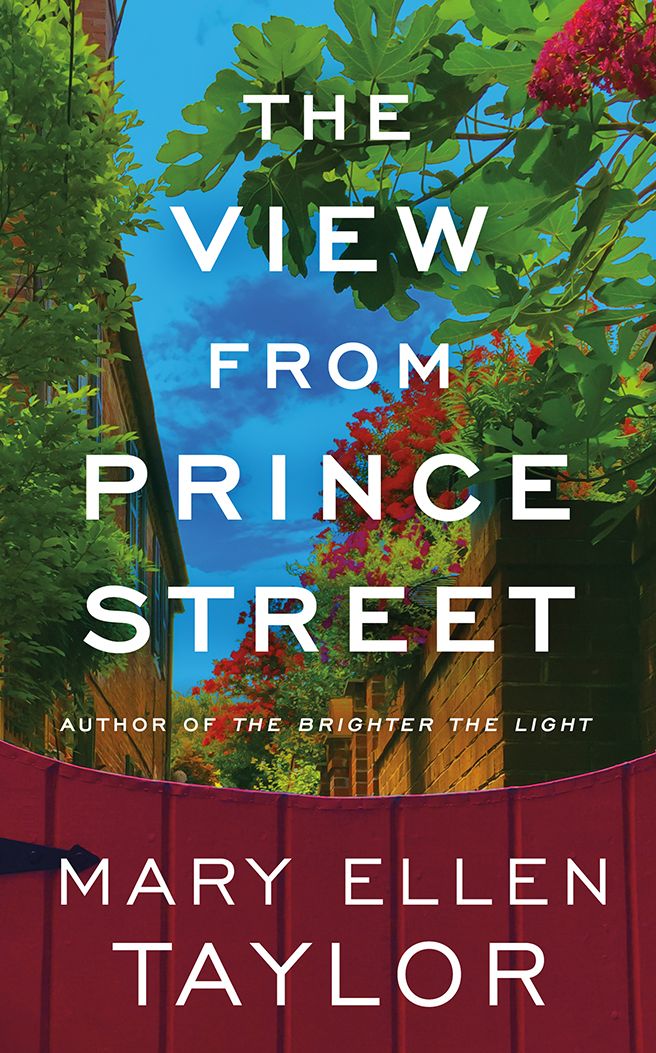
"The View from Prince Street" centers on Rae McDonald, a therapist living in her family's Alexandria home who has spent fifteen years since her older sister Jennifer's death in a car accident building emotional walls she's never quite acknowledged building. Lisa Smyth, Jennifer's best friend, was in the car that night too and survived, carrying a guilt she's spent the years since trying to outrun, quite literally, as a traveling photographer who's never stayed anywhere long. When Lisa returns to Alexandria to care for her aunt Amelia, who is living with Alzheimer's, the two women are forced back into each other's orbit for the first time since the accident that defined both their lives.
Running alongside that reunion is a historical mystery involving three witch bottles, buried centuries ago by early Alexandria settlers to ward off evil, and the three founding families connected to them. When architectural salvage experts, including Addie Morgan and her colleague Margaret from Shire Architectural Salvage, uncover documents spanning more than three hundred years of Rae's family history, a dark secret starts surfacing that ties the witch bottles' original purpose directly to the tragedies still playing out among their descendants today. Rae and Lisa have to untangle both mysteries, the historical curse and the far more immediate wound of what actually happened the night Jennifer died, before either woman can move forward.
Rae and Lisa: Two Survivors, Two Very Different Kinds of Damage
The strongest material in "The View from Prince Street" is the specific, carefully differentiated way Taylor renders how Rae and Lisa each carry the same tragedy. Rae's response has been to build a career out of helping other people process exactly the kind of trauma she's never worked through herself, an irony the book is well aware of and uses effectively; she's spent fifteen years being excellent at everyone else's grief while her own stays sealed off, emotionally withdrawn even within her own family home. Lisa's response has taken the opposite shape, running, literally, from place to place, from relationship to relationship, from the specific guilt of having survived the crash that killed her best friend, and her recovery from alcoholism adds another layer of hard-won, ongoing effort to a character who's spent years trying to outpace what she can't outrun.
That contrast gives the central friendship real texture once the two women are forced back into proximity. Neither is simply healed by the other's presence; Taylor lets their reunion be genuinely uncomfortable, weighted by years of avoided conversation and unequal grief, before either woman can offer the other anything resembling real support.
The Witch Bottles and Three Families' Buried History
The historical mystery Taylor builds around the witch bottles gives the book its genre hook, and the specific detail she brings to the practice, bottles filled with sharp objects, buried at thresholds and hearths considered vulnerable points where evil could enter a home, adds genuine texture to what could otherwise be a fairly abstract curse premise. Tracing the bottles back to three specific founding families and uncovering how their fates have echoed down through three centuries of descendants gives the present-day mystery real historical weight, and the involvement of Addie Morgan and the Shire Architectural Salvage team ties this book concretely back to the events of "At the Corner of King Street."
Where the mystery is at its best is in how directly it connects to Rae's own family line, making the historical investigation feel like an extension of her personal reckoning rather than a separate plot running alongside it. The witch bottles aren't just a curiosity Rae happens to stumble into; they're bound up in the same family history that's shaped the emotional patterns she's spent her adult life unconsciously repeating.
Adoption, Motherhood, and a Second Buried Thread
Running underneath both the accident's aftermath and the witch bottle mystery is a third significant thread: Rae's difficult, strained relationship with the son she gave up for adoption as a teenager, now grown and complicating her life in ways she's not fully equipped to handle. That thread adds real thematic weight to the book's interest in motherhood, inheritance, and the specific damage of things left unspoken across generations, and it pairs meaningfully with the revelation that Lisa's aunt Amelia was herself adopted, giving the novel two parallel, generationally distant versions of the same core wound.
It's a lot of material for one book to carry, and that abundance is both a strength and a genuine liability, which I'll get into below.
Where the Book's Ambition Outpaces Its Clarity
I'd be underselling this review if I didn't flag how much "The View from Prince Street" is juggling at once: the car accident and its fifteen-year aftermath, the witch bottle mystery spanning three families and three centuries, Rae's estrangement from her son, Lisa's recovery from alcoholism, Aunt Amelia's Alzheimer's and her own adoption secret, and returning characters and threads from "At the Corner of King Street." Readers have consistently flagged this density as a real challenge, multiple interconnected families and timelines that require careful tracking, and it's a fair criticism. The book's ambition is admirable, but the sheer number of threads competing for attention means some of them, particularly the adoption subplot involving Rae's son, get less room to fully develop than they'd need to land with maximum impact.
A number of readers have also noted editing inconsistencies and some friction reconciling details with the first book, the kind of continuity issue that can crop up in a series building this much accumulated history across multiple books. None of that derails the novel, but it's worth knowing that this is a book that rewards patience and careful attention rather than casual reading.
Mary Ellen Taylor's Growing Confidence With Interwoven Stories
What's genuinely impressive, even amid the complexity, is how far Taylor's instincts for building an interconnected fictional Alexandria have developed by this second installment. Returning characters like Addie Morgan feel genuinely woven into this new story rather than cameoing for fan service, and the throughline connecting witch bottles across multiple books gives the series a sense of accumulated mythology that a lot of standalone-adjacent women's fiction doesn't bother building. Taylor's sense of place remains a consistent strength, Alexandria's historic streets and buildings function as more than backdrop across the whole series, and her willingness to tackle genuinely difficult material, grief, addiction, adoption, guilt, with real emotional honesty rather than tidy resolution gives this book substance beyond its charming setting.
How The View from Prince Street Fits Into the Alexandria Series
Following directly from "At the Corner of King Street," which introduced Addie Morgan's own reckoning with her family's supposed curse, "The View from Prince Street" expands the series' mythology considerably by connecting a second protagonist's family history to the same witch bottle tradition. This is very much a book meant to be read in sequence rather than picked up cold; the emotional and historical payoff depends heavily on the groundwork the first book already laid, and readers unfamiliar with Addie's story will likely find her role here less resonant than longtime series readers will.
About Author Mary Ellen Taylor
Mary Ellen Taylor is an Amazon Charts bestselling author of dual-timeline women's fiction, and the Alexandria series, alongside her Union Street Bakery books, represents her ongoing interest in using Virginia's historic towns as settings rich enough to sustain interconnected, multi-book mythologies. "The View from Prince Street," originally published in 2016 and reissued in this revised edition, shows a writer growing more confident at weaving multiple families' histories together across an expanding series, even as that ambition occasionally outpaces what a single 350-page book can fully deliver.
Critical Reception and Reader Response
"The View from Prince Street" holds a strong 4.41-star average across more than 7,300 Goodreads ratings and nearly 200 written reviews, a genuinely well-loved reception for the second book in an ongoing series. Readers have consistently praised the atmospheric Alexandria setting, the emotional depth of Rae and Lisa's respective journeys through grief and guilt, and the strength of the book's female characters, with one reviewer offering the apt observation that "past, present, and future are links in a chain," capturing the novel's core interest in generational connection.
The criticism that surfaces most consistently centers on complexity: readers found the multiple timelines and interconnected families genuinely challenging to track, and some noted editing inconsistencies alongside details that don't perfectly reconcile with the first book. None of that has stopped the novel from earning a devoted following among readers who appreciate historical mystery blended with contemporary women's fiction and a genuine sense of place.
Key Takeaways from The View from Prince Street
Rae and Lisa's contrasting responses to shared trauma feel genuinely earned. One built walls through overwork and emotional avoidance, the other ran, and both are handled with real specificity.
The witch bottle mystery connects directly to Rae's personal reckoning. Rather than a separate plot thread, the historical investigation extends the same family patterns Rae has spent her life unconsciously repeating.
The adoption threads add real thematic depth. Rae's estrangement from her son and Aunt Amelia's own adoption secret give the book a meaningful throughline about motherhood and inheritance.
The book juggles more plot than it always manages gracefully. Multiple families, timelines, and returning characters require real attention, and some threads get less development than they deserve.
This is a sequel best read in order. The emotional and historical payoff depends heavily on familiarity with "At the Corner of King Street."
Conclusion: Is The View from Prince Street Worth Reading?
"The View from Prince Street" is a genuinely ambitious continuation of Mary Ellen Taylor's Alexandria series, using a centuries-old witch bottle mystery to deepen a much more immediate story about two women carrying very different versions of the same unprocessed grief. Rae and Lisa's reunion earns its emotional weight, the historical mystery ties meaningfully into Rae's own family patterns, and the adoption threads running underneath both add real substance to a book that could have coasted on charming setting alone.
It asks real attention of its reader, the density of interconnected families and timelines is a genuine challenge, and some threads don't get quite the development the setup promises. But as a sequel that expands its predecessor's mythology with real emotional stakes and Taylor's growing confidence at weaving multiple histories together, "The View from Prince Street" rewards readers willing to follow it carefully. You can pick up a copy of "The View from Prince Street" on Amazon and see whether Rae and Lisa's reckoning with the crash nobody talks about pays off for you the way it did for most of its readers.