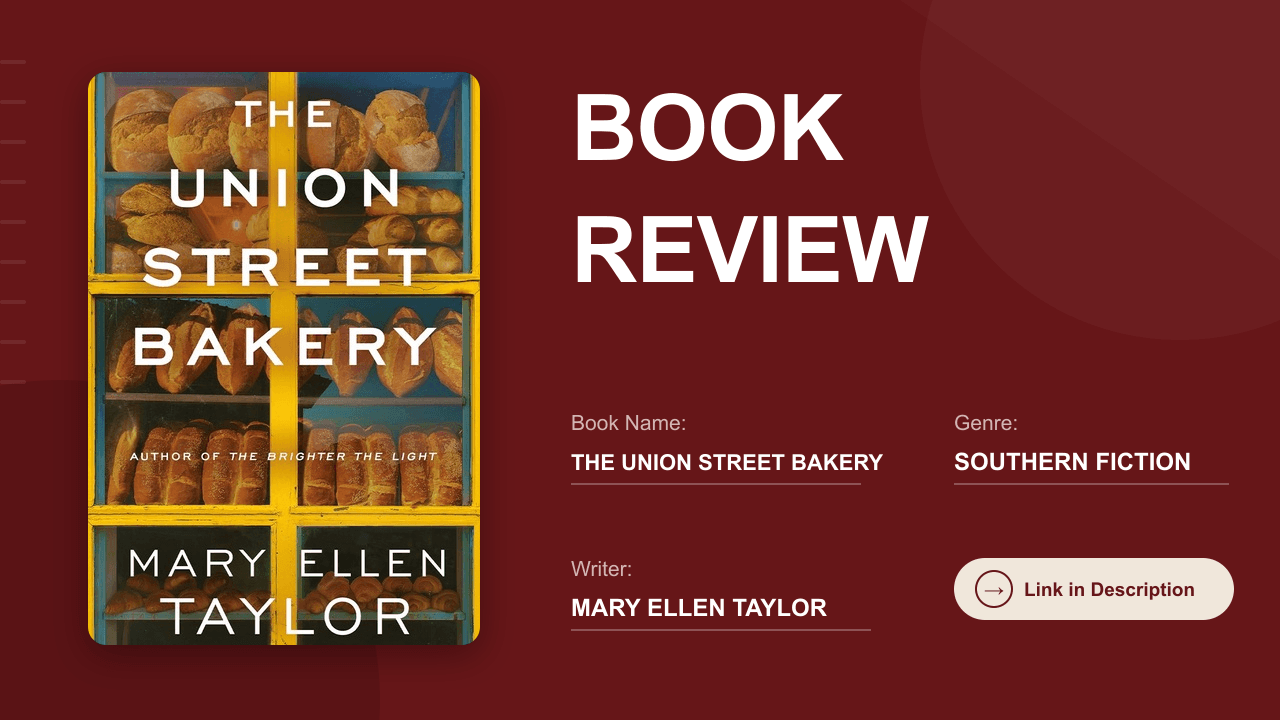
The Union Street Bakery Review: A Family Saga That Earns Its Ghost Story
- Sajjad
- Book Reviews
- 14 Sep, 2026
A lot of women's fiction novels bolt a ghost onto a family drama because the marketing copy needed a hook. The Union Street Bakery does the opposite: it builds a genuinely aching story about adoption, belonging, and what a family actually owes its members first, and only then lets a ghost walk into it, because by that point the ghost has somewhere real to stand. Mary Ellen Taylor's debut earns its supernatural element instead of leaning on it, and that's a harder trick than it sounds.
I went into "The Union Street Bakery" expecting a cozy, bread-scented comfort read about a woman rebuilding her life above her family's bakery. What I got was that, plus a genuinely moving dual-timeline story that uses a dead woman's century-old journal to ask hard questions about who counts as family, who gets remembered, and what it costs the people history quietly erases.
In this review, I'll walk through Daisy McCrae's return to Alexandria and the bakery she was abandoned at as a toddler, how the journal she inherits from a dying customer pulls Susie's story into the present, the tangled feelings stirred up by her ex-fiancé Gordon's reappearance in town, and where the book's ambition to juggle contemporary family drama, historical injustice, and light supernatural elements holds together versus where it strains. I'll also talk about how this 2025 edition fits into Taylor's larger body of work, since this isn't the first time she's set a story on these particular Alexandria streets.
Overview: What The Union Street Bakery Is About
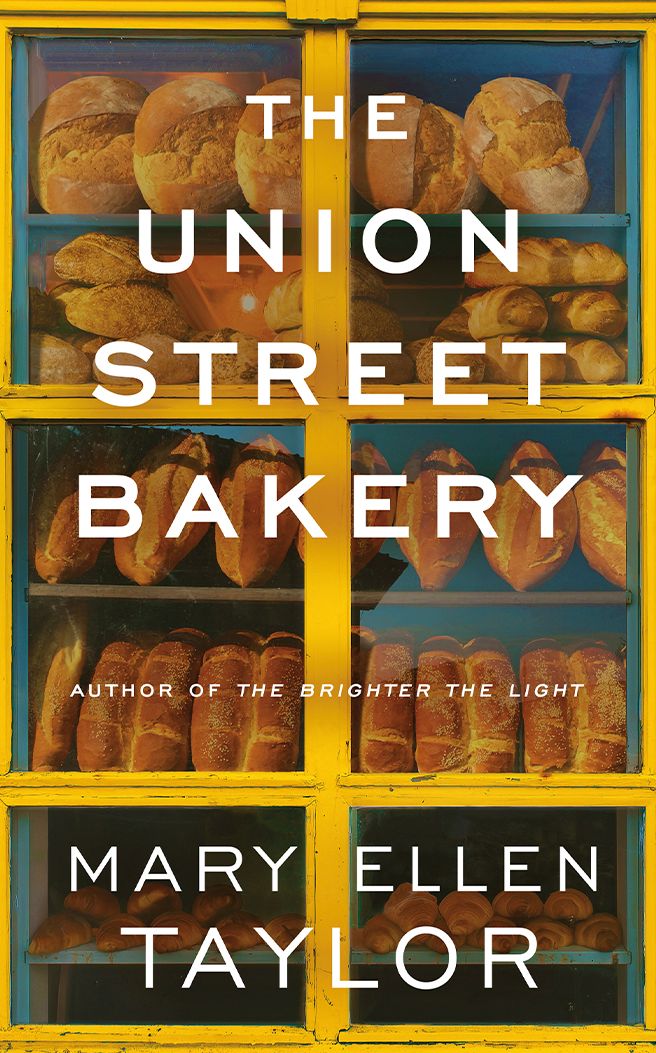
"The Union Street Bakery" follows Daisy McCrae, who was abandoned by her birth mother at her adoptive family's Alexandria bakery when she was three years old. Thirty years later, after losing her finance job and ending her engagement to Gordon, Daisy moves back into the apartment above the bakery to help her adoptive parents keep the failing family business afloat. It's meant to be a temporary landing spot, but Daisy has spent her whole life quietly convinced she doesn't fully belong among her adoptive sisters, Rachel and Margaret, no matter how much her family loves her, and coming home forces her to actually sit with that feeling instead of running from it.
The plot accelerates when an elderly customer dies and leaves Daisy a journal roughly 150 years old, written by Susie, an enslaved girl with a direct connection to the bakery's own history. Susie's presence doesn't stay confined to the page; Daisy starts experiencing dreams and visions that blur the line between reading someone else's story and actually living alongside it, and untangling what happened to Susie becomes inseparable from Daisy untangling her own sense of who she is and where she comes from.
Daisy McCrae: The Adopted Daughter Who Never Stopped Auditioning
The strongest material in "The Union Street Bakery" is Daisy's interior conflict about belonging, and Taylor handles it with real specificity rather than generic adoption-plot shorthand. Daisy isn't unloved. Her parents and sisters genuinely want her there, and the book never pretends otherwise. What it does instead is sit with the harder, less easily resolved feeling of someone who's spent thirty years feeling like the odd one out in a family that never treated her that way, a gap between being loved and feeling fully, unquestionably home that a lot of adoption narratives smooth over too quickly.
That emotional honesty gives the book's central question, what does it actually mean to belong to a family, real weight well before Susie's journal enters the picture. Rachel and Margaret are drawn with enough specificity to make the sisterly dynamic feel lived-in rather than a background feature, and the "odd one out" tension among three sisters, two by birth, one by circumstance, lands as genuinely credible rather than melodramatic.
Susie's Journal: The Ghost Story That Actually Means Something
Where a weaker version of this book might have used its ghost as a cheap plot engine, Taylor ties Susie's presence directly to the book's larger argument about who gets remembered and who doesn't. Susie was enslaved, tied to the same physical ground the bakery now sits on, and her story existing only because an elderly woman happened to preserve her journal and think to pass it along is itself a pointed detail: history remembers the people someone bothered to write down, and forgets everyone else by default. Daisy uncovering Susie's story becomes an act of restoring someone to the historical record who was never supposed to have a record at all.
The dreams and visions Daisy experiences are used sparingly enough that they read as genuinely eerie rather than gimmicky, and the book smartly keeps its supernatural elements in service of the historical mystery rather than letting them become spectacle for their own sake. It's a deliberate choice that pays off: by the time the book's present and past timelines fully intersect, the ghost story feels earned rather than bolted on, which is exactly the achievement this review's title is pointing at.
Gordon, the Bike Shop, and Old Wounds Reopening
Running alongside the central mystery is the complication of Gordon, Daisy's former fiancé, unexpectedly opening a bike shop within walking distance of the bakery. His reappearance isn't played as a simple second-chance romance setup; it forces Daisy to reckon with a version of her old life resurfacing at the exact moment she's trying to figure out who she is without it, and Taylor uses that timing well. Gordon isn't a plot device so much as a mirror, someone whose presence makes Daisy's uncertainty about her own path impossible to avoid.
It's a smaller thread than the central journal mystery, but it does real work reinforcing the book's larger theme: that starting over doesn't mean the past politely stays where you left it, whether that past is a fiancé, a birth mother, or a family history stretching back over a century.
Where the Book Strains: Too Many Threads at Once
I'd be underselling this review if I didn't flag where Taylor's ambition outpaces her execution, particularly for a debut novel. The book is juggling a lot at once, Daisy's identity crisis, the bakery's financial troubles, Gordon's return, Susie's historical mystery, and the visions connecting the two timelines, and there are stretches where that many simultaneous storylines start to feel genuinely convoluted rather than richly layered. Readers have consistently flagged this as the novel's biggest structural weakness, and it's a fair one; a slightly tighter focus on fewer threads would likely have let the strongest material, Daisy's belonging arc and Susie's story, breathe more.
There are also some rougher, more debut-novel-specific issues worth naming: a handful of continuity inconsistencies (small details like fabric colors shifting between chapters) and profanity that a number of readers have found tonally out of step with the book's otherwise warm, comforting register. None of these are fatal flaws, but they're a fair account of where this reads as an author's first novel rather than a fully polished later work.
Mary Ellen Taylor's Alexandria: A Setting Worth Returning To
Taylor's rendering of Old Town Alexandria and the Potomac River waterfront is genuinely immersive, full of the kind of sensory, specific detail, fresh bread, old brick, a bakery that's been part of the neighborhood's fabric for generations, that makes the setting feel like more than backdrop. It's clear even in this debut why Taylor would return to these same streets in later work; Alexandria's blend of colonial history and contemporary small-business life gives her exactly the kind of layered setting her dual-timeline structure needs to work.
The recipes included at the book's end are a nice, genre-appropriate touch that reinforces the bakery's role as the emotional center of the story rather than just its setting.
How The Union Street Bakery Compares to Taylor's Later Work
Readers who've read Taylor's "At the Corner of King Street," also set in Alexandria and built around a woman confronting buried family history through a dual-timeline structure, will recognize a lot of her recurring instincts here in earlier form: a protagonist pulled back to a hometown she has complicated feelings about, a piece of physical history, a witch bottle in that book, a journal in this one, that unlocks a connection between past and present, and a genuine interest in whether family is defined by blood or by who actually shows up. "The Union Street Bakery," as her debut, is rougher around the edges and more prone to overstuffing its plot than the more assured "At the Corner of King Street," but the emotional DNA, and the specific talent for making Alexandria itself feel like a character, is already clearly present here.
About Author Mary Ellen Taylor
Mary Ellen Taylor is an Amazon Charts bestselling author known for dual-timeline women's fiction that blends contemporary family drama with historical mystery, frequently set in Virginia and the Outer Banks of North Carolina. "The Union Street Bakery," originally published in 2013 and reissued in this revised June 2025 edition, was her debut novel and launched a series that continues with "Sweet Expectations." It's a strong first showing that clearly laid the groundwork for the more refined dual-timeline storytelling she'd go on to develop in later books.
Critical Reception and Reader Response
"The Union Street Bakery" holds a strong 4.11-star average across more than 16,000 Goodreads ratings and nearly 1,000 written reviews, an impressive, well-loved showing for a debut novel over a decade after its original publication. Readers have consistently praised the "credible dynamics of sisterly love," the immersive Alexandria setting, and the way the book balances contemporary struggles against historical mystery, with several noting how effectively it captures "how something from long ago can still be influencing your current life."
The criticism that surfaces most consistently centers on plot density: multiple reviewers described the novel as juggling too many simultaneous storylines, and some flagged profanity that felt out of place against the book's otherwise gentle tone, along with minor editing inconsistencies. None of that has kept the book from building a genuinely devoted readership over more than a decade in print, and the strength of its reissue reception suggests the story's core, Daisy's search for belonging, and Susie's overdue recognition, still resonates.
Key Takeaways from The Union Street Bakery
The ghost story is earned, not gimmicky. Susie's presence is tied directly to the book's larger argument about who history remembers and who it erases.
Daisy's belonging arc is the emotional core. Her feeling of being the odd one out despite being genuinely loved is handled with real specificity rather than generic adoption-plot shorthand.
The bakery and Alexandria setting are genuinely immersive. Taylor's sensory, specific detail makes the town feel like a real character in the story.
The plot juggles too much at once. Financial trouble, romance, family identity, and a historical mystery competing for space is the book's clearest structural weakness.
It's a strong debut, rough edges included. Continuity slips and tonally mismatched profanity mark this clearly as an earlier, less polished work than Taylor's later novels.
Conclusion: Is The Union Street Bakery Worth Reading?
"The Union Street Bakery" is a genuinely warm, emotionally honest family saga that does the rare thing of making its ghost story matter rather than just decorating a contemporary plot with one. Daisy McCrae's search for where she actually belongs gives the book real emotional stakes, and Susie's journal, restoring a life history tried to erase, gives that search a historical weight that elevates the novel well beyond a simple homecoming story.
It asks a lot of itself for a debut, juggling more storylines than it always manages gracefully, and it shows some of the rough edges you'd expect from a first novel. But as a dual-timeline story that earns its supernatural element by grounding it in genuine historical stakes, "The Union Street Bakery" delivers something more substantial than its cozy bakery-fiction packaging might suggest. You can pick up a copy of "The Union Street Bakery" on Amazon and see whether Daisy, and Susie, find the recognition they're both looking for.