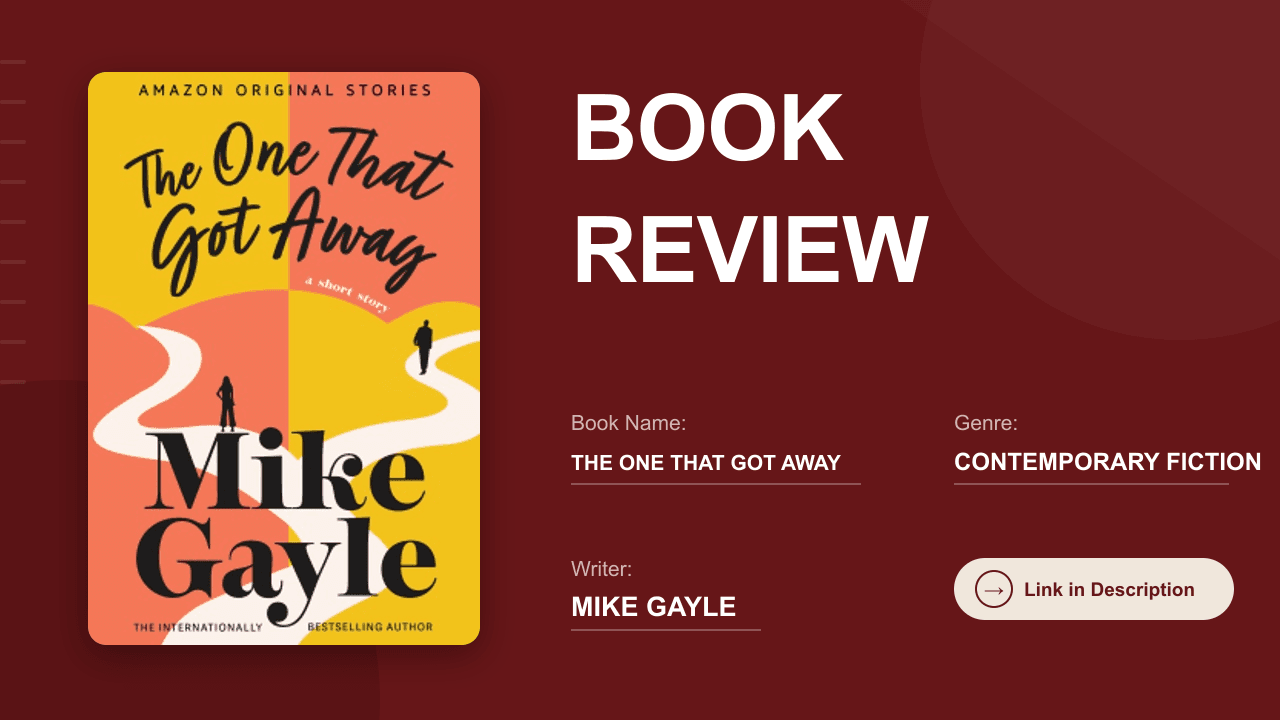
The One That Got Away Review: A Breakup Story That's Not the Romance It's Being Sold As
- Sajjad
- Book Reviews
- 14 Sep, 2026
Every element of the premise behind The One That Got Away is engineered to make you assume you know where it's going. A man still in love with his ex. A wedding day he can't bring himself to attend as a guest. A last-minute phone call from the bride that sounds, on paper, exactly like the setup for a runaway-bride reunion romance. Mike Gayle knows exactly what premise he's handing you, and he spends the length of this short story quietly, deliberately refusing to deliver it.
I went into "The One That Got Away" expecting the cover's title and the general shape of the setup to mean what they usually mean in this genre: an ex-couple gets a second chance, obstacles get overcome, credits roll on a reunion. What I got was a story a good deal more interested in what it actually means to let someone go, and a resolution that's more honest, and frankly more interesting, than the reunion a lesser version of this premise would have delivered.
In this review, I'll walk through Reuben's wedding-day distraction plan and the phone call that upends it, how Gayle's then-and-now structure builds out Reuben and Beth's relationship before revealing why it actually ended, the surprising direction the story takes once Reuben reaches the wedding, and why the ending, whether or not you see it coming, is the most honest choice the book could have made. I'll also talk about where the format's brevity works against it, because a story this short asks a lot of its reader in a very compressed space.
Overview: What The One That Got Away Is About
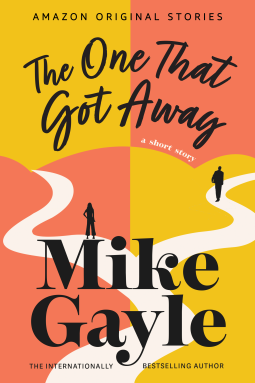
"The One That Got Away" introduces Reuben Miller six months after his breakup with Beth, the woman he'd assumed he'd spend his life with. He's not over it. When he learns Beth is getting married, and soon, to a man named Leo, Reuben's loyal best friend Pete puts together an elaborate distraction for the wedding day itself: a rented Ferrari, a VIP box at the races, champagne, nightclubbing, the whole extravagant playbook for not thinking about the woman getting married across town.
The plan lasts about as long as these plans usually do in fiction. On the morning of the wedding, Beth calls Reuben directly, asking him to come rescue her from her own ceremony. Reuben, reading the situation exactly the way anyone primed by a lifetime of romantic comedies would read it, races to Abbey Manor in his borrowed Ferrari, ready for a moment that feels like it's been building since the first page. What he finds when he gets there complicates that assumption almost immediately, and the story spends its back half working out what actually happens next, which is considerably less predictable than the setup promises.
Then and Now: How the Story Builds Its Case
Gayle structures the story across two alternating timelines, labeled "Then" and "Now," moving between the wedding-day chaos and flashbacks to Reuben and Beth's relationship as it actually was, six months and further back. It's a smart structural choice for a story this compressed: rather than front-loading exposition about why the relationship ended, Gayle lets the reader piece together Reuben and Beth's history at the same pace the wedding-day plot unfolds, so the reveal of why they actually broke up lands with real weight rather than as background information.
What emerges is a portrait of two people who wanted fundamentally different things from love. Beth, shaped by childhood experiences that left her skeptical of the idea of "forever" as anything more than a comforting story people tell each other, never fully bought into the romantic permanence Reuben needed to believe in. Reuben, for his part, spends much of the "Then" timeline trying to argue her out of that skepticism rather than actually reckoning with it, which retroactively reframes the breakup as less a tragedy that happened to them and more a genuine incompatibility neither of them was willing to name honestly while they were still together.
The Wedding Day Twist: Leo's Crisis, Not Reuben's Rescue
Here's where the story earns the framing in this review's title. When Reuben arrives at Abbey Manor expecting to be the answer to Beth's call for help, he discovers that Beth's fiancé Leo has also gone missing, seized by his own last-minute doubts, doubts that turn out to be an infected version of Beth's own skepticism about whether "forever" is a real, sustainable thing or just a nice story. Reuben's role in the day shifts almost immediately from would-be romantic hero to something much stranger and more generous: helping track Leo down, and, in the process, ending up in the position of giving Leo advice about how to actually move forward with Beth.
It's a genuinely clever inversion of the premise. A weaker version of this story lets Reuben be the one who swoops in and gets the girl back. Gayle's version has Reuben use everything he learned from losing Beth, the hard, humbling lessons about what she actually needed from a partner that he couldn't give her, to help the man who's about to marry her instead. That's a much more interesting use of a broken heart than a reunion would have been, and it's the reason the story's back half feels earned rather than manipulative.
An Ending That Chooses Peace Over a Reunion
The story closes with Reuben not only helping reunite Beth and Leo but attending their wedding as a guest, and, in a final touch that could have felt cute but mostly lands as genuinely hopeful, meeting someone new there himself. It's the kind of ending that only works if the story has actually earned Reuben's growth rather than just asserting it, and Gayle mostly does the work to get there: Reuben's arc isn't about winning Beth back, it's about accepting that the version of love he wanted from her was never something she could honestly give him, and that letting go of that specific want is what actually frees him to be happy.
That's a braver choice than the marketing, and the title itself, might suggest to a reader expecting a straightforward "the one that got away, got won back" story. Gayle is using the title ironically as much as literally: Beth is the one who got away, and the story's real argument is that this was always going to be for the best, for both of them, even though it doesn't feel that way for most of the pages leading up to it.
Where the Compressed Format Shows Its Seams
I'd be underselling this review if I didn't acknowledge where the short format strains under the weight of what Gayle is trying to do. At roughly a hundred pages, the compressed timeline means some of the emotional shifts, particularly Leo's independent crisis of confidence mirroring Beth's own doubts, happen fast enough to stretch credibility. The convenience of both Beth and Leo getting cold feet on the same morning, in ways that conveniently create the exact situation Reuben needs to have his epiphany, is a fair target for skepticism, and more than one reader has flagged it as the story's biggest plot contrivance.
The single-perspective, first-person structure also means Beth herself stays somewhat undersketched; we understand her mainly through Reuben's retrospective account of their relationship, and her own interiority, what she actually wants and why, is filtered entirely through a narrator who spent most of their relationship not fully listening to her on exactly that subject. It's a defensible choice thematically, Reuben's limited understanding of Beth is part of the point, but it does mean the story's emotional generosity toward her stops short of actually letting her speak for herself. The epilogue also moves quickly past the aftermath, jumping ahead rather than sitting in the processing that a slightly longer format might have allowed.
Mike Gayle's Voice: Warm, Funny, and Willing to Undercut Its Own Premise
None of that undercuts what Gayle does well here, which is write genuinely natural, funny dialogue and balance real heartache against comedy without either one undercutting the other. Gayle has built a career on contemporary relationship fiction that takes ordinary romantic disappointment seriously without losing its sense of humor, and that balance is on full display here, particularly in Pete's scenes, which provide comic relief without ever feeling like padding.
The real achievement, though, is structural: Gayle sets up a premise that reads exactly like a familiar romantic-comedy formula and then uses that familiarity against the reader, delivering a story that's ultimately more interested in acceptance and honest incompatibility than in engineered reunions. That's a genuinely mature thing for a story wearing this particular genre's clothing to attempt, and it mostly succeeds.
How The One That Got Away Fits Into Gayle's Work
Readers familiar with Gayle's longer novels, which have built his reputation as a chronicler of modern relationships navigating disappointment, aging, and the gap between how love is supposed to work and how it actually does, will recognize his interests condensed here into a tighter package. The novella format doesn't give him room for the slower character accumulation his full-length books allow, but the thematic DNA, skepticism about romantic mythology, real affection for flawed people trying their best, is unmistakably his.
About Author Mike Gayle
Mike Gayle is an internationally bestselling author known for contemporary relationship fiction that blends humor with real emotional insight, and "The One That Got Away," published through Amazon Original Stories in May 2025, is a compact showcase of exactly that combination. His ability to subvert a familiar romantic premise without losing the warmth that makes the genre appealing in the first place is the clearest evidence of a writer who understands the form well enough to complicate it on purpose.
Critical Reception and Reader Response
"The One That Got Away" has drawn a positive, engaged reception, with reviewers generally landing in the 3.5-star-and-up range and several describing the ending specifically as "perfection." Readers have praised Gayle's ability to capture "the heart and soul of his characters" in a compressed format, and the audiobook edition, narrated by David Ijiti, has been singled out for particular praise, with listeners calling the performance "wonderful."
The criticism that surfaces most consistently centers on the compressed timeline: several reviewers flagged the coincidence of Beth and Leo's simultaneous cold feet as a contrivance that strains credibility, and some found Beth's characterization thin given that the entire story is filtered through Reuben's limited perspective. A few readers also noted the premise echoes familiar romantic-comedy beats, even as most agreed the ending's subversion of those beats is what elevates the story above a formulaic read.
Key Takeaways from The One That Got Away
The title is more ironic than literal. Beth is the one who got away, but the story argues that letting her go was always the right outcome, not a tragedy to be reversed.
The then-and-now structure earns the breakup's reveal. Alternating timelines let Reuben and Beth's fundamental incompatibility emerge gradually rather than as exposition.
Reuben's arc is about acceptance, not victory. His growth comes from using what he learned from losing Beth to help the man marrying her, not from winning her back.
The wedding-day twist is a genuine subversion. Leo's parallel crisis of confidence redirects the plot away from a predictable reunion and toward something more thoughtful.
The short format has real costs. Compressed pacing strains credibility around the central coincidence, and Beth's own interiority stays underexplored given the single-perspective structure.
Conclusion: Is The One That Got Away Worth Reading?
"The One That Got Away" is a smarter, more emotionally honest story than its premise and title initially suggest, using the familiar shape of a runaway-bride romantic comedy to deliver something closer to a story about acceptance, incompatibility, and the specific kind of peace that comes from finally understanding why a relationship had to end. Reuben's day at Abbey Manor doesn't give him the reunion the setup seems to promise, and that's exactly the point Gayle is making.
It asks you to accept a fairly convenient coincidence to get its two central characters into crisis at the same moment, and Beth herself remains more sketch than full portrait given the story's tight first-person focus. But as a compact, funny, genuinely thoughtful reworking of "the one that got away" as a concept, rather than a plot to reverse, this short story delivers something more interesting than the reunion romance it could have easily been. You can pick up a copy of "The One That Got Away" on Amazon and see whether Reuben's day in a borrowed Ferrari convinces you the way it convinced most of its readers.