The Laughing Dead Review: Jess Lourey Found the Creepiest Real Medical Detail in Crime Fiction
- Sajjad
- Book Reviews
- 14 Sep, 2026
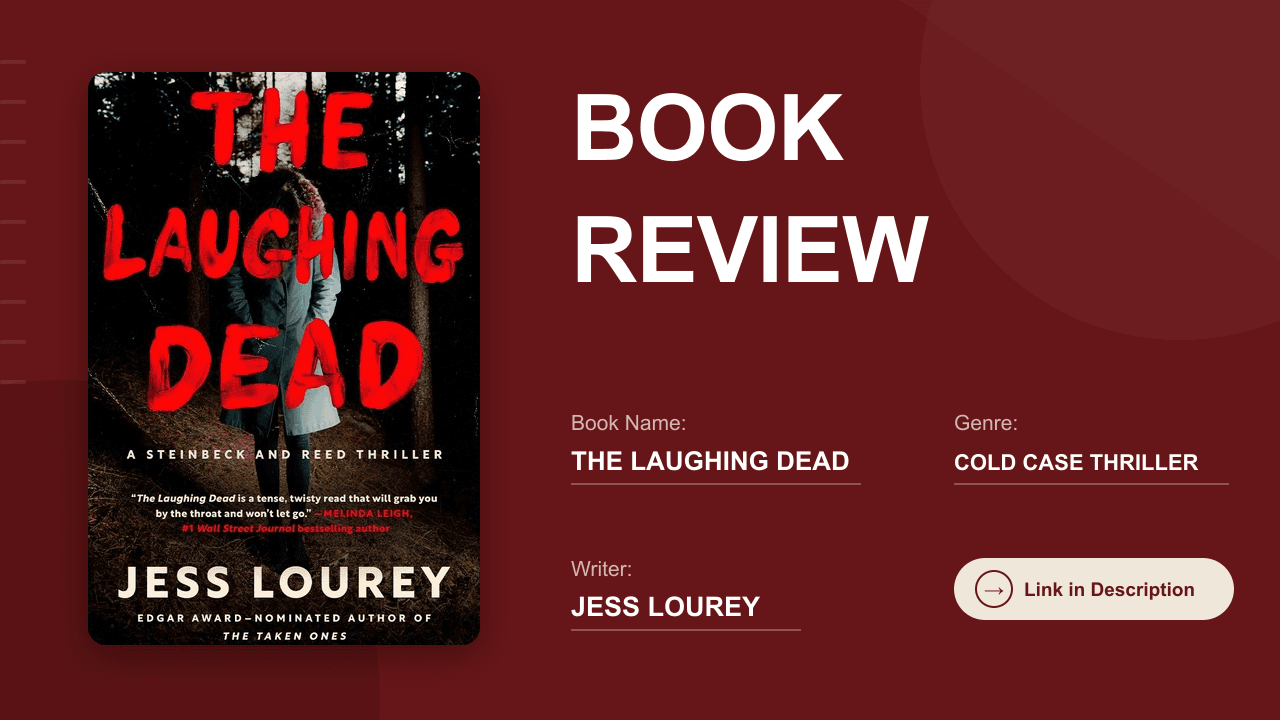
The best crime writers know that a real, documented horror is always creepier than an invented one. The Laughing Dead builds its entire premise around risus sardonicus, a genuine medical phenomenon in which facial muscle spasms lock a dying person's mouth into what looks like a wide, ghoulish grin. It's a real thing, with a real history stretching back to ancient Sardinia, and Jess Lourey uses it as the engine of a case that reaches from a set of forgotten 1986 deaths straight into her cold case agent's own buried past.
I came to "The Laughing Dead" as the third book in Lourey's Steinbeck and Reed series, and it delivers exactly what a strong trilogy closer should: a case that's genuinely disturbing on its own terms, a central duo whose dynamic has had two books to develop real tension, and a resolution to Van Reed's long-buried history with a cult that the series has been building toward from the start. It's not a flawless book, but it's a genuinely well-constructed one, and the specific medical horror at its center is the kind of detail that sticks with you well after you've closed the book.
In this review, I'll walk through the 1986 case that gives the book its title and how it resurfaces decades later, the risus sardonicus detail itself and why it's such an effective hook, Van Reed's complicated cult past and her secret investigation into Harry Steinbeck's missing sister, and where the book's ambition occasionally outpaces its plotting. I'll also talk about how this closes out the trilogy, because that's the question most readers coming to book three actually want answered.
Overview: What The Laughing Dead Is About
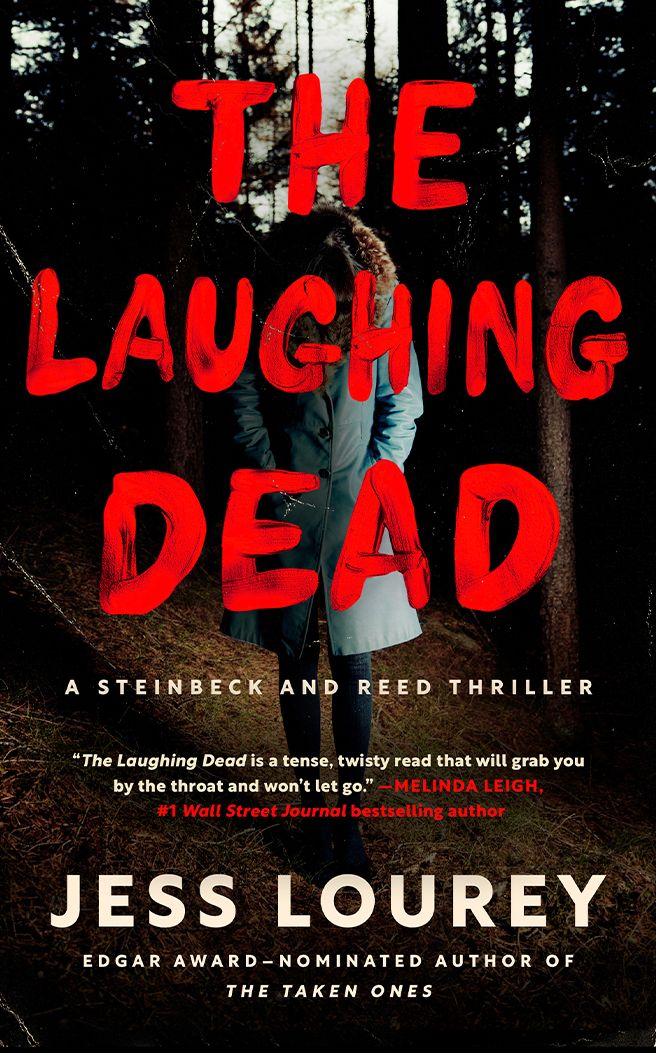
"The Laughing Dead" opens with a case that was closed and forgotten decades before the present-day story begins: in 1986, three teenage girls in central Minnesota were found dead, each with her mouth fixed in a horrifying, unnatural grin. Authorities dubbed it the "Laughing Dead" case, ruled the deaths suicides, and moved on. Cold case agent Evangeline "Van" Reed, working with her BCA partner, forensic scientist Harry Steinbeck, is called to a fresh murder scene decades later where the victim wears that exact same horror-movie smile, and the case reopens with a complication nobody saw coming: Van's own police ID turns up at the crime scene, making her the investigation's prime suspect.
That complication isn't a simple frame job. Van has secrets, ones she's never told Harry, rooted in a traumatic childhood inside a cult run by a man named Frank Roth, and as the investigation into the resurfaced Laughing Dead case deepens, those secrets start bleeding into the present in ways Van can't fully control or explain. Running parallel to the main case is Van's own private investigation, conducted without Harry's knowledge, into whether Frank Roth was responsible for the disappearance of Harry's sister, Caroline, nearly two decades earlier. Van is, in other words, working two cases at once, one she's assigned to and one she's hiding, and the book's tension comes as much from that double life as from the murders themselves.
Risus Sardonicus: A Real Medical Horror Doing Real Narrative Work
The book's title comes directly from its most effective device, and it's worth explaining why it works as well as it does. Risus sardonicus is a genuine medical sign, a sustained, grimacing spasm of the facial muscles that produces an expression resembling a fixed grin, historically associated with poisoning and severe muscle-affecting toxins. Its name traces back to ancient Sardinia, where a toxic plant was reportedly used in a ritual context, and the phrase "sardonic smile" descends from that same etymological root, a detail that stretches all the way back to Homer. Lourey builds her killer's method around a real-world tincture capable of producing this effect, and the choice to ground the book's most horrifying image in documented medical and historical fact, rather than an invented supernatural flourish, is exactly what makes it linger.
It's a smart choice structurally as well as viscerally. Because risus sardonicus is real and specific, the forensic details around identifying it, distinguishing an induced case from a natural one, tracing the substance responsible, give Harry Steinbeck's scientific expertise genuine narrative purpose rather than just procedural flavor. The mystery isn't solved by a lucky break; it's solved by the kind of specific, grounded expertise the book has spent two prior installments establishing as his defining trait.
Van Reed: A Detective Whose Past Won't Stay Buried
Van herself is the more complicated half of the central duo, a cold case agent whose instincts and visions, remnants of a childhood defined by cult trauma, give her genuine insight into the case but also make her a fundamentally unreliable narrator of her own life. Lourey doesn't play Van's history as simple backstory color; it's presented as an active, ongoing force shaping how she investigates, what she notices, and what she's willing to hide from the people meant to be helping her. Her rule-bending, messier approach to the case creates real narrative tension against Harry's more buttoned-up, procedural instincts, and that contrast has clearly been one of the series' strongest assets across all three books.
What makes this installment specifically compelling is how directly it forces Van's past and present cases to collide. Her secret investigation into Caroline Steinbeck's disappearance, conducted entirely behind Harry's back, means the book is asking Van to lie to her own partner in service of protecting him from a truth she isn't sure he can handle, while simultaneously asking her to solve a murder case in which she herself is a suspect. That's a lot of narrative weight for one character to carry, and for the most part, Lourey balances it well.
Harry Steinbeck and the Quiet Tragedy of Caroline
Harry's throughline across the series, centered on his sister Caroline's unresolved disappearance, finally gets meaningful movement in this book, and it's handled with real emotional weight rather than treated purely as a mystery box to unlock. His unawareness of Van's parallel investigation into Frank Roth's possible involvement adds a layer of dramatic irony that pays off by the book's end, and the resolution to his half of the story gives the trilogy a genuine sense of closure rather than leaving his most personal stakes dangling for a fourth book that may or may not come.
The supporting cast gets real texture too, and it's worth specifically flagging Owl, the duo's dog, who has become something of a fan favorite across the series and continues to earn that affection here. It's a small thing, but in a book this heavy with trauma and violence, Owl's presence provides genuine relief without ever feeling like a tonal mismatch.
Where the Plotting Strains
I'd be underselling this review if I didn't flag where the book's ambition outpaces its execution. Some of the plot's bigger reveals ask for real suspension of disbelief, particularly around how certain characters manage to survive or evade detection across the timeline the book establishes, and a few of Van's choices as an investigator, including a specific moment involving an unopened piece of research correspondence that would plausibly change her understanding of the case much earlier, strain credibility for a character established as sharp and thorough. It's the kind of contrivance that exists to keep the plot's timeline working rather than because it's the most believable choice a character like Van would actually make.
There's also a tonal note worth flagging: some readers have found Van's self-punishing internal voice, her guilt, her self-blame, her tendency to spiral, creates a heavier, more subdued atmosphere than the pacing of a thriller ideally wants, occasionally slowing momentum in stretches where the plot itself is trying to accelerate. It's a defensible characterization choice given what Van has been through, but it's a fair account of where the book's mood and its genre mechanics pull in slightly different directions.
Jess Lourey's Craft: Dual Timelines Done With Real Confidence
None of that undercuts what Lourey does well here, which is construct a genuinely well-managed dual-timeline structure that keeps the 1986 case and the present-day investigation feeding into each other without ever losing the reader. Her prose stays tight and controlled even while handling genuinely disturbing material, and her research into the medical and historical reality behind risus sardonicus gives the book a texture of authenticity that a lot of comparable thrillers don't bother to earn. Lourey, an Edgar Award-nominated author, brings real craft to balancing the emotional weight of Van's cult trauma against the forward momentum a case-driven thriller needs, and for the most part, that balance holds.
How The Laughing Dead Closes Out the Trilogy
Following "The Taken Ones," which introduced Van and Harry and ended with Harry contemplating a secret of his own, and "The Reaping," which dug into the backstory of Caroline's disappearance, "The Laughing Dead" functions as a genuine trilogy closer rather than another open-ended middle installment. It doesn't end on a cliffhanger, which reads as a deliberate choice to give readers real closure on both the case and Van and Harry's personal arcs, even as the door stays open enough that a continuation wouldn't feel forced if Lourey chooses to write one. Readers coming to this as their first Steinbeck and Reed book will likely find themselves lost on the emotional stakes tied to Caroline and Van's cult history; this is very much a book meant to be read after the first two.
About Author Jess Lourey
Jess Lourey is an Edgar Award-nominated author best known for launching this series with "The Taken Ones," and her background writing across both crime fiction and true-crime-adjacent material shows up clearly in how confidently she handles the real medical and historical research underpinning "The Laughing Dead." Her ability to make a documented, real-world horror like risus sardonicus feel both scientifically grounded and genuinely frightening is the clearest evidence of a writer who understands that the creepiest details are often the true ones.
Critical Reception and Reader Response
"The Laughing Dead" holds a strong 4.37-star average across more than 9,000 Goodreads ratings and over 650 written reviews, among the best-reviewed entries in the series. Readers have consistently praised the dual-timeline structure, calling it "a masterclass in suspense," and Owl the dog has earned specific, repeated praise as one of the series' most beloved characters. Reviewers have also highlighted the authenticity of Van and Harry's evolving partnership as a highlight of this third installment.
The criticism that surfaces most consistently centers on plausibility: some readers questioned specific plot mechanics around character survival and security details, and a few found Van's self-punishing, guilt-heavy internal voice created a heavier, more subdued reading experience than the thriller pacing ideally calls for. Most reviewers strongly recommend reading the trilogy in order, noting that the emotional payoff of this book depends heavily on the groundwork laid in "The Taken Ones" and "The Reaping."
Key Takeaways from The Laughing Dead
Risus sardonicus is a genuinely effective hook. Grounding the book's central horror in real medical and historical fact makes it linger longer than an invented device would.
Van and Harry's dynamic is the series' strongest asset. Her rule-bending instincts against his procedural precision continue to generate real tension in this third installment.
Caroline's disappearance finally gets real resolution. Harry's personal throughline pays off with genuine emotional weight rather than staying an open question.
Some plot mechanics strain credibility. Certain reveals and character choices, including an oddly unexamined piece of correspondence, exist to serve the timeline more than believability.
This is a trilogy closer, not a jumping-on point. Readers should start with "The Taken Ones" to get the full emotional impact of Van's arc here.
Conclusion: Is The Laughing Dead Worth Reading?
"The Laughing Dead" closes out Jess Lourey's Steinbeck and Reed trilogy with real confidence, anchored by a genuinely unsettling real-world medical detail and a central partnership that's had two full books to earn the tension it cashes in here. Van Reed's collision between her cult-scarred past and the case she's assigned to solve gives the book real emotional stakes beyond its central mystery, and Harry's long-running search for answers about his sister finally gets the resolution the series has been building toward.
It isn't without real plotting strain, a few reveals ask for more suspension of disbelief than the book has otherwise earned, and Van's heavier emotional register occasionally slows the thriller's momentum. But as a conclusion to a series built on genuinely researched, genuinely disturbing details and a detective duo worth following through three books, "The Laughing Dead" delivers. You can pick up a copy of "The Laughing Dead" on Amazon and see whether Van and Harry's last case together sticks with you the way it did with most of its readers.