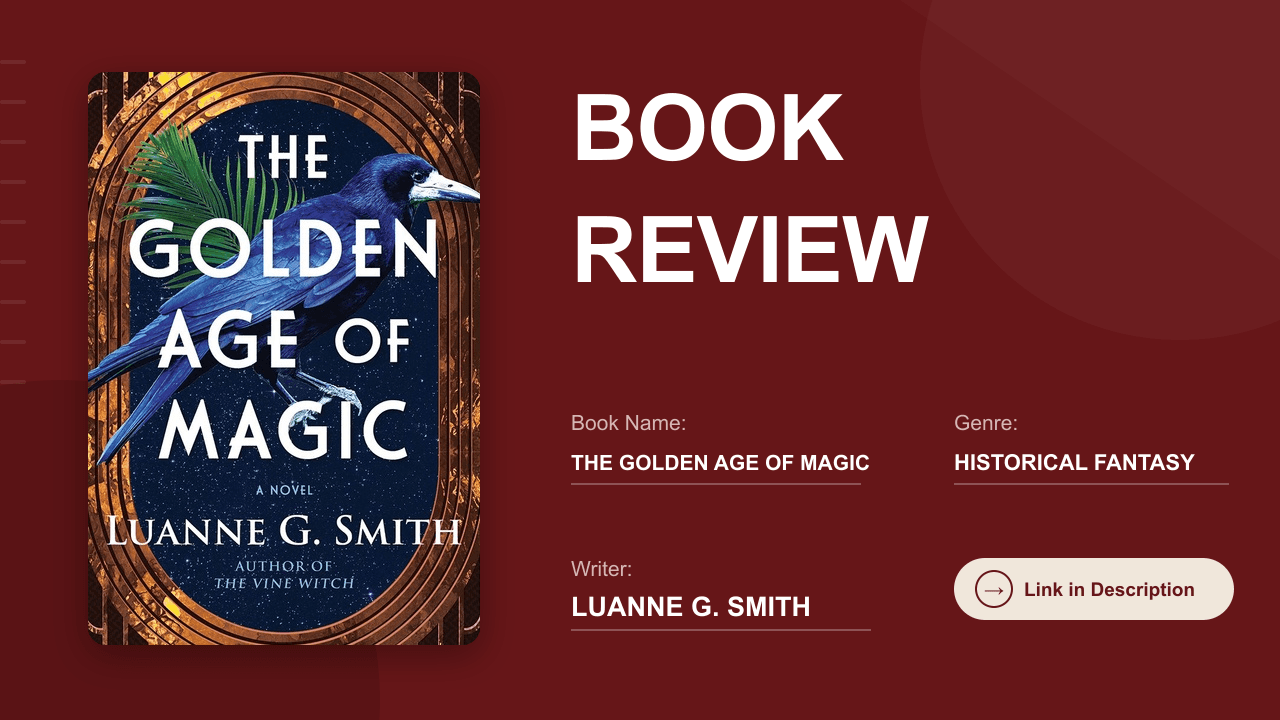
The Golden Age of Magic Review: Fairy Godmothers in 1927 Hollywood, and It Mostly Charms
- Sajjad
- Book Reviews
- 14 Sep, 2026
The fairy godmother is one of the most underused figures in fantasy fiction, mostly relegated to a supporting cameo in someone else's Cinderella story. The Golden Age of Magic fixes that by making the godmother the protagonist, dropping her into the middle of booming 1927 Hollywood, and asking a genuinely interesting question: what does it actually cost to hand someone else their destiny? It's a clever premise, and Luanne G. Smith mostly makes good on it, even when the execution around the edges doesn't quite match the strength of the idea.
I went into "The Golden Age of Magic" expecting a fairly light historical fantasy riding on the novelty of its Old Hollywood setting. What I found was a genuinely charming, occasionally uneven book that's at its best when it's exploring the specific mechanics of what a fairy godmother's job actually entails, and at its weakest when its murder-mystery plot needs to move faster than its worldbuilding wants to let it.
In this review, I'll walk through Celeste's mission to usher her first protégé toward her destiny, the sisterhood of Fées Gardiennes she's trying to earn full standing in, the sabotage and murder plot that complicates her work on the studio lot, and where the book's blend of whimsy and mystery works better than where it doesn't. I'll also talk about the sequel-setting ending, because this is clearly meant to be the first book in a series, and that's worth knowing going in.
Overview: What The Golden Age of Magic Is About
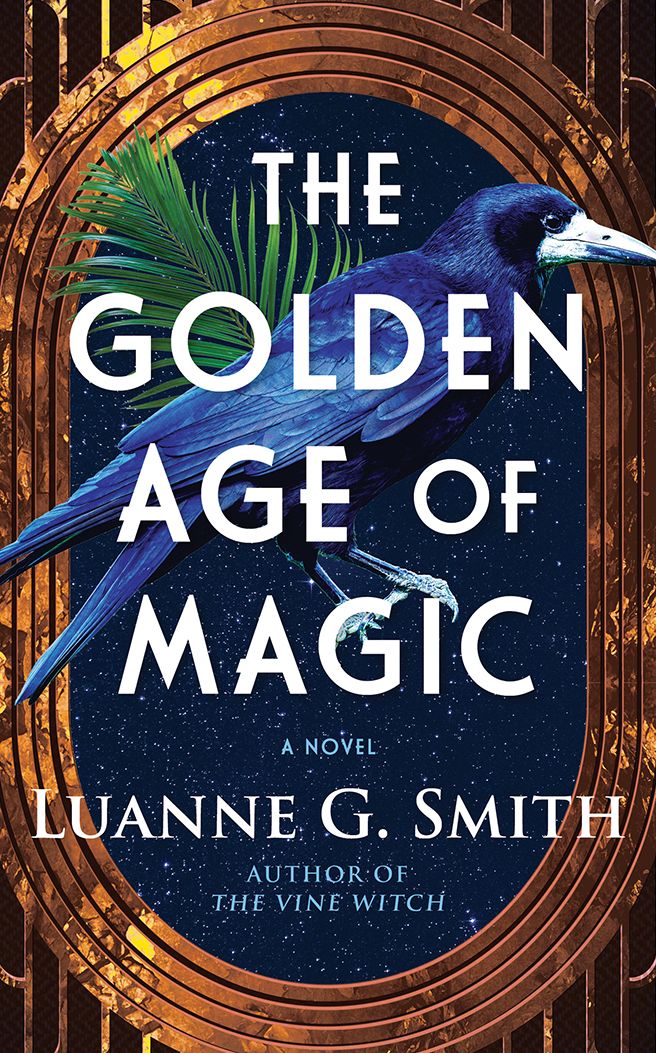
"The Golden Age of Magic" is set in 1927, at the height of Hollywood's early filmmaking boom, and follows Celeste, a fairy godmother-in-training working toward full membership in the Fées Gardiennes, a centuries-old sisterhood of thirteen godmothers tasked with quietly steering deserving people toward their destined paths. To earn her place among them, Celeste needs to successfully guide her first protégé, and she chooses Rose, a gifted studio seamstress whose talent far outstrips the recognition she's actually getting, exactly the kind of underappreciated dreamer the Fées Gardiennes exist to help.
What should be a fairly straightforward mentorship complicates fast. A string of unexplained accidents starts plaguing the studio lot, stirring up rumors of a curse, and Celeste becomes convinced the trouble is deliberate sabotage from a rival Gardienne rather than coincidence or bad luck. The sabotage turns genuinely dangerous when a starlet is murdered on the lot and Rose herself becomes the prime suspect, forcing Celeste to use her full magical ability, and her standing within a sisterhood that may not have her back, to clear Rose's name and protect the destiny she's supposed to be shepherding.
Celeste and the Fées Gardiennes: A Fresh Angle on an Old Trope
The best idea in "The Golden Age of Magic" is treating fairy-godmothering as an actual profession with rules, hierarchy, and institutional politics, rather than a vague, magical kindness that happens off-page in someone else's story. The Fées Gardiennes as a centuries-old sisterhood with thirteen members and a formal path to full status gives the book real structural stakes: Celeste isn't just trying to help Rose because it's nice, she's trying to prove herself within an organization that has its own internal rivalries, expectations, and, as the plot reveals, its own capacity for sabotage from within.
That institutional angle is what elevates the book above a simple "magical helper intervenes in a mortal's life" premise. Celeste's uncertainty about whether a fellow Gardienne might be working against her adds a layer of genre-blending intrigue, part fantasy, part whodunit, that gives the book more to chew on than its whimsical premise initially suggests. Her partnership with Sebastian, a stoat who serves as both companion and a charming bit of period-appropriate magical texture, adds warmth to what could otherwise be a fairly procedural magical-mentorship plot.
Rose: The Protégé Worth Rooting For
Rose herself is drawn with real sympathy, a talented seamstress whose skill is consistently overlooked by a studio system more interested in the actors in front of the camera than the craftspeople making them look the part. That specific kind of overlooked competence, talent that goes unrewarded because it's not the kind of talent an industry has decided to value, gives Rose's arc real emotional grounding, and it makes her escalating jeopardy once she's accused of murder land with genuine stakes rather than existing purely as plot mechanics.
The mentor-protégé dynamic between Celeste and Rose is where the book's emotional core lives, and it's handled with real care. Celeste's investment in Rose isn't purely professional, it's personal, and watching that investment get tested by an accusation neither of them saw coming gives the back half of the book its clearest sense of urgency.
1927 Hollywood as More Than Backdrop
Smith's period research shows up in genuinely immersive detail, from the set construction and costume design specifics to the broader texture of an industry still figuring out what it was becoming. The studio lot setting does real work beyond simple novelty; it's a world built on manufactured illusion and constructed destiny, which makes it a clever, almost thematically inevitable place to drop a story about a woman whose entire job is quietly manufacturing other people's futures. The parallel between Hollywood's dream-making machinery and the Fées Gardiennes' literal destiny-shaping magic is one of the smarter structural choices in the book, even when it isn't made explicit.
The love interest subplot, a handsome producer who catches Celeste's eye, adds a lighter romantic thread without overtaking the central mentorship and mystery plots, giving the book some of the breezier, more purely enjoyable material that balances out its darker sabotage-and-murder stakes.
Where the Mystery Plot Strains
I'd be underselling this review if I didn't flag where the book's execution doesn't fully match its premise's ambition. The murder mystery at the center of the back half, while it raises the stakes effectively, unfolds with a fair amount of predictability; readers have consistently noted that the central whodunit doesn't hold many genuine surprises, and the eventual reveal of who's actually behind the sabotage lands more as confirmation of an already-obvious suspicion than a genuine twist. For a book pairing fantasy with mystery, that's a real missed opportunity, since the mystery half of the premise doesn't get the same inventive treatment the magical-institution half does.
The pacing is uneven as well, with the worldbuilding-forward stretches, richly detailed as they are, occasionally slowing the momentum the murder plot needs to sustain real tension. Some readers have been considerably harsher about the prose execution than I'd be personally, with the sharpest criticism describing certain passages as reading like early, unpolished writing rather than the work of a bestselling author several books into her career; that's a stronger complaint than the book generally deserves, but it does point to real unevenness in how consistently the prose holds up across the full length of the novel. A handful of plot threads also resolve more loosely than the setup promises, leaving some sense that the book is setting up its sequel at the expense of fully closing its own loops.
Luanne G. Smith's Voice: Whimsical, Atmospheric, and Occasionally Uneven
None of that undercuts what Smith does well, which is build a genuinely inviting, atmospheric world and populate it with characters worth spending time with. Her prose is at its strongest in the period detail and the specific mechanics of the Fées Gardiennes' magic, and her ability to blend genuine whimsy, a fairy godmother's magic rendered with real charm and specificity, against the darker stakes of sabotage and murder shows a writer comfortable working across tonal registers even when the balance between them isn't perfectly calibrated.
Smith, the bestselling author of The Vine Witch series, brings the same instinct for grounding magic in tactile, sensory period detail that defined her earlier work, and that instinct is easily the book's most reliable strength across its full length.
How The Golden Age of Magic Compares to The Vine Witch
Readers familiar with Smith's Vine Witch trilogy, set among French vineyards and steeped in a similarly tactile, craft-focused magic system, will recognize her recurring interest in magic that's bound up with a specific trade or industry, winemaking there, filmmaking and fairy-godmothering here. "The Golden Age of Magic" trades the Vine Witch books' European countryside for Hollywood glamour, and while the mystery plotting here is less assured than what longtime readers may expect from her, the worldbuilding instincts and atmospheric confidence carry over clearly.
About Author Luanne G. Smith
Luanne G. Smith is an Amazon Charts and Washington Post bestselling author best known for The Vine Witch series, and "The Golden Age of Magic," published by 47North in mid-2025, launches a new series that applies her talent for tactile, trade-specific magic systems to a fresh setting. A sequel is already slated for 2026, confirming this as the opening installment of an ongoing series rather than a standalone.
Critical Reception and Reader Response
"The Golden Age of Magic" holds a 3.71-star average across more than 5,500 Goodreads ratings and over 360 written reviews, a solidly mixed-to-positive reception. The Historical Novel Society's trade review praised it as "an enjoyable spin on the classic fairy godmother's trope," specifically highlighting the period-accurate set and costume detail and Celeste's partnership with Sebastian the stoat. Reader reviews have echoed that enthusiasm for the premise, with one calling it "such a fun and creative read all around."
The criticism clusters around execution rather than concept: several readers found the central mystery predictable, with the sabotage plot's resolution landing as expected rather than surprising, and some flagged loose plot threads left dangling by the book's close. A minority of reviewers were considerably harsher about the prose quality in places, though that view sits well outside the more common assessment of the book as an engaging, if imperfectly executed, genre mashup.
Key Takeaways from The Golden Age of Magic
The institutional angle on fairy godmothering is genuinely fresh. Treating the Fées Gardiennes as a structured sisterhood with real internal politics elevates the premise well beyond a simple magical-helper story.
Rose's overlooked talent gives the plot real emotional stakes. Her arc from underappreciated seamstress to murder suspect lands because the book takes her specific kind of invisibility seriously.
Hollywood's illusion-making is a smart thematic parallel. The studio system's manufactured destinies mirror the Fées Gardiennes' literal destiny-shaping magic, even when the connection isn't spelled out.
The mystery is the weakest link. The sabotage plot's resolution is largely predictable, missing an opportunity to match the inventiveness of the magical worldbuilding.
This is a series opener, not a standalone. Some threads resolve loosely, with a 2026 sequel already confirmed to continue Celeste's story.
Conclusion: Is The Golden Age of Magic Worth Reading?
"The Golden Age of Magic" is a genuinely charming reimagining of the fairy godmother as a working professional navigating institutional politics, personal stakes, and the specific glamour and illusion of 1927 Hollywood. Celeste and Rose's mentor-protégé bond gives the book real emotional grounding, and Luanne G. Smith's tactile, period-rich worldbuilding makes the studio lot setting feel genuinely lived-in rather than just a novel backdrop for a familiar fantasy trope.
Where it falls short is in its mystery mechanics, the sabotage plot resolves with less surprise than the setup promises, and the pacing occasionally sags under the weight of its own worldbuilding. But as an inventive, atmospheric opener to a new series from a writer with a clear talent for grounding magic in specific craft and detail, "The Golden Age of Magic" mostly earns the charm this review's title gives it credit for. You can pick up a copy of "The Golden Age of Magic" on Amazon and see whether Celeste's first case as a fairy godmother wins you over the way it won over most of its readers.