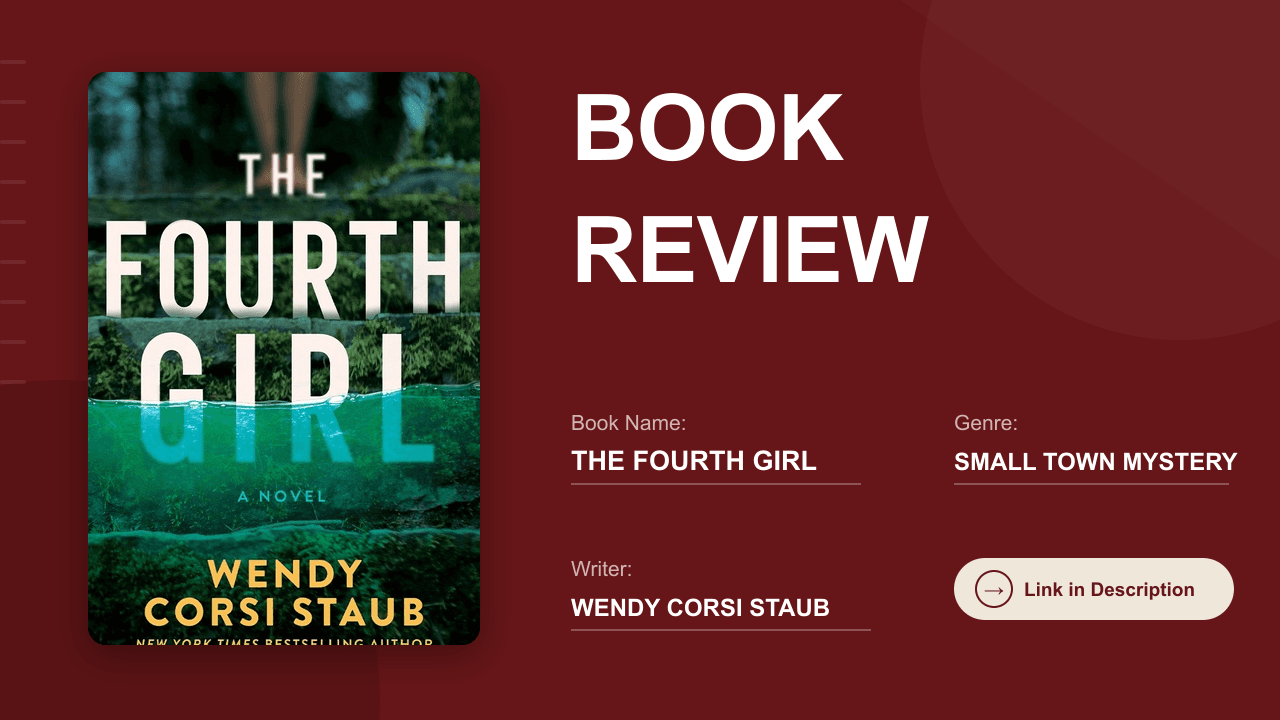
The Fourth Girl Review: Twenty-Five Years of Silence, and Someone Finally Wants to Talk
- Sajjad
- Book Reviews
- 14 Sep, 2026
Twenty-five years is a long time to keep a secret buried, and The Fourth Girl understands exactly how much pressure that kind of silence puts on a friendship before something finally forces it back into the open. Wendy Corsi Staub builds her Haven Cliff series opener around a group of teenage best friends, one vanished girl, and a secret the other three have carried so long it's become part of who they are, and then she gives them a reason, a body, an object, a detective who happens to be one of their own, to finally start talking again.
I went into "The Fourth Girl" expecting a fairly standard small-town-secret thriller, and structurally, that's largely what it is. What elevates it is the specificity of its four central friends, drawn distinctly enough in their late-90s teenage years that the present-day reunion actually carries weight, even when the mystery mechanics around them fall into more familiar genre patterns.
In this review, I'll walk through what happened to Caroline Winterfield on prom night and what her three friends have carried since, how the present-day murder investigation pulls detective Midge Kennedy back into a case she has deeply personal reasons to avoid, the dual-timeline structure connecting 1997 Mulberry Bay to the present, and where the book's strong character work runs into a more predictable plot than it deserves. I'll also talk about the "gleaming architectural jewel" Haven Cliff has become, because the mansion's transformation is doing more thematic work than it might first appear to.
Overview: What The Fourth Girl Is About
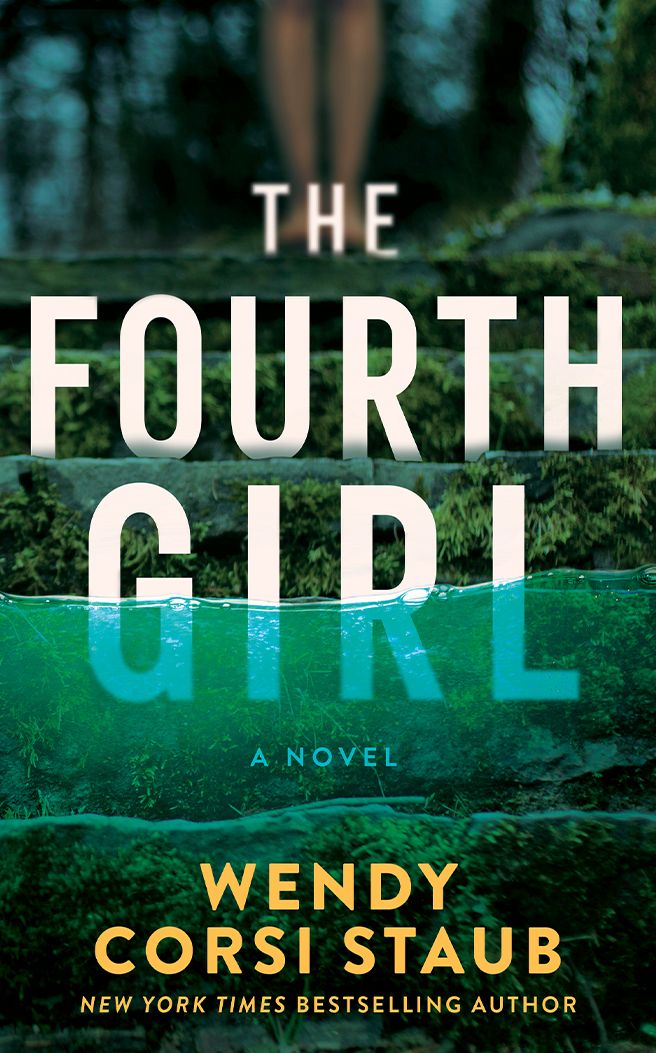
"The Fourth Girl" centers on four inseparable friends from Mulberry Bay, New York: Talia Shaw, even-tempered and college-bound; Kelly Barrow, beautiful and drawn to wealthy men; Midge Kennedy, determined to follow her police-officer father into law enforcement; and Caroline Winterfield, the rule-abiding daughter of a strict, religious family. On prom night in 2000, Caroline walked away from the ruins of the abandoned Haven Cliff mansion and was never seen again, presumed drowned in the water nearby. Only Talia, Kelly, and Midge know what actually happened that night, and none of them have spoken about it since.
Twenty-five years later, Haven Cliff has been transformed from a crumbling ruin into a gleaming, fully restored estate, and it's there that a body turns up, that of Gordy, Caroline's old boyfriend, holding an object in his lifeless hand that only three other people in the world would recognize the significance of. Midge, now a police detective, realizes almost immediately that she's not just investigating a murder, she's investigating a case that could unravel the secret she and her two oldest friends have spent a quarter century protecting.
Four Girls, One Vanishing, and the Secret That Followed
The book's strongest asset is how distinctly Staub draws its four central girls in the 1997-to-2000 timeline before the present-day plot even kicks into gear. Talia's chatty even temperament, Kelly's mischievous pursuit of money and status, Midge's inherited sense of duty toward law enforcement, and Caroline's rule-following nature shaped by a strict religious household aren't just quick character tags, they're consistent enough traits that each girl's choices on and around prom night feel psychologically coherent rather than engineered purely to serve the plot.
That groundwork pays off once the book shifts into its present-day investigation. Watching Midge specifically, a woman who built her entire professional identity around justice and truth-telling, forced to investigate a case that could expose her own decades-old silence, gives the book a genuine moral tension that a less character-focused thriller wouldn't have access to. She's not just solving a mystery, she's confronting the exact kind of secret her career has trained her to distrust.
Midge Kennedy: A Detective Investigating Her Own Silence
Midge is the book's clearest standout, and putting her specifically in the role of the investigating detective is a smart structural choice. It means the present-day mystery can't simply proceed as a straightforward procedural; every step forward in the case is also a step toward Midge's own exposure, and Staub uses that tension effectively to keep the present-day chapters urgent even when the reader can guess roughly where things are heading. Her aspiration, inherited from her police-officer father, to be someone who stands for truth and accountability, makes her complicity in Caroline's cover-up land with real weight rather than as a simple plot inconvenience.
Kelly and Talia get less interior space than Midge in the present day, but their long-dormant friendship, forced back into contact by Gordy's murder, still carries the specific discomfort of people who've spent twenty-five years actively avoiding each other precisely because they share something they can't discuss with anyone else. That avoidance-turned-reunion dynamic is well observed, even where the plot around it moves in more predictable directions.
Haven Cliff's Transformation: A Mansion That Mirrors the Cover-Up
The choice to have Haven Cliff itself go from an abandoned ruin, the setting of Caroline's disappearance, into a fully restored, gleaming estate by the time the present-day plot begins is a nice piece of structural irony, whether or not the book leans into it as heavily as it could. A place associated with decay and a buried tragedy getting polished into something beautiful and desirable mirrors exactly what Midge, Kelly, and Talia have done with their own shared history: taken something broken and dangerous and built a presentable, functional life on top of it. That the murder happens at the restored Haven Cliff, rather than anywhere else in town, reinforces the sense that some foundations don't stay buried no matter how much gets built over them.
Where the Mystery Falls Into Familiar Patterns
I'd be underselling this review if I didn't flag where "The Fourth Girl" settles into more conventional thriller mechanics than its character work deserves. Multiple readers, and I'd agree, found the central mystery fairly predictable, with the shape of what actually happened to Caroline, and who's responsible for Gordy's murder, becoming apparent well before the book's official reveals. For a novel built around a quarter-century of silence, the payoff doesn't always feel proportionate to the buildup.
The dual-timeline, multiple-POV structure, while ambitious, also draws consistent criticism for being genuinely difficult to track in places, and a number of readers have specifically flagged timeline inconsistencies and pacing that drags in stretches, particularly in the middle section where the present-day investigation and the 1997 flashbacks compete for attention without always advancing either story efficiently. There are also a fair number of loose threads regarding secondary character motivations that don't get fully resolved by the book's close, the kind of dangling detail that reads less like deliberate ambiguity and more like a plot that got away from its author in the editing process.
Wendy Corsi Staub's Craft: Strong Voices, Routine Plot
None of that undercuts what Staub does well, which is write genuinely distinctive character voices. Kirkus specifically praised the depth and flavor she gives each of the four central girls, even while noting the underlying storyline itself follows fairly routine mystery conventions, and that's an accurate summary of the book's core tension: the characterization is doing real work to elevate material that, stripped of Staub's voice, would read as a fairly standard secret-from-the-past thriller. Staub, a New York Times bestselling author of more than ninety novels, clearly knows how to make a reader care about people quickly, and that skill carries the book through its more formulaic plot machinery.
The 1990s period detail in the flashback timeline adds real nostalgic texture as well, grounding Caroline's disappearance in a specific, recognizable moment rather than a vague, interchangeable "the past."
How The Fourth Girl Sets Up the Haven Cliff Series
As the first book in a new series, "The Fourth Girl" clearly has more Haven Cliff story left to tell, and the mansion's transformation from ruin to restored estate suggests it's positioned to function as a recurring setting for future entries rather than a one-book device. Readers invested in Midge's arc specifically, a detective now permanently entangled with the secret she's spent her career unconsciously working against, will have real reason to follow where the series goes next, even with this opener's structural rough edges.
About Author Wendy Corsi Staub
Wendy Corsi Staub is a New York Times bestselling, award-winning author of more than ninety novels across the thriller and suspense genres, and "The Fourth Girl" launches her newest series with the confident character work that's defined her long career. Her ability to juggle a large ensemble cast across two distinct timelines, even when the plot machinery underneath occasionally strains, reflects the instincts of a writer who has spent decades honing what makes readers stay invested in a mystery's people as much as its puzzle.
Critical Reception and Reader Response
"The Fourth Girl" holds a 3.77-star average across nearly 15,000 Goodreads ratings and over 750 written reviews, a solid if divided reception. Readers have praised the book's "explosive conclusion," its nostalgic 1990s atmosphere, and the compelling friendships at its center, with several reviewers noting they stayed engaged despite predicting much of the plot early on.
The criticism clusters consistently around structure and pacing: the dual timelines and multiple points of view drew repeated complaints about being difficult to follow, the middle section moves slower than the premise's urgency suggests it should, and a number of readers flagged unresolved plot threads and timeline inconsistencies by the book's end. Kirkus's assessment, strong character voices carrying a fundamentally routine plot, captures the general reader consensus well.
Key Takeaways from The Fourth Girl
The four central friends are distinctly, consistently drawn. Talia, Kelly, Midge, and Caroline's individual traits shape their choices believably across both timelines.
Midge's dual role as detective and secret-keeper is the book's smartest choice. Investigating a case that could expose her own silence gives the mystery genuine moral stakes.
Haven Cliff's restoration mirrors the central cover-up. A ruin transformed into something gleaming echoes what the surviving friends have built over their own buried history.
The mystery itself is fairly predictable. Readers consistently guessed the shape of the reveal well before the book delivered it.
The dual-timeline structure creates real tracking difficulty. Multiple POVs and timeline inconsistencies are the book's most common structural complaint.
Conclusion: Is The Fourth Girl Worth Reading?
"The Fourth Girl" is a character-driven small-town thriller that gets real mileage out of four distinctly drawn friends and the specific, believable weight of a secret they've carried for twenty-five years. Midge Kennedy's position as both investigator and secret-keeper gives the book a genuine moral engine, and Haven Cliff's transformation from ruin to restored estate adds a quiet thematic resonance to a mystery that otherwise follows fairly familiar beats.
It doesn't fully escape the predictability of its genre, and the dual-timeline structure asks more patience of its reader than the payoff always justifies. But as a series opener carried by strong character voices and a genuinely compelling central detective, "The Fourth Girl" gives Wendy Corsi Staub's newest series a solid, if not flawless, start. You can pick up a copy of "The Fourth Girl" on Amazon and see whether twenty-five years of silence finally breaking open pays off for you the way it did for most of its readers.