The Bookstore Keepers Review: Alice Hoffman Does More in 35 Pages Than Most Novels Manage
- Sajjad
- Book Reviews
- 14 Sep, 2026
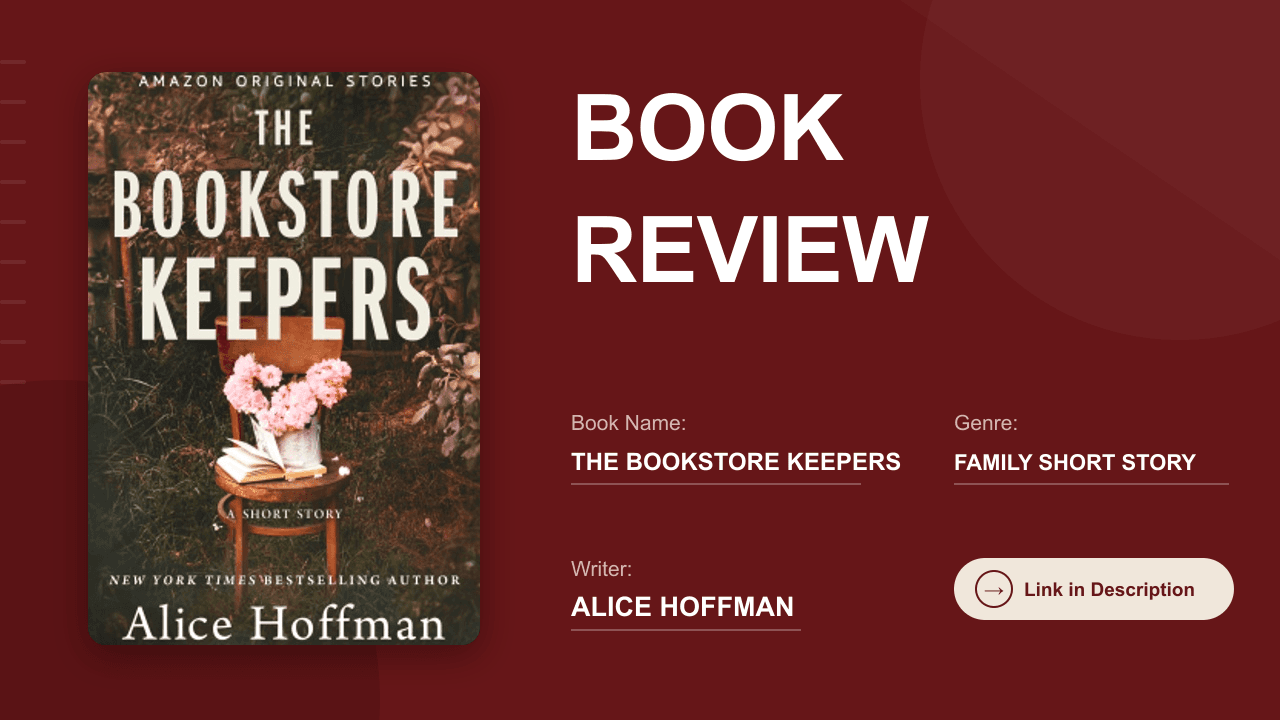
Length is not the same thing as depth, and The Bookstore Keepers is the kind of short story that proves it in the most efficient way possible. In 35 pages, Alice Hoffman fits a death, a premonition, a marriage renegotiating its own future, a niece's coming-of-age departure, and a pregnancy that changes the shape of a family's next decade. Most novels three or four times this length don't cover that much emotional ground, and Hoffman does it without the story ever feeling rushed.
I came to "The Bookstore Keepers" as the third entry in Hoffman's Once Upon a Time Bookshop Stories, an Amazon Original Stories series that's been quietly building out the lives of the Gibson sisters and the people who orbit their family bookstore on Brinkley's Island, Maine. I expected a pleasant, cozy continuation of a story I already liked. What I got was something considerably heavier and more rewarding, a story about grief reshaping desire, told with the kind of restraint that makes its handful of big emotional beats land harder because Hoffman never overexplains them.
In this review, I'll walk through where "The Bookstore Keepers" picks up with Isabel and Johnny Lenox, the dream that opens the story and what it sets in motion, the parallel thread involving Sophie's daughter Violet, and how Hoffman manages to make a story this short feel this complete. I'll also talk about where the format works against the book, because a 35-page story asks something different of its reader than a full novel does, and it's worth knowing that going in.
Overview: What The Bookstore Keepers Is About
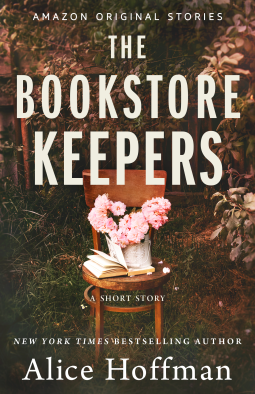
"The Bookstore Keepers" finds sisters Isabel and Sophie Gibson five years into running the family bookstore and bakery they inherited on Brinkley's Island, Maine, the same reconciliation that "The Bookstore Sisters" set in motion after years of estrangement. Isabel and Johnny Lenox, the man she thought she'd left behind when she first ran off to New York, are five years into their own second chance at love. Their life together is settled, stable, the kind of happy ending a shorter story would be content to simply maintain.
Hoffman doesn't let it stay settled. The story opens with Johnny waking from an extraordinary dream, a premonitory vision of his father as an angelic figure, not long before his father actually dies. That dream, and the grief that follows it, sets off something Johnny didn't see coming: at forty-two, having long assumed that chapter of his life was closed, he finds himself wanting to become a father. Isabel has to decide how to meet that want, and how much space to give a man working through loss in a way she can't fully enter alongside him.
A Dream, a Death, and a Man Renegotiating His Own Future
The opening pages do an enormous amount of work in very little space. Hoffman doesn't spend time building up Johnny's father as a character before his death; instead, she uses the premonitory dream itself as the emotional entry point, letting the reader arrive at grief the same way Johnny does, already mid-transformation, already changed by something that happened while he was asleep. It's a structurally efficient choice that also happens to be true to how grief actually works: it rarely waits for a proper introduction.
What makes the middle of the story genuinely affecting is how specifically Hoffman ties Johnny's grief to a very particular, very human response: the sudden, disorienting desire to become a parent himself, arriving at exactly the age and life stage where he'd stopped expecting it. It would have been easy to make this a simple grief-to-joy pipeline, but Hoffman keeps it messier than that. Johnny isn't simply processing loss by chasing new life; he's genuinely unsettled by his own want, and Isabel's task isn't to fix that for him, it's to stand near it while he works out what it means.
Isabel's Side of the Story: Giving Space Without Disappearing
Isabel could easily have been reduced to a supporting role in her own husband's grief arc, but Hoffman keeps her interiority present throughout. The choice to give Johnny room, rather than either pushing him to talk or making his reckoning about her own feelings first, is presented as its own kind of active labor, not passivity. Readers have picked up on this specifically: the story is honest about the fact that no one can grieve for someone else, and that loving a person through that process sometimes means tolerating a version of them you don't fully have access to.
That restraint extends to how the eventual pregnancy is handled at the story's close. It isn't played as a tidy solution to Johnny's grief, wrapped up with a bow; it's positioned as one part of a larger, ongoing negotiation between two people building a next chapter neither of them expected to be writing five years into an already-happy marriage.
Violet's Parallel Story: Choosing Paris Over the Bookstore
Running alongside Isabel and Johnny's story is a quieter, generationally reversed thread involving Sophie's daughter, Violet, who returns from college with news she can't quite bring herself to share directly, and eventually reveals she's planning to leave for Paris rather than step into the future at the bookstore that's been quietly assumed for her. It's a smart structural pairing: while Johnny is discovering an unexpected desire to build a family and inherit a kind of future, Violet is doing the opposite, stepping away from the inheritance that's been waiting for her.
Hoffman doesn't force these two threads into an explicit thematic collision, but the parallel is clearly intentional, and it gives the story's final pages, Isabel's pregnancy landing at the same moment Violet is packing to leave, a sense of cyclical completeness that a lot of much longer novels struggle to earn. Beginnings and endings sitting inside the same family, in the same short window of time, without either canceling the other out.
The Island as a Character, and Hoffman's Gift for Gesture
Brinkley's Island itself remains one of the series' quiet strengths, rendered with enough specificity across three installments now that it functions as more than backdrop. Hoffman's prose throughout is lyrical without tipping into excess, and her real skill here is characterization through gesture rather than explanation: the story trusts small physical details and unspoken beats to carry emotional weight that a lesser writer would spell out in dialogue. That restraint is exactly why a story this short doesn't feel thin. Hoffman isn't compressing a novel's worth of plot into 35 pages; she's selecting the handful of moments that actually matter and trusting the reader to fill in the rest.
Where the Short Format Shows Its Limits
I'd be underselling this review if I didn't acknowledge where the format works against the story. This is the third installment in an ongoing series, and readers coming to it without the first two entries will genuinely struggle to feel grounded in who Isabel, Sophie, and Johnny are before the story asks them to care about a death, a dream, and a pregnancy in quick succession. More than one reader has noted exactly this: the story is short enough that character familiarity from prior installments is doing real load-bearing work, and without it, some of the emotional beats land softer than they should.
The novella length also means a few plot developments arrive with less surprise than they might in a fuller narrative; Johnny's late-in-life desire for fatherhood and Violet's departure both follow fairly recognizable beats, and the compressed page count doesn't leave much room to complicate them further. Minor characters stay thin by necessity, and the middle section, brief as it is, occasionally feels like it's moving through required story beats rather than lingering in them. None of that undoes what the story accomplishes, but it's a fair account of what a 35-page format costs even when it's handled this well.
How The Bookstore Keepers Fits Into the Series
Following "The Bookstore Sisters," which reunited Isabel and Sophie, and "The Bookstore Wedding," which gave Isabel and Johnny their star-crossed second chance, "The Bookstore Keepers" is where the series shifts from establishing happy endings to complicating them, asking what a family does with a happy ending once life keeps happening inside it. It sets up "The Bookstore Family," the fourth installment, by ending on exactly the kind of transitional note, a new baby coming, a daughter leaving, that promises there's more of this family's story left to tell. Readers invested in the series will find this the most emotionally substantial entry so far; readers looking for a standalone introduction to Hoffman's Gibson family should start with book one instead.
About Author Alice Hoffman
Alice Hoffman is a New York Times bestselling author best known for "Practical Magic" and its related novels, and her facility with magical realism, grief, and the emotional undercurrents of ordinary family life is on full display even at this short a length. The Once Upon a Time Bookshop Stories series lets her work in miniature, and "The Bookstore Keepers" shows that her instincts for gesture-driven, lyrical prose translate just as effectively to 35 pages as they do to a full novel.
Critical Reception and Reader Response
"The Bookstore Keepers" holds a 4.00-star average across nearly 18,000 Goodreads ratings, a strong showing for a short-story entry in an ongoing series. Reviewers have consistently praised Hoffman's prose as "gorgeous" and lyrical, with particular admiration for her emotional intelligence and her ability to render Brinkley's Island as a fully lived-in setting even within such a compressed page count.
The criticism that surfaces most consistently is about the format itself rather than the writing: readers new to the series or working from audiobook without much context have noted they didn't fully have a grasp on the characters given how short the story is, and a few reviewers flagged that some plot developments, particularly Johnny's arc, feel somewhat predictable. The general consensus is that the story resonates most strongly with readers who've followed the series from the start, and works best as a continuation rather than an entry point.
Key Takeaways from The Bookstore Keepers
It accomplishes a remarkable amount in very little space. A death, a premonition, a marriage in renegotiation, a departure, and a pregnancy all land within 35 pages without feeling compressed.
Johnny's grief arc avoids easy resolution. His unexpected desire to become a father is treated as genuinely unsettling rather than a tidy response to loss.
Isabel's restraint is its own form of active love. The story is honest that giving someone space through grief is labor, not passivity.
Violet's parallel thread gives the ending real resonance. A pregnancy and a departure landing together create a sense of cyclical completeness the short format earns rather than rushes.
This is a continuation, not an entry point. Readers without the first two Bookshop Stories installments will miss some of the emotional grounding the story assumes.
Conclusion: Is The Bookstore Keepers Worth Reading?
"The Bookstore Keepers" is a genuinely impressive piece of short fiction, proof that Alice Hoffman can compress a novel's worth of grief, desire, and family reckoning into 35 pages without shortchanging any of it. The dream that opens the story, the pregnancy that closes it, and everything Isabel and Johnny work through in between are handled with the kind of restraint and precision that a lot of much longer books never manage, and Violet's quieter parallel story gives the ending a resonance that feels earned rather than convenient.
It asks a little more of its reader than a standalone story would, leaning on two prior installments' worth of established character history, and its brevity means a few of its beats land more predictably than they might with room to breathe. But as a continuation of the Gibson family's story, and as a demonstration of just how much emotional weight a short story can carry when it's written this well, "The Bookstore Keepers" delivers. You can pick up a copy of "The Bookstore Keepers" on Amazon and see just how much Hoffman fits into so little space.