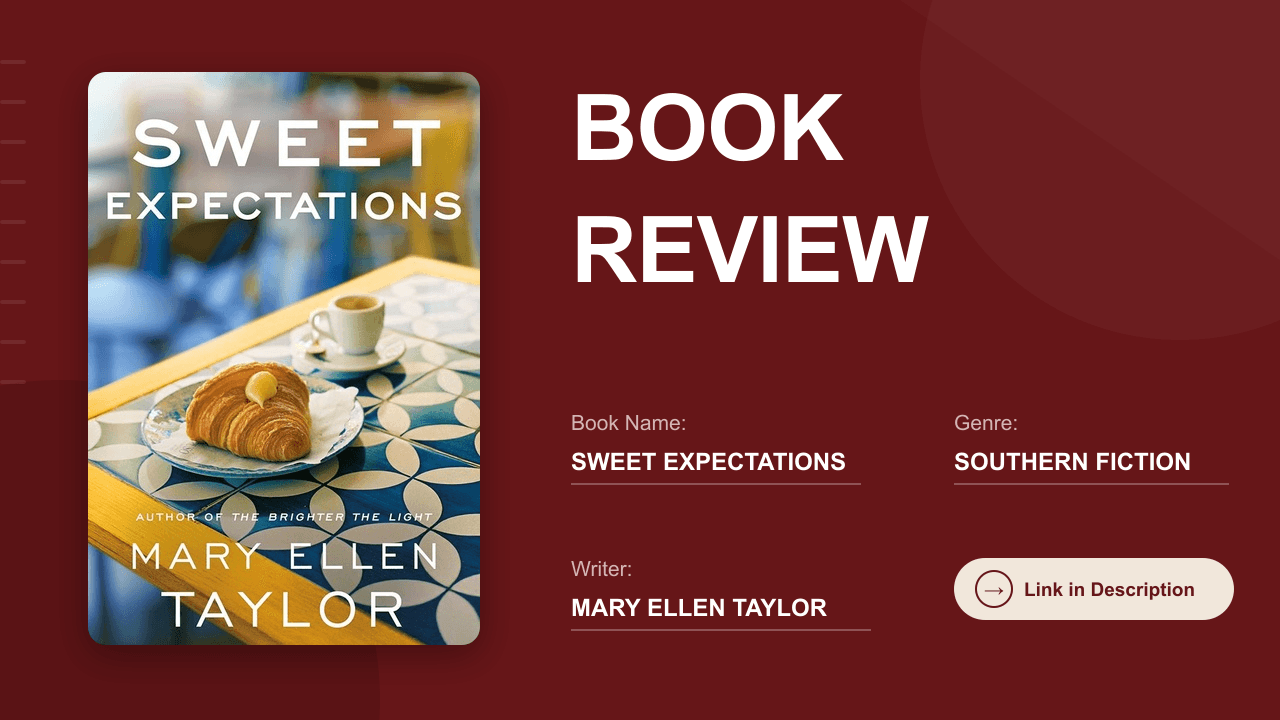
Sweet Expectations Review: Another Wall, Another Ghost, and Taylor's Best Mystery Yet
- Sajjad
- Book Reviews
- 14 Sep, 2026
A sequel's biggest risk is repeating the trick that made the first book work without actually improving on it. Sweet Expectations takes that risk deliberately, another hidden discovery behind a wall of the Union Street Bakery, another ghost with an unresolved history, another dual-timeline mystery tangled up in Daisy McCrae's present, and it mostly succeeds where its predecessor sometimes strained, by giving Daisy a more focused, more personally resonant crisis to carry alongside the historical mystery this time around.
I went into "Sweet Expectations" right after finishing "The Union Street Bakery," curious whether Mary Ellen Taylor could repeat the formula without it feeling like a retread. What I found was a book that takes the same basic structure, present-day family drama plus a supernatural nudge toward a buried historical injustice, and tightens it considerably, largely by making Daisy's own unplanned pregnancy mirror the ghost's story so directly that the two timelines feel genuinely inseparable rather than loosely stitched together.
In this review, I'll walk through the crisis that upends Daisy's fragile new stability, the box of recipes and mementos that surfaces during the bakery's renovations, how Jenna's decades-old story of loss and Daisy's own unexpected pregnancy end up illuminating each other, and where this sequel improves on the debut versus where some of the same rough edges persist. I'll also talk about why this book, more than the first, earns the comparison to Taylor's later, more assured work.
Overview: What Sweet Expectations Is About
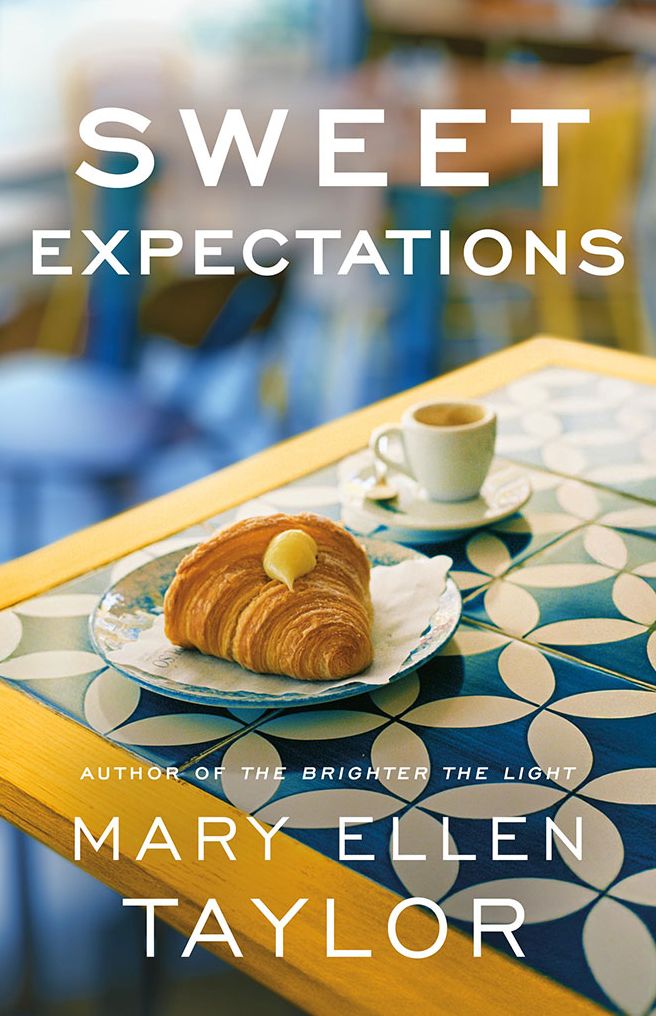
"Sweet Expectations" picks up shortly after "The Union Street Bakery" left off, with Daisy McCrae settling into a version of contentment she hadn't expected to find, running the family bakery, reconciled with her ex-fiancé Gordon, finally feeling more at home in Alexandria than she has in years. That fragile stability shatters fast: Daisy discovers she's four months pregnant, the result of a night of drinking and heartbreak during the year she and Gordon were broken up, which means the child isn't his, and Daisy now has to figure out how to tell him, and herself, what happens next.
The personal chaos collides with a professional one when renovation workers uncover a metal box hidden behind a wall of the bakery, containing recipes, photographs, and mementos belonging to a woman named Jenna, along with a photo marked "Jenna 1944" showing her alongside two soldiers. Daisy starts having recurring dreams of a woman searching desperately for her lost baby, and as she digs into who Jenna actually was, what happened to her fiancé, and what became of the child she lost, the historical mystery starts running in direct, deliberate parallel with Daisy's own unresolved questions about the baby she's now carrying and the family she's trying to build around it.
Daisy's Pregnancy: A Complication With Real Teeth
What elevates "Sweet Expectations" above a simple retread of its predecessor is how much sharper and more specific Daisy's central crisis is this time. Her pregnancy isn't a plot device dropped in for stakes; it's a genuinely complicated situation with no clean resolution available, a child conceived during a period of real heartbreak, a father who isn't the man she's rebuilding her life with, and a looming conversation with Gordon that the book doesn't rush or simplify. Taylor lets Daisy sit with real uncertainty about what family means when biology and choice pull in different directions, and that uncertainty gives the book an emotional urgency the first novel's more diffuse identity crisis didn't always sustain.
It also ties directly back into Daisy's own history as an adopted child, abandoned at the bakery as a toddler and raised by a family that chose her rather than one she was born into. Taylor uses that history well here: Daisy's pregnancy forces her to reckon with the flip side of her own adoption story, what it means to be the parent making an impossible choice rather than the child living with its consequences, and that thematic doubling gives "Sweet Expectations" a coherence the debut sometimes lacked when it was juggling too many simultaneous threads.
Jenna's Story: A Ghost Whose Grief Mirrors Daisy's Fear
Jenna's 1944 storyline benefits enormously from being paired so directly with Daisy's present-day pregnancy rather than existing as a separate historical puzzle running alongside a loosely related contemporary plot. Jenna's grief over her lost fiancé and the baby who died at birth isn't just a mystery for Daisy to solve, it's a mirror for exactly what Daisy is afraid of: losing a chance at motherhood, losing the people she loves to circumstances she can't control, building a family under conditions the world didn't make easy for her. That parallel gives the ghost story real emotional purpose rather than functioning as supernatural decoration on top of a contemporary plot.
The mystery itself, tracing Jenna's connection to the two soldiers in her photograph and untangling what actually happened to her and her son, unfolds with more clarity and momentum than the journal mystery in the first book managed, likely because it has a single, well-defined emotional throughline (a lost child, a lost love) rather than trying to carry the weight of a larger historical injustice on top of Daisy's identity crisis.
Rachel, Jean Paul, and a Supporting Cast With More to Do
Daisy's sister Rachel gets real development this time around, transitioning from widow to a woman building independence on her own terms, and that arc runs alongside Daisy's pregnancy crisis without competing for the same emotional space, giving the book's supporting cast more to actually do than the first novel's somewhat thinner treatment of Rachel and Margaret allowed. The introduction of Jean Paul, a French baker brought in to help with the bakery's renovations, adds a fresh professional dynamic to the shop itself, and the ongoing renovation subplot doubles nicely as the literal mechanism that keeps unearthing the past, walls coming down, secrets coming out, without feeling like a contrived excuse for discovery.
Where the Sequel Still Shows Some Rough Edges
I'd be underselling this review if I didn't note that "Sweet Expectations" hasn't entirely shaken the debut's weaknesses. Some readers have pushed back on the supernatural elements specifically, feeling that Jenna's ghostly presence and Daisy's dream sequences function as a bit of a narrative crutch, information delivered through vision rather than earned through investigation, and that criticism is fair even where I found the ghost's story better integrated than the first book's. There are also continued reports of editing inconsistencies, including timeline errors, the same kind of rough-edges issue that dogged the debut, suggesting these are inherited quirks of the original manuscript that the 2025 reissue hasn't fully smoothed out.
A handful of readers who loved "The Union Street Bakery" found this sequel comparatively slower, particularly in stretches where the renovation subplot and the historical mystery move at different speeds. That's a fair complaint in the book's middle section, though I'd argue the emotional payoff by the end, Daisy's reckoning with her pregnancy landing in direct conversation with Jenna's resolution, justifies the patience it asks for.
Why This Is Taylor's Strongest Mystery in the Series So Far
The title of this review isn't hyperbole. What makes "Sweet Expectations" work better as a mystery specifically is focus. Where "The Union Street Bakery" split its attention across Daisy's belonging crisis, Gordon's return, the bakery's finances, and Susie's much larger historical injustice, "Sweet Expectations" narrows its historical thread to a single, emotionally direct question, what happened to Jenna's fiancé and her son, and lets that question run in lockstep with Daisy's own present-day fears about motherhood and loss. That tighter thematic alignment between timelines is exactly the kind of structural discipline the debut occasionally lacked, and it's the clearest sign of a writer getting more confident with the dual-timeline format she'd go on to use even more assuredly in later books like "At the Corner of King Street."
Mary Ellen Taylor's Growth as a Storyteller
Taylor's sense of place remains a consistent strength across both books, and the Union Street Bakery itself continues to function as a genuine emotional anchor rather than just a setting. What's different here is a more confident hand guiding the mystery structure specifically; the Jenna storyline resolves with a clarity and emotional payoff that feels more earned than some of the looser threads in the debut, evidence that Taylor was already sharpening the instincts that would define her more polished later work.
About Author Mary Ellen Taylor
Mary Ellen Taylor is an Amazon Charts bestselling author known for dual-timeline women's fiction set in Virginia and the Outer Banks of North Carolina, and "Sweet Expectations," originally published in 2013 and reissued in this revised 2025 edition, represents a clear step forward from her debut within the same series. Readers who enjoyed the more polished, historically weighty dual-timeline structure of her later novel "At the Corner of King Street" will recognize the groundwork for that approach already taking shape here.
Critical Reception and Reader Response
"Sweet Expectations" holds a strong 4.30-star average across more than 9,500 Goodreads ratings and over 435 written reviews, a reception that edges out the first book's numbers and reflects a genuinely well-loved sequel. Readers have praised the continuation of Daisy's "quirky and snippy" character, the way the whole McCrae family "holds together" across both books, and the effective blend of romance, history, and mystery that defines the series' appeal.
The criticism that surfaces most consistently centers on the supernatural elements, several readers wished the story could "stand strong without the paranormal crutch," and some flagged continued editing inconsistencies, including timeline errors carried over from the original edition. A handful of reviewers felt the pacing was slower than the first book's, though the general consensus treats this as a satisfying continuation best read as, in one reviewer's words, "visiting old friends."
Key Takeaways from Sweet Expectations
Daisy's pregnancy crisis has real emotional teeth. A complicated, unresolved situation gives the book stakes the first novel's more diffuse identity crisis didn't always sustain.
Jenna's story and Daisy's fears mirror each other directly. The ghost mystery functions as genuine emotional counterpoint rather than a separate historical puzzle bolted onto the plot.
Rachel and Jean Paul round out a stronger supporting cast. The sequel gives its secondary characters more defined arcs than the debut managed.
The mystery is tighter and more focused than book one's. A single, well-defined emotional question replaces the first book's more scattered simultaneous storylines.
Some rough edges persist. Supernatural elements still draw fair criticism, and timeline inconsistencies from the original manuscript remain in this reissue.
Conclusion: Is Sweet Expectations Worth Reading?
"Sweet Expectations" is a genuine step forward for the Union Street Bakery series, taking the same dual-timeline, ghost-assisted mystery structure that defined the debut and tightening it considerably by giving Daisy's present-day crisis and Jenna's decades-old story a direct, resonant emotional connection. Daisy's pregnancy gives the book real stakes, Rachel and Jean Paul add welcome texture to the supporting cast, and Jenna's mystery resolves with more clarity and payoff than the journal mystery in book one managed.
It hasn't entirely shed the series' rough edges, the supernatural elements still draw fair skepticism, and some editing inconsistencies remain uncorrected even in this 2025 reissue. But as a sequel that genuinely improves on its predecessor's mystery mechanics while deepening its emotional core, "Sweet Expectations" earns its place as the strongest entry in the series so far. You can pick up a copy of "Sweet Expectations" on Amazon and see whether Daisy, and Jenna, both find the resolution they're looking for.