Small Things Review: You'll See It Coming, and the Ending Still Lands
- Sajjad
- Book Reviews
- 14 Sep, 2026
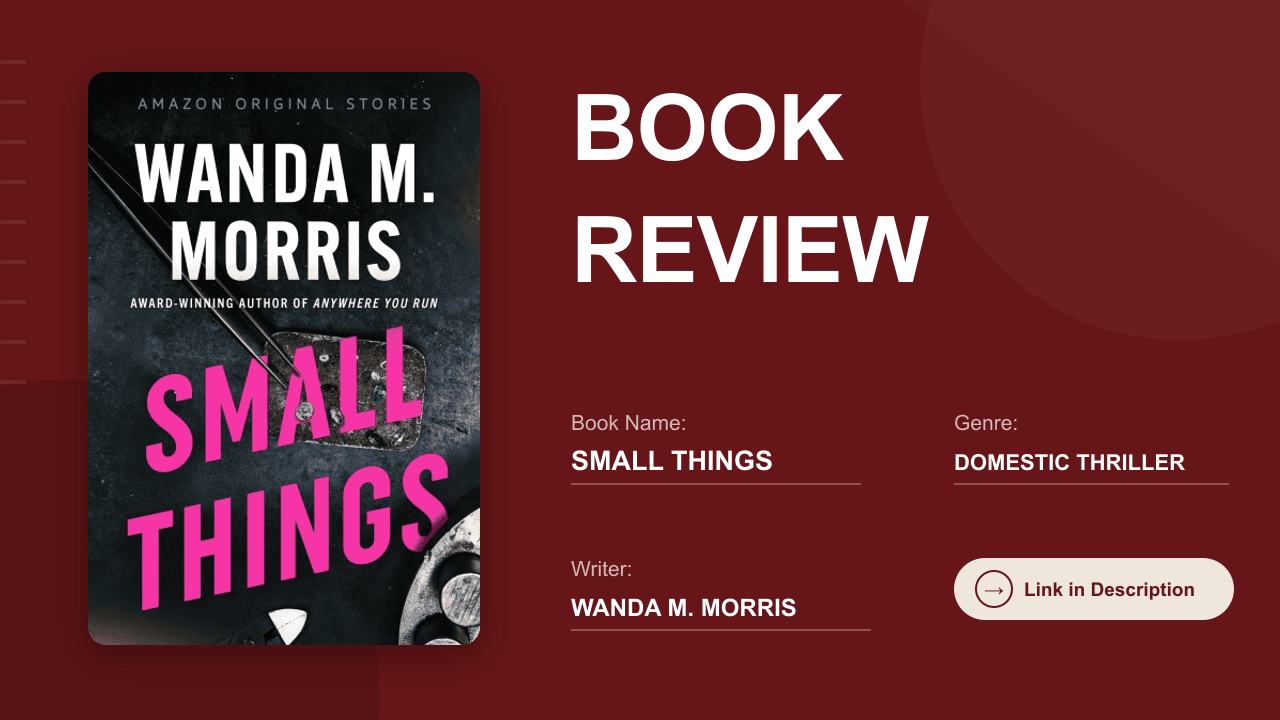
Some short stories work precisely because they don't try to hide the ball. Small Things tells you, more or less, where it's headed within its first few pages, an abusive husband, a wife pushed to a breaking point, and it doesn't waste any of its short runtime pretending otherwise. What Wanda M. Morris is actually interested in isn't surprising you about what happens, it's making you feel every reason why it happens, and by the time the story reaches its close, that patient, deliberate build pays off exactly the way it's supposed to.
I came to "Small Things" as part of the Alibis collection, Amazon's anthology of standalone stories about lies, deception, and the small moral compromises that snowball into something much larger, and Morris's entry is one of the collection's more quietly devastating pieces. It's not trying to be a twisty thriller. It's trying to earn a foregone conclusion through sheer emotional precision, and for a story this short, that's a genuinely difficult thing to pull off.
In this review, I'll walk through Hannah Ferguson's life with her husband Rusty and the shed that's become her only real refuge, how Morris builds the case for what Hannah eventually does without ever losing sympathy for her, why the story's predictability is a feature rather than a flaw, and where a 30-page format necessarily limits how much room the story has to breathe. I'll also talk about how "Small Things" fits into the broader Alibis collection, since this is one entry in a six-story anthology rather than a standalone release.
Overview: What Small Things Is About
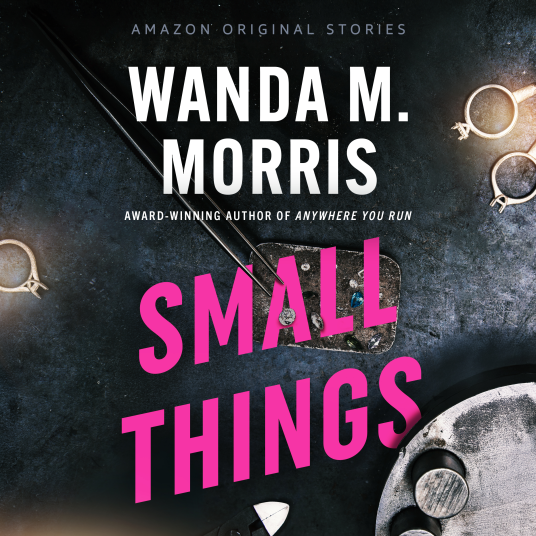
"Small Things" follows Hannah Ferguson, a woman whose marriage to Rusty looks, from the outside, like a good life. No one around them knows the emotional nightmare Hannah actually endures behind closed doors, the control, the diminishment, the slow erosion of anything that belongs to her alone. Her one genuine escape is the jewelry she crafts in the shed behind their house, a small, self-contained space where she gets to be someone other than Rusty's wife. When Rusty threatens to take even that away from her, along with the other small things that bring her any joy at all, Hannah reaches a breaking point and begins planning something with real, permanent consequences, a plan built specifically around leaving no trace behind.
The story is compact by design, a single-sitting read that doesn't waste time on subplots or extended world-building. Everything in it serves the central question of what happens when someone who has had every source of autonomy slowly stripped away finally decides she has nothing left to lose.
Hannah Ferguson: A Portrait of Control, Not Just Abuse
What makes "Small Things" work as well as it does in such a short space is how specifically Morris renders the mechanics of Hannah's marriage rather than relying on abuse as a vague, generic backdrop. Rusty's control isn't rendered as one big, dramatic act of cruelty; it's built from accumulated small deprivations, financial restriction, isolation, the steady chipping away at anything Hannah might call hers, including, eventually, the shed itself. That specificity matters. It's the difference between a story that tells you a marriage is abusive and one that actually shows you, in granular, believable detail, what that control looks like day to day.
The jewelry-making itself is a smart, tactile choice for what Hannah's freedom actually consists of. It's not a dramatic escape, no secret second life or affair, just a small, physical act of making something with her own hands in a space that's briefly, entirely her own. That modesty is the point. The story's title comes directly from this idea, that small things can be strong things too, and Hannah's arc is essentially about what happens when even the smallest, most modest form of autonomy becomes worth fighting to protect.
Why the Predictability Works in the Story's Favor
Here's where this review earns its title. Readers going into "Small Things" will likely see the broad shape of where it's heading well before Morris gets there, an abused wife, a controlling husband, a plan with serious consequences. That's not really a spoiler so much as the premise itself, stated plainly in the story's official description. What's genuinely impressive is how little that predictability costs the story emotionally. Morris isn't trying to surprise you with what happens, she's trying to make the inevitability of it feel earned, and by the time Hannah's plan comes together, the story has done enough careful work establishing exactly how she got there that the ending lands with real weight rather than feeling like a foregone conclusion checked off a list.
That's a genuinely difficult needle to thread in 30 pages. A lot of short fiction built around an inevitable outcome either rushes the buildup to get to the payoff faster, or drags out the reveal past the point where the reader's patience holds. Morris does neither. The pacing stays tight enough that the predictability never curdles into boredom, and the emotional beats land with enough specificity that even a reader who's correctly guessed the ending finds it satisfying rather than merely expected.
A Story That Earns Its Content Warnings
It's worth being upfront that "Small Things" isn't a light read despite its brevity. The story handles spousal abuse, gaslighting, body-shaming, infidelity, and infertility directly and without softening any of it, and Morris doesn't use the short format as an excuse to treat these themes superficially. That density of difficult material in such a compact space is part of what gives the story its weight, but it's also worth knowing going in if you're sensitive to depictions of domestic abuse specifically.
What keeps the story from becoming simply grim is the clarity of its emotional logic. Hannah's eventual decision doesn't read as a leap; it reads as the only remaining option for a woman who has had every other form of agency systematically removed from her, and that careful, patient buildup is what makes the ending feel less like a shock and more like an exhale.
Where the Short Format Shows Its Limits
I'd be underselling this review if I didn't acknowledge what a 30-page format necessarily sacrifices. Rusty himself stays fairly thin as a character, defined almost entirely by his control over Hannah rather than by any deeper interiority, which is a defensible choice for a story this focused on Hannah's perspective, but it does mean the marriage itself is rendered somewhat one-dimensionally from his side. Readers looking for a fuller psychological portrait of an abusive dynamic, rather than a tightly focused character study of the person trying to escape it, may find the format limiting.
The compressed length also means side characters and the wider world around Hannah and Rusty get essentially no development at all; this is a story about exactly two people and the shed between them, and it doesn't pretend to be anything more expansive than that. For readers who prefer their domestic suspense in a genre they're already inclined toward, that focus works well. For readers whose taste runs elsewhere, the format may feel like it doesn't have room to fully justify its darker material.
Wanda M. Morris's Craft: Precision Over Surprise
None of that undercuts what Morris does well here, which is write with genuine precision inside a tight word count. Every scene in "Small Things" is doing real work, and there's very little wasted motion in how the story builds its case for Hannah's eventual choice. Morris, an award-winning author known for "Anywhere You Run" and "All Her Little Secrets," brings the same interest in moral complexity and the specific pressures placed on women navigating dangerous domestic situations that's defined her longer fiction, condensed here into a format that demands total efficiency.
The prose stays controlled and unshowy throughout, letting the accumulated weight of Hannah's circumstances do the emotional heavy lifting rather than relying on stylistic flourish. That restraint is exactly what a story this short needs to actually land its ending, and it's the clearest evidence of a writer comfortable working at a scale very different from her novels.
How Small Things Fits Into the Alibis Collection
"Small Things" is one of six stories in the Alibis collection, an Amazon Original Stories anthology built around themes of lies, truth, and deception, featuring authors including Freida McFadden, Sally Hepworth, Chris Bohjalian, and Chad Zunker alongside Morris. The six stories don't need to be read in any particular order, and Morris's entry stands comfortably on its own within that lineup, contributing a more grounded, domestic-suspense register to a collection otherwise ranging across different flavors of psychological deception. Readers who enjoy "Small Things" specifically for its focus on coercive control and a woman's quiet reclamation of agency will find it a strong entry point into the broader collection, even without reading the other five stories first.
About Author Wanda M. Morris
Wanda M. Morris is an award-winning author best known for her novels "Anywhere You Run" and "All Her Little Secrets," both of which established her as a writer with a sustained interest in the specific pressures and moral compromises facing women navigating dangerous or unjust circumstances. "Small Things," published as part of the Alibis collection in June 2025, shows that same sensibility working effectively at a much smaller scale, proof that her command of tension and character doesn't require a full novel's worth of space to land.
Critical Reception and Reader Response
"Small Things" holds a 3.64-star average rating, a solid if unspectacular showing typical of anthology entries that draw a smaller readership than full-length novels. One reviewer covering the full Alibis collection, working outside their usual preferred genre, specifically singled out the ending as "the best part of this short story" and called it "very satisfying indeed," despite domestic drama not being their typical read, a notable endorsement given the reviewer's own acknowledged bias against the genre going in.
The broader response has focused less on surprise and more on execution: readers consistently note that the story's outcome is telegraphed early, but that the quality of the writing and the emotional groundwork Morris lays make the predictable ending feel earned rather than anticlimactic. The story's handling of its heavier themes, abuse, gaslighting, infertility, has also been flagged as genuinely affecting, if intense for a story this short.
Key Takeaways from Small Things
The predictability is deliberate, not a flaw. Morris isn't trying to surprise you with the outcome, she's trying to make that outcome feel inevitable and earned.
Hannah's shed is a smart, modest symbol. Her freedom isn't dramatic or secretive, it's small and physical, which makes Rusty's threat to take it away land with real weight.
Rusty stays thin by design. The story's tight focus on Hannah means his character gets little interiority beyond his control over her.
The content is genuinely heavy for 30 pages. Abuse, gaslighting, body-shaming, and infertility are all handled directly, without softening.
The ending is the story's clear high point. Even readers outside the genre have singled it out as the most satisfying part of the collection.
Conclusion: Is Small Things Worth Reading?
"Small Things" is a tightly controlled, emotionally precise piece of short fiction that gets more out of its predictable premise than you'd expect. Wanda M. Morris isn't interested in surprising you about where Hannah Ferguson's story is headed, she's interested in making sure that when it gets there, you understand exactly why, and feel the full weight of everything that led up to it. The shed, the jewelry, the small, modest scale of Hannah's freedom, all of it builds toward an ending that multiple readers, including some outside the genre's usual audience, have called the story's clear high point.
It doesn't have room to fully develop Rusty beyond his function as a controlling presence, and the format's brevity means the darker themes it handles arrive without much cushioning. But as a compact character study about reclaiming agency after it's been stripped away one small thing at a time, "Small Things" delivers a genuinely satisfying ending, exactly the kind you'll see coming and still feel land. You can pick up a copy of "Small Things" on Amazon and decide for yourself whether Hannah's plan pays off as cleanly as it did for most of its readers.