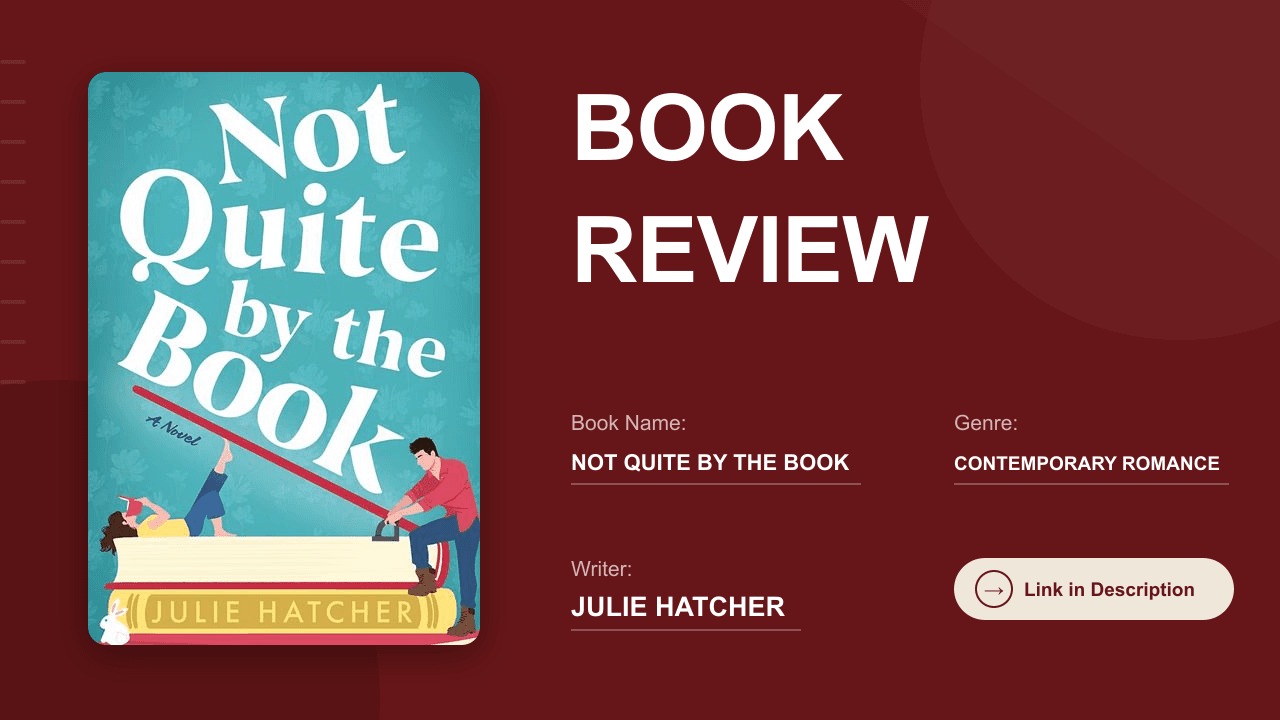
Not Quite by the Book Review: A Romance That Lets Its Heroine Want Something Other Than Love
- Sajjad
- Book Reviews
- 14 Sep, 2026
Most romance heroines swear off love and mean it for about a chapter and a half. Emma Rini, the burned-out bookstore manager at the center of Not Quite by the Book, swears off love because she's actually trying to figure out what she wants when nobody else is in the room, and Julie Hatcher takes that distinction seriously enough to build an entire novel around it. This isn't a book about a woman waiting to be swept off her feet. It's a book about a woman who has spent so long managing everyone else's needs that she genuinely doesn't know her own, and the romance, when it finally shows up, has to earn its place against that.
I went into "Not Quite by the Book" expecting a cozy, bookish rom-com with an Emily Dickinson theme bolted on for flavor, the kind of premise that's charming on a back cover and thin in practice. What I got was a genuinely well-observed story about a people-pleaser trying to reclaim six weeks of her own life, complicated by a grumpy architect, a family crisis she can't fully outrun, and a mystery admirer whose flowers keep showing up whether Emma wants the distraction or not.
In this review, I'll walk through Emma's decision to hole up in Hearthstone Manor and channel her literary idol, how her prickly dynamic with renovator Davis Sommers develops into something neither of them planned, the family pressure that keeps pulling her back toward the life she's trying to step away from, and where the book's handling of its central mystery and its sister subplot works better than others. I'll also talk honestly about where the book stumbles, because a story this interested in getting its heroine's interior life right deserves an honest look at where the execution doesn't quite keep up with the ambition.
Overview: What Not Quite by the Book Is About
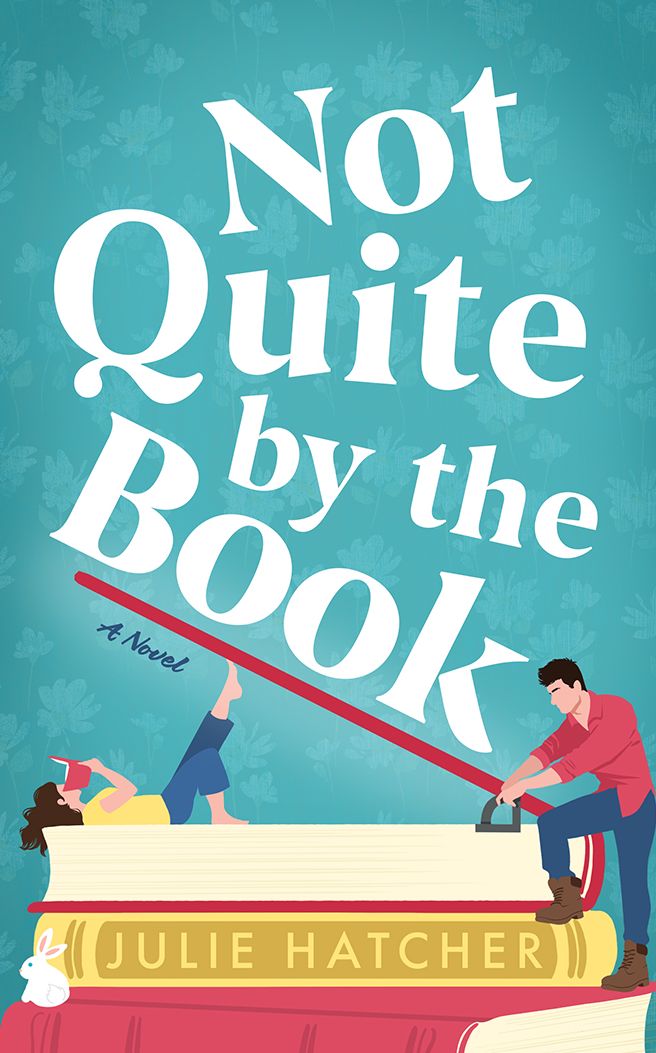
"Not Quite by the Book" follows thirty-one-year-old Emma Rini, a bookstore manager who has quietly organized her entire adult life around what other people need from her. When the chance arises to rent Hearthstone Manor, a crumbling eighteenth-century house outside Amherst, Massachusetts, Emma takes it as a sign: six weeks alone, channeling her inner reclusive poet in the spirit of Emily Dickinson, giving up on romance entirely, and finally figuring out who she is when she isn't managing anyone else's expectations.
The universe has other plans almost immediately. The manor won't hold a fire. The garden is under siege from rabbits. And Davis Sommers, the architect hired to handle the house's renovations, turns out to be exactly the kind of grumpy, competent, irritatingly attractive presence Emma didn't plan for and can't easily ignore. On top of all that, mysterious floral messages start arriving from an anonymous admirer, forcing Emma to reckon with the fact that solitude, however deliberately chosen, isn't actually protecting her from the very things she came here to avoid.
Emma Rini: A Heroine Whose Real Problem Isn't Being Single
What sets "Not Quite by the Book" apart from a lot of contemporary romance is how clearly Hatcher identifies Emma's actual problem, and it isn't a lack of romantic prospects. Emma is a people-pleaser who has spent years deferring to her family, her job, and everyone else's version of what her life should look like, and the six weeks at Hearthstone Manor are framed explicitly as an attempt to break that pattern rather than to find a man. The decision to give up on love isn't a wound to be healed by the right partner, it's a symptom of a much bigger habit of self-neglect that the book is actually interested in examining.
That distinction matters because it changes what the romance is doing structurally. Davis isn't positioned as the solution to Emma's loneliness, he's more like a test case, someone who forces her to practice wanting something for herself in real time, in a context where she isn't allowed to fall back into her usual pattern of accommodating everyone else first. It's a smarter foundation than the genre usually bothers building, and it's the main reason the book earns the framing in this review's title.
Davis Sommers and the Grumpy-Hot Architect Done Well
Davis himself is the classic grumpy counterpart to Emma's overextended people-pleaser, but Hatcher gives him a specific, grounded passion, historic preservation, that keeps him from reading as a generic brooding love interest. His friction with Emma isn't manufactured irritation for its own sake; it comes from two people who both care, in very different ways, about what Hearthstone Manor should become, and that shared investment in the house gives their early scrambling, sparring dynamic somewhere real to go.
The chemistry between them builds through actual collaboration rather than just proximity, arguments over renovation choices, reluctant teamwork against the rabbit-besieged garden, the accumulated small moments of a house slowly getting fixed by two people who keep circling the same conclusion about each other from different directions. It's a slow burn in the most literal sense, and while the tropes underneath it are familiar, the specificity of Davis's preservationist streak and Emma's growing investment in the manor keep it from feeling generic.
The Manor, the Admirer, and the Weight of Emily Dickinson
Hearthstone Manor functions as close to a character as the book's supporting cast, and the Dickinson framing does real work rather than sitting on the premise as decoration. Emma's plan to embrace reclusiveness in Dickinson's spirit is immediately, comically undercut by everything that keeps intruding on her solitude, and that tension, between the myth of the isolated genius and the reality of a woman who actually thrives on connection, is one of the book's better running threads. The literary references land as organic parts of Emma's internal voice rather than forced trivia.
The mysterious floral messages from an anonymous admirer add a light mystery element that runs alongside the main romance, though this is also where the book shows its most predictable seams. Readers consistently guess the admirer's identity well before the reveal, and the resolution, when it comes, doesn't carry much surprise. It works fine as a device for keeping Emma off balance and forcing her to confront what she actually wants versus what she's decided she should want, but it's not doing much heavy lifting as a genuine mystery.
Family Pressure and the Sister Subplot
Running underneath the manor romance is Emma's relationship with her family, particularly her sister Annie, whose pregnancy complications introduce real emotional stakes into a story that could otherwise stay fairly light. Annie's preeclampsia subplot gives Emma's six weeks of self-discovery genuine consequence: she can't fully disappear from her family's orbit even when she's trying to, and the pull back toward caretaking mode, the exact pattern she came to the manor to break, is one of the more honest threads in the book.
It's also where the tonal balance gets shakiest. The shift into Annie's medical crisis arrives abruptly relative to the lighter, wittier register the book maintains for most of its length, and a few readers have found the tonal whiplash jarring rather than additive. I felt that shift too, though I'd argue it's doing something purposeful: it's the moment the book most directly tests whether Emma has actually changed or is just play-acting at independence for six weeks in a borrowed house. The execution is uneven, but the intent behind it is sound.
Where the Book Strains
I'd be underselling this review if I didn't flag the book's weaker spots plainly. The middle section dwells a little too long on Emma's domestic misadventures at the manor, the fires that won't start, the rabbits, the general slapstick of a woman unequipped for rural self-sufficiency, and while some of that is genuinely funny, it slows the plot's momentum more than it needs to. The supporting cast beyond Annie, including Emma's small-town circle of Grace Forsythe, Cecily, and Olivia Love, provides warmth but stays fairly thin, more atmosphere than fully realized people.
There's also a fair criticism worth naming directly: some readers have pushed back on how the book handles Emily Dickinson's own biography, specifically flagging a lack of acknowledgment of the historical scholarship around Dickinson's likely queerness, given how heavily the novel leans on her as inspiration and framing device. For a book this steeped in Dickinson's life and work, that's a real gap, and readers who care about that context going in should know it's a point of legitimate frustration for part of the audience.
Julie Hatcher's Voice and Craft
None of that undercuts what Hatcher does well here, which is write genuinely sharp, funny, character-driven dialogue and give Emma a first-person voice that reveals her contradictions honestly rather than tidily. Hatcher, a prolific, award-winning author who's published more than fifty novels across genres and pen names, brings real craft to balancing humor against the story's more substantial emotional material, and the prose avoids leaning on convenient romance shortcuts even when the plot occasionally does.
The book's real achievement is thematic rather than structural: its insistence that meaningful connection, not isolation, is what Emma has actually been missing, delivered without undercutting her original instinct to want something for herself first. That's a harder balance to strike than it sounds, and Hatcher mostly pulls it off.
How Not Quite by the Book Compares to Its Genre Peers
Readers who enjoy Emily Henry's or Katherine Center's brand of character-first contemporary romance will find familiar territory here: a heroine whose internal arc matters as much as her romantic one, a setting doing real emotional work, and a love interest who complements rather than completes her. "Not Quite by the Book" leans harder into its literary framing than most comparable titles, and its willingness to let Emma's central conflict be about reclaiming her own identity, rather than simply finding the right man, puts it closer to the genre's more introspective end than its purely escapist one.
About Author Julie Hatcher
Julie Hatcher is an award-winning, bestselling author who has published more than fifty novels since her 2013 debut, writing across mystery, romantic suspense, and contemporary romance, including work under the pen name Julie Anne Lindsey. Her accolades include the 2020 National Readers' Choice Award for Romance Adventure and the 2019 Daphne du Maurier Award for Mystery/Suspense, and that range shows in how confidently "Not Quite by the Book" balances its lighter comic beats against real emotional substance.
Critical Reception and Reader Response
"Not Quite by the Book" holds a 3.80-star average across more than 21,000 Goodreads ratings and over 1,600 written reviews, a solid, well-liked reception for a contemporary romance. Readers have praised Emma's character growth, the immersive bookish setting, and the way the novel captures, as one reviewer put it, "how sometimes you need to abandon the quest for love to find your true passion."
The criticism that surfaces most consistently centers on the romance's predictability, several readers pointed to excessive miscommunication tropes and a secret-admirer mystery that resolves without much surprise. Others flagged the "gay erasure" issue around the book's treatment of Dickinson's biography, and a smaller group found the premise of a working professional taking six weeks off on short notice hard to buy into. None of that has stopped the book from developing a genuinely warm following among readers who describe it as comforting and hopeful rather than groundbreaking.
Key Takeaways from Not Quite by the Book
Emma's real arc isn't about finding love. The book is more interested in a people-pleaser learning to want things for herself, which gives the eventual romance more weight than it would have on its own.
Davis Sommers earns his grumpy-hot archetype. His preservationist passion gives his friction with Emma a specific, grounded source rather than generic broodiness.
The manor and the Dickinson framing do real thematic work. Emma's failed attempt at chosen isolation is one of the book's sharpest running ideas.
The mystery admirer subplot is the weakest link. It's predictable well before the reveal and functions more as a light device than a genuine surprise.
The sister subplot adds real stakes, unevenly. Annie's pregnancy complications give the story consequence, though the tonal shift into that material lands abruptly.
Conclusion: Is Not Quite by the Book Worth Reading?
"Not Quite by the Book" is a genuinely thoughtful contemporary romance that trusts its heroine to want something other than love, and lets that want drive the story instead of treating it as a problem to be corrected by the right man. Emma Rini's slow, funny, occasionally messy attempt to reclaim six weeks of her own life is the book's real spine, and Davis Sommers, the manor, and even the too-predictable secret admirer all end up in service of that larger question rather than distractions from it.
It has real soft spots: a slow middle section, a mystery subplot that doesn't hold much tension, and a legitimate blind spot in how it handles the historical figure it leans on so heavily. But if you're looking for a books-about-books romance with more on its mind than a meet-cute, one that takes its heroine's need for self-definition as seriously as her eventual romance, "Not Quite by the Book" delivers that with real warmth. You can pick up a copy of "Not Quite by the Book" on Amazon and see whether Emma's six weeks at Hearthstone Manor convince you the same way they convinced her.