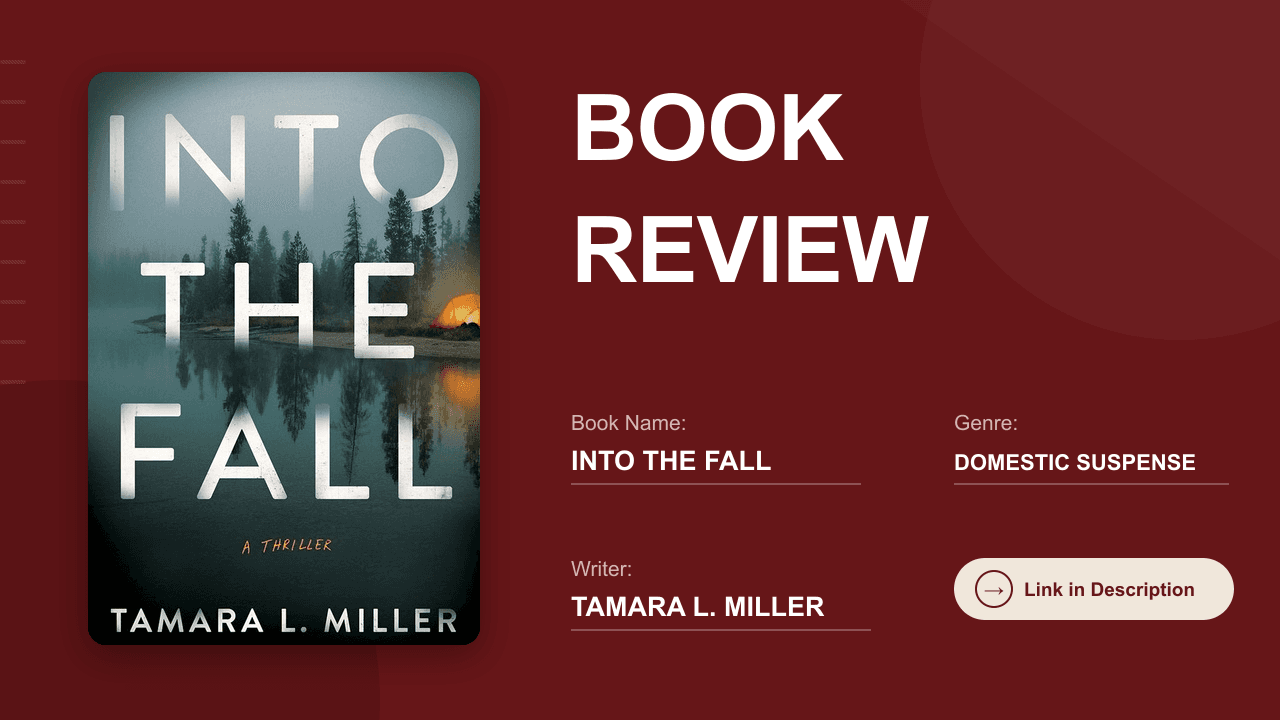
Into the Fall Review: A Missing-Husband Thriller Where the Marriage Is the Real Mystery
- Sajjad
- Book Reviews
- 14 Sep, 2026
The best missing-person thrillers eventually admit that the disappearance was never really the point. Into the Fall gets there faster than most, and it's a smarter book for it. Tamara L. Miller's debut opens like a survival story, a husband gone from a tent in the Canadian wilderness, a storm closing in, but by the time Sarah Anderson is a year into searching for him, the book has quietly become something else: an excavation of a marriage she's only now realizing she never fully understood.
I went into "Into the Fall" expecting a fairly conventional vanishing-husband thriller, wilderness peril up front, procedural mystery to follow. What I got instead was a dual-timeline character study that uses the disappearance as a structural hook to pull the reader back into Sarah's marriage, chapter by chapter, until the actual question of the book stops being "where did Matthew go" and becomes "who was I married to."
In this review, I'll walk through the camping trip that opens the novel and the storm that strands Sarah in the wilderness, how the book's dual timelines build toward the discovery that upends everything Sarah thought she knew about her husband, the sister relationship that gives Sarah her emotional ballast, and where Miller's ambitious structure pays off versus where the pacing and procedural elements strain. I'll also talk honestly about the ending, because it's the single most divisive element of this book among the readers who've already finished it.
Overview: What Into the Fall Is About
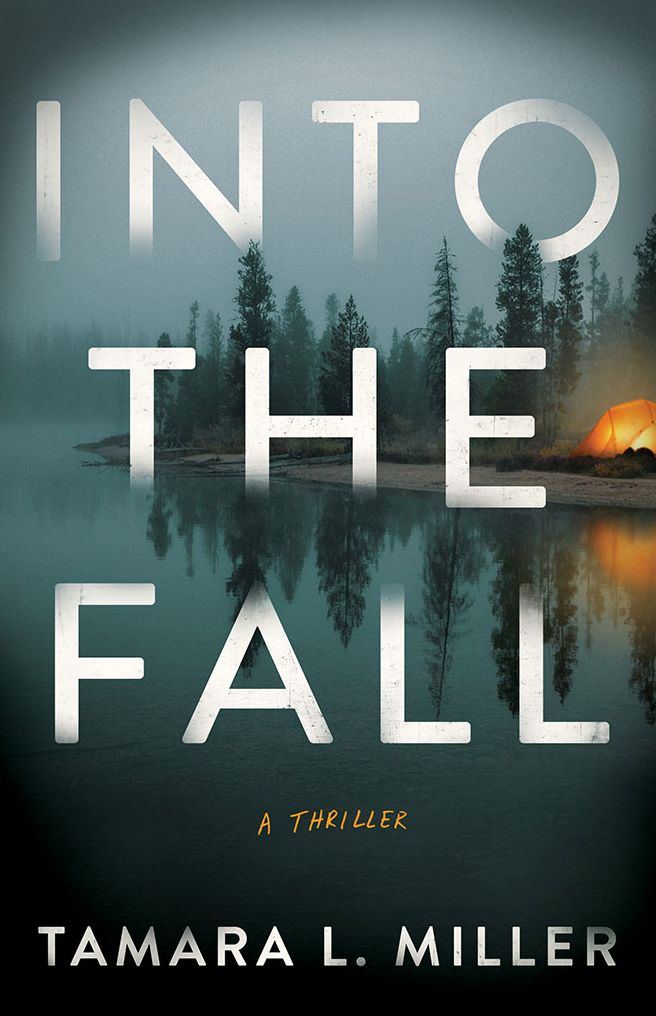
"Into the Fall" introduces Sarah Anderson as a woman whose life looks, from the outside, entirely in order: a thriving career, a comfortable home in Ottawa, two young children, and a husband, Matthew, who's brought the family out to Nagadon Lake in the Canadian Shield for a getaway. What Sarah doesn't say out loud, at least not yet, is that the marriage underneath all of it has been quietly coming apart for a while. Then Matthew vanishes from their tent overnight, and as a storm rolls in and Sarah finds herself lost in the wilderness searching for him, the family vacation becomes something much more dangerous, and much more permanent.
The search for Matthew doesn't resolve quickly. Miller stretches it across a full year, following Sarah as she works with a rural lawman sympathetic to her situation, fends off the mounting suspicion of a slick city police officer who isn't convinced she's telling the whole story, and reconnects with her estranged sister, Izzy, for support she badly needs. Along the way, told through alternating timelines that move between the search itself and the slow reveal of what was actually happening inside the marriage before Matthew disappeared, Sarah starts uncovering truths about her husband that reframe everything she thought she understood about the life they'd built together.
A Storm, a Missing Husband, and a Wilderness That Won't Let Go
The opening stretch of "Into the Fall" is where Miller's descriptive instincts are strongest. The Canadian Shield setting, with its granite slabs, brooding forests, and treacherous lakes, does more than provide scenery; it's genuinely dangerous in its own right, and Sarah's disorientation during the storm that strands her gives the book's first act real physical stakes independent of the mystery. That wilderness backdrop recurs as a kind of metaphor throughout the novel, hard, ancient terrain that reveals what's buried underneath only when conditions force it to the surface, which tracks neatly with what the marriage plot ends up doing to Sarah's understanding of Matthew.
It's a strong hook, and it's worth being upfront that the book's title and marketing lean into this survival-thriller framing more than the middle of the novel actually delivers on. Readers expecting sustained wilderness peril throughout will find that the physical danger of the opening chapters gives way fairly quickly to a slower, more introspective investigation, and that shift in register is one of the more common points of friction among readers.
The Marriage Underneath the Missing-Person Case
Where "Into the Fall" earns the framing in this review's title is in how deliberately it treats Sarah's marriage as its own mystery, running in parallel with the literal disappearance. The dual-timeline structure alternates between Sarah's present-tense search and glimpses backward into the relationship as it actually was, not the polished version she presented to the world, and the gap between those two versions widens steadily as the book goes on. Matthew's disappearance forces Sarah to reconstruct him from the outside for the first time, sorting through inconsistencies she'd previously excused or simply hadn't noticed.
Without spoiling exactly where that reconstruction leads, the book's central discovery is that Matthew wasn't fully who he presented himself to be, that the life Sarah thought she was living alongside him was built, at least in part, on a version of him that doesn't hold up under real scrutiny. Miller handles this reveal with real nuance: it isn't played as a simple villain twist, but as a genuinely complicated unraveling of identity, deception, and the specific kind of self-protective distance that can exist inside even a marriage that looks, from the outside, entirely functional. The book is interested in moral ambiguity here rather than a clean verdict on who Matthew was, and that restraint is one of its stronger choices.
Izzy, the Children, and the People Holding Sarah Together
Sarah's relationship with her estranged sister, Izzy, gives the book its emotional throughline outside the central mystery, and it's handled with real warmth. Their reconciliation isn't rushed or convenient; it's built on the kind of hesitant, imperfect rebuilding that estranged siblings actually go through, and Izzy's presence gives Sarah somewhere to be honest that the investigation itself doesn't allow for. It's a smart counterbalance to a plot that otherwise keeps Sarah isolated, increasingly suspected, and unable to fully trust the people investigating alongside her.
The children, Bella and Charlie, are also given more interiority than a lot of thrillers bother extending to kids in this kind of plot. Bella in particular carries a quiet, specific guilt about her father's disappearance that Miller doesn't resolve tidily, and that thread adds real weight to what could otherwise have been a purely plot-mechanical family unit. It's one of the clearest signs of a debut author writing with more patience and character interest than the genre strictly requires.
Where the Procedural Elements and Pacing Strain
I'd be underselling this review if I didn't flag where the book's ambition outpaces its execution. The police procedural elements, particularly the suspicious city officer's investigation of Sarah, feel oversimplified relative to the emotional sophistication Miller brings to the marriage plot; the mechanics of the actual missing-person case sometimes take a back seat in ways that strain credibility once you start asking practical questions about how a year-long search would really unfold. Some plot developments lean on convenient timing and coincidence to keep the dual timelines converging on schedule.
The pacing is the more consistent complaint among readers, and it's a fair one. The middle section, where the book is doing its most patient character work, moves noticeably slower than the wilderness-thriller opening promises, and readers who came for sustained suspense have been vocal about feeling like the book is, in the words of more than one review, a slow-burn mystery wearing a thriller's marketing. There's also a real split on the ending: some readers found the final resolution to Matthew's story and Sarah's reckoning with it satisfying and earned, while others found it anticlimactic relative to the tension the book spends 250-plus pages building. That divide is worth knowing about going in, because where you land on it will likely depend on whether you're reading primarily for plot payoff or for the character excavation Miller is actually most interested in.
Tamara L. Miller's Voice: Strong Instincts, Some Debut Rough Edges
For a first novel, Miller's command of a dual-timeline structure is genuinely impressive; keeping two chronologies distinct and mutually revealing without either one collapsing into confusion is a difficult trick, and she mostly pulls it off. Her prose is atmospheric and confident, particularly in the wilderness passages, and her refusal to sort Matthew, and by extension Sarah's own choices, into a simple victim-or-villain binary shows real maturity as a storyteller.
The rough edges are the ones you'd expect from a debut: secondary characters beyond Izzy, Bella, and Charlie stay thinner than the central cast, some stylistic quirks (informal dialogue spellings that a few readers found distracting) pull attention away from otherwise strong scenes, and the plot occasionally needs its characters to make choices that serve the structure more than they serve believability. None of it undoes what's clearly a promising debut, but it's a fair account of where the book shows its seams.
How Into the Fall Fits Into the Genre
Readers who gravitate toward marriage-secret thrillers in the vein of authors exploring what a partner's disappearance reveals about a relationship will find familiar territory here, but Miller's specific interest in identity, reinvention, and the moral gray area between protecting yourself and deceiving the people who love you gives "Into the Fall" a more literary bent than a lot of comparable page-turners. It's less interested in twist-for-twist's-sake plotting than in sitting with the discomfort of not fully knowing someone you've built a life with, which is a more ambitious project than the marketing's thriller framing suggests, for better and for worse depending on what you came for.
About Author Tamara L. Miller
Tamara L. Miller was born in Winnipeg, Manitoba, and earned a PhD in Canadian history before working for the federal government, eventually leaving public service to write fiction. "Into the Fall" is her debut novel, and it was shortlisted for Best Crime Novel of 2026 by the Crime Writers of Canada, a genuinely strong showing for a first book. Her historical background shows up in how carefully she renders the Canadian wilderness setting, and she's since published a follow-up novel, "The Weight of Glass."
Critical Reception and Reader Response
"Into the Fall" holds a 3.73-star average across nearly 28,500 Goodreads ratings and over 1,500 written reviews, a genuinely mixed but engaged reception for a debut thriller. Readers have praised the atmospheric Canadian wilderness setting, the complexity of the central characters, and the dual-timeline structure's ability to keep the mystery feeling fresh and unpredictable, with one reviewer specifically noting that while the disappearance is what draws readers in, "it's the secrets that kept me going."
The criticism clusters consistently around genre expectations and pacing: several readers felt the book was marketed as a thriller but reads more like a slow-burn mystery, with descriptive passages that pad the middle section more than they need to. A vocal minority found the ending anticlimactic relative to the buildup, and a handful of stylistic choices, including informal dialogue spellings, drew specific criticism. None of that has stopped the book from earning real critical recognition, including its Crime Writers of Canada shortlist nod.
Key Takeaways from Into the Fall
The marriage is the book's real mystery. Matthew's disappearance is the hook, but the dual-timeline structure is really interested in who he was inside the relationship, not just where he went.
The reveal avoids easy villainy. Miller treats identity, deception, and self-protection with genuine moral ambiguity rather than a simple twist verdict.
Izzy and the children give the book real emotional grounding. Sarah's reconciliation with her sister and her daughter Bella's quiet guilt add weight beyond the central investigation.
The pacing doesn't match the thriller marketing. The middle section moves as a patient character study more than a sustained suspense read, and some readers will find that mismatch frustrating.
The ending divides readers. Some find it an earned, ambiguous close; others find it anticlimactic after 250-plus pages of buildup.
Conclusion: Is Into the Fall Worth Reading?
"Into the Fall" is an ambitious, genuinely well-observed debut that uses a missing-husband setup as the entry point into something more interesting: a patient, morally complicated excavation of what it means to build a life with someone you only partly know. Sarah's year-long search is compelling less for its procedural mechanics, which are the book's weakest element, than for what it forces her to confront about her own marriage, and Miller's willingness to resist a clean villain in Matthew's reveal is a genuinely mature choice for a first novel.
It doesn't fully deliver on its thriller marketing, the pacing sags in the middle, and the ending will land differently depending on what you came to this book wanting. But if you're drawn to domestic suspense that's more interested in the slow unraveling of a marriage than in sustained physical peril, "Into the Fall" is a strong, promising debut that earned its Crime Writers of Canada recognition honestly. You can pick up a copy of "Into the Fall" on Amazon and decide for yourself whether Sarah's search for Matthew, and for the truth about her own marriage, pays off the way it did for most of its readers.