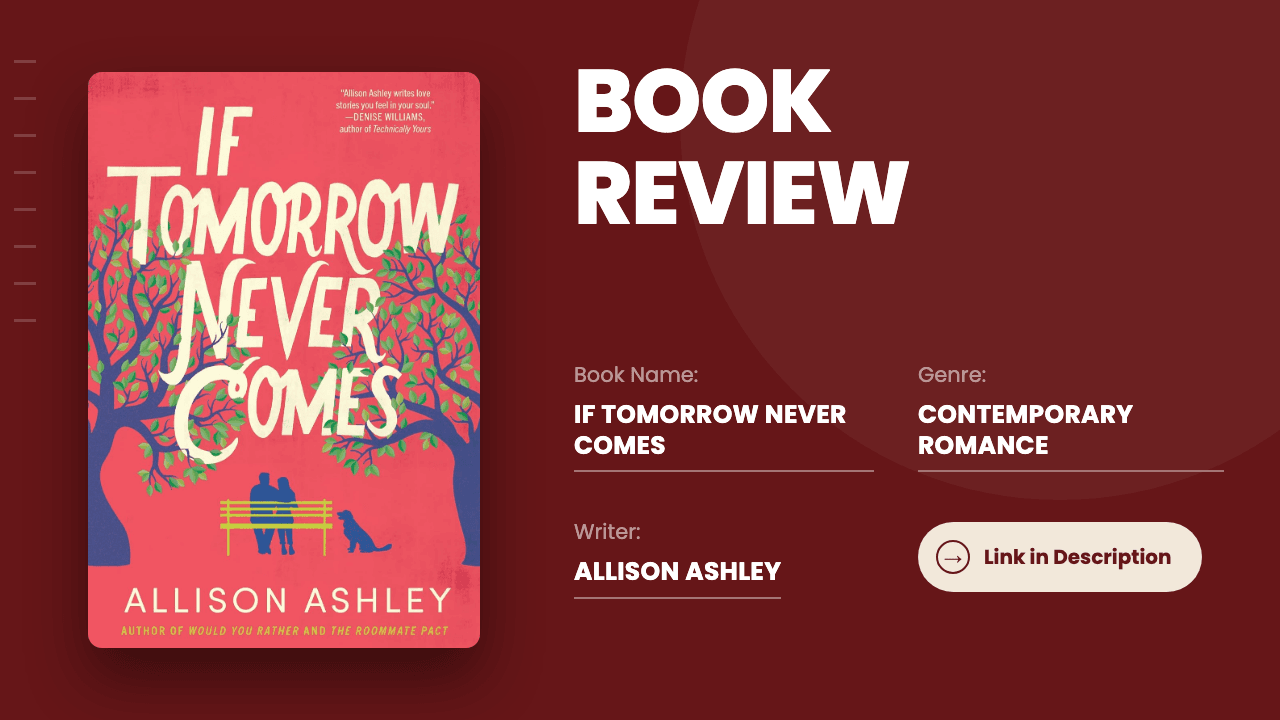
If Tomorrow Never Comes Review: The Woman Who Saved Her Life Is Dating the Man She Can't Forget
- Sajjad
- Book Reviews
- 14 Sep, 2026
Some romance premises rely on a coincidence. If Tomorrow Never Comes by Allison Ashley builds its entire emotional core out of one, and then makes that coincidence as uncomfortable as it should actually be. Elliott Holland spends the night before a stem cell transplant with a man she assumes she'll never see again. A year later, in remission, she finally gets to meet the stranger who donated the cells that saved her life. That stranger's name is Carly. Carly's boyfriend is Jamie. Readers who've kept up will already know exactly where this is going, and exactly why it's so hard to look away from.
I went into "If Tomorrow Never Comes" expecting a fairly standard second-chance romance dressed up with a medical subplot, the kind where illness exists mostly to raise the emotional stakes before getting comfortably resolved. What I found instead was a book more interested in sitting with an actually awkward situation than rushing past it, a love triangle built not on jealousy or deception but on gratitude, debt, and the very real discomfort of wanting the boyfriend of the woman who gave you a second chance at life. In this review, I'll cover Elliott and Jamie's first night together, the gut-punch of Elliott meeting Carly, how the author's own medical background shapes the book's most convincing details, where the story's quieter pacing works against it, and why the ending earns its resolution instead of manufacturing one.
Overview: What If Tomorrow Never Comes Is About
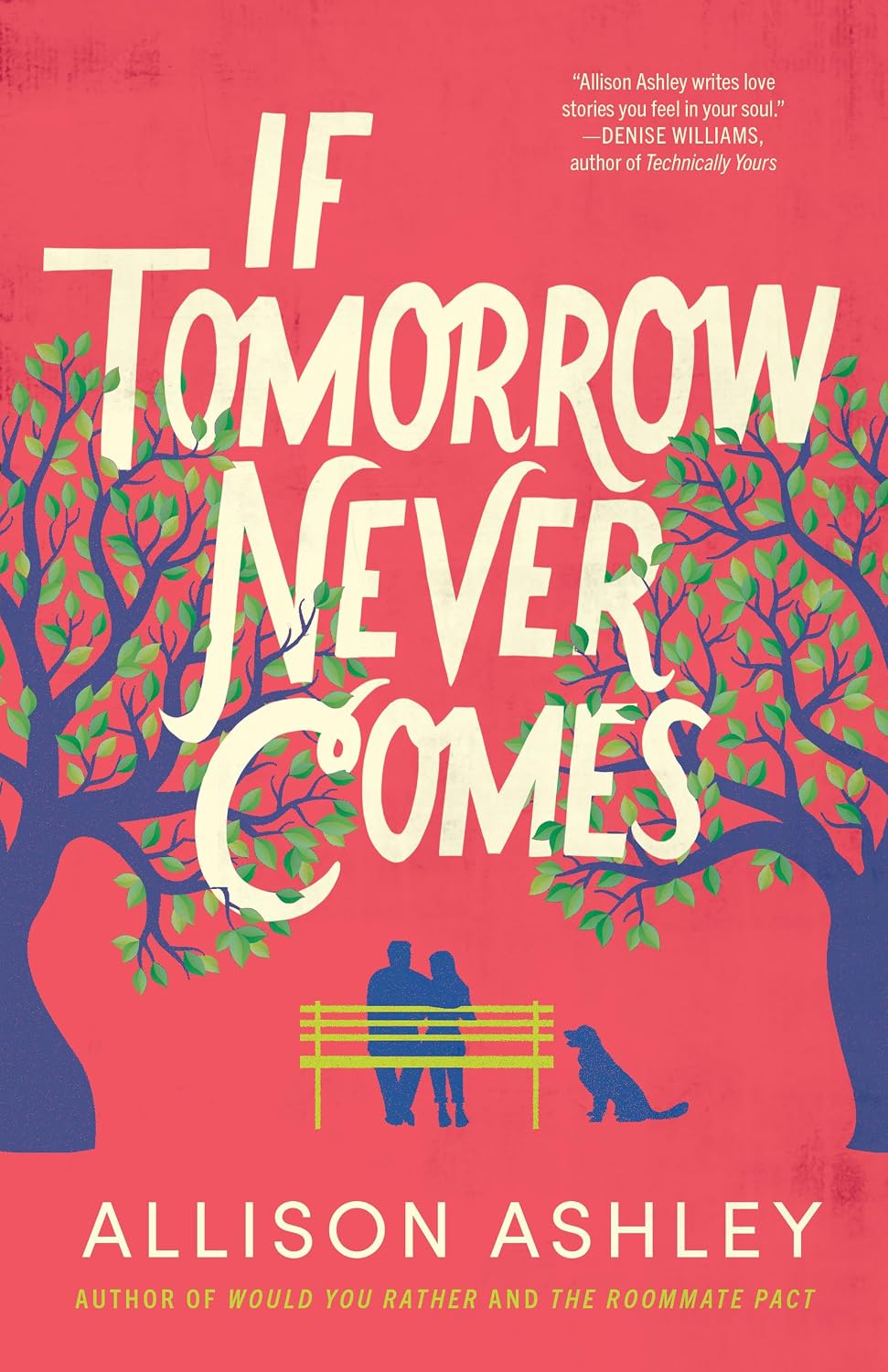
"If Tomorrow Never Comes" opens with Elliott Holland facing the eve of a stem cell transplant meant to treat her leukemia, uncertain enough about what tomorrow holds that she decides, just once, to live like there might not be one. That decision puts her in the path of Jamie Sullivan, charming and instantly easy to talk to, and the two of them spend an evening together that neither is expecting to matter beyond that night. The chemistry is immediate, the evening is genuinely romantic, and it ends with a kiss goodbye and no exchanged numbers, both of them treating it as a closed chapter rather than a beginning.
A year later, Elliott's life looks nothing like it did that night. Her cancer is in remission, her graphic design career is finally taking off, and she's about to do something she's been putting off: meet Carly, the donor whose stem cells are, quite literally, the reason she's still alive. The reunion she doesn't see coming happens in the same breath. Carly is dating Jamie. The stranger Elliott spent one unforgettable night with a year ago is now attached to the one person Elliott owes an unrepayable debt to, and the book spends the rest of its pages in the genuinely uncomfortable space that creates.
Elliott and Jamie: A Connection Neither One Forgot
The version of this story that reaches for cheap drama would have Jamie and Elliott lie, scheme, or sneak around behind Carly's back. Ashley doesn't take that route, and the book is stronger for it. What she does instead is let the reunion between Elliott and Jamie sit in plain, awkward view, both of them immediately aware of what they still feel and both of them equally aware of exactly how impossible acting on it would be. Their original night together is written with enough specificity and warmth that it's easy to understand why neither has moved past it, and more than one reader has singled out their first kiss as one of the better-written scenes of its kind in recent romance, a compliment I don't think is overstated. It's a scene that earns the rest of the book's stakes rather than just setting them up.
That earlier chemistry does a lot of load-bearing work later, because the book needs the reader to believe Elliott and Jamie's pull toward each other is strong enough to justify the mess it creates. Ashley mostly succeeds. The two have an easy, unforced rapport whenever they're together, conversations that feel lived-in rather than written to hit beats, and that groundwork is what keeps the reunion from reading like a contrived plot twist instead of a genuinely painful coincidence.
Carly: The Donor Who Complicates Everything
The choice that separates "If Tomorrow Never Comes" from a more conventional love triangle is Carly herself. She isn't written as an obstacle to root against, a flat rival whose removal from the picture would make everyone's lives easier. She's the reason Elliott is alive to have this problem at all, which means every ounce of attraction Elliott feels toward Jamie comes bundled with guilt she can't set aside, and every step Jamie takes toward Elliott means betraying a relationship with the one person Elliott is supposed to be endlessly grateful to. That's a genuinely harder needle to thread than most love triangles bother attempting, and Ashley deserves real credit for not softening the discomfort just to make her leads easier to root for unconditionally.
Where this section of the book works best is in refusing to give Elliott, or the reader, a clean way out. There's no scene where Carly turns out to be secretly awful, no convenient excuse that dissolves the guilt. The tension stays exactly as uncomfortable as the premise promises, and that discomfort is the point.
Ashley's Medical Background Shows, in the Best Way
Allison Ashley is an oncology pharmacist by trade, and that professional background is all over the most convincing parts of "If Tomorrow Never Comes." Elliott's transplant, her recovery, the anxiety that lingers even in remission, the strange, complicated gratitude of meeting a stem cell donor face to face, all of it reads with a specificity that a writer without that clinical experience would likely have smoothed over or gotten wrong. It's a similar effect to what a psychiatrist-turned-thriller-writer brings to a domestic suspense novel, expertise that shapes the texture of the book rather than sitting on top of it as research. Here, that expertise is put toward something gentler: making the fear, the relief, and the residual anxiety of cancer treatment feel true to life rather than used as a plot device to raise stakes and then forgotten.
A Low-Steam, Slice-of-Life Romance by Design
Readers going in expecting a steamy, high-drama love triangle should recalibrate. "If Tomorrow Never Comes" is a closed-door, low-steam romance, more interested in emotional intimacy than physical description, and it largely avoids the manufactured misunderstandings and third-act breakups that pad out a lot of contemporary romance. That restraint is deliberate, and for readers who want their romance grounded and unhurried rather than engineered for maximum swoon, it's a real strength. One reviewer called it a story that "avoided unnecessary drama" while still delivering a wonderfully heartfelt love story, and that's a fair summary of what Ashley is going for here.
Where the Story Loses Some Momentum
I'd be underselling this review if I didn't flag where that same restraint works against the book. The pacing sags in the middle stretch, where the day-to-day rhythm of Elliott's life, her career, her friendships, her slowly rebuilding sense of normalcy, takes precedence over the central tension for long enough that some readers understandably lose momentum along with it. More than one review described the book as "too slice of life" for their taste, wanting more sweeping romantic urgency to carry them through, and I think that's a fair read of the book's quieter stretches specifically.
There's a second, related critique worth naming directly: some readers found Elliott and Jamie too uniformly likable, without enough real flaws to make their dilemma feel dangerous rather than simply sad. "Characters have no flaws," one Goodreads review put it bluntly, and while I'd push back on that as an overstatement, given that guilt, avoidance, and indecision are flaws the book does take seriously, I understand the instinct behind it. A story built around a genuinely painful ethical bind benefits from leads who are at least a little messier in how they handle it, and Ashley keeps Elliott and Jamie admirable enough that the tension occasionally softens when it could have cut deeper.
The Ending: A Quiet, Earned Resolution
Without spoiling exactly how it gets there, "If Tomorrow Never Comes" resolves its central triangle by having Elliott and Jamie choose their connection rather than continuing to avoid it, and the book earns that choice by taking the emotional cost seriously rather than waving it away in a tidy final chapter. It isn't a twist ending, and it doesn't pretend the situation resolves painlessly for everyone involved. That restraint is consistent with everything that comes before it, a book more committed to emotional honesty than to a clean, consequence-free happily ever after.
Critical Reception and Reader Response
"If Tomorrow Never Comes" holds a strong 3.99-star average across more than 18,000 Goodreads ratings and over 1,400 written reviews, a reception that reflects a genuinely well-loved book with a clear, if occasionally divided, readership. Fans of Ashley's other work praised it as her "most emotional and serious" novel yet, with several singling out the opening night between Elliott and Jamie as one of the best first-kiss scenes they'd read in the genre, and calling her a writer whose romances hit somewhere deeper than the usual comfort read.
The criticism tracks closely with what I noticed reading it: some found the middle stretch slow enough that the story "started off strong but then lost its steam," others wanted leads with sharper edges, feeling the characters were written a little too flaw-free to fully believe in, and a smaller group found the whole thing simply forgettable once the initial hook wore off. None of that stopped the book from becoming one of Ashley's most talked-about releases, and the overall sentiment leans strongly toward a quiet, well-crafted romance that rewards patience more than it rewards a need for constant momentum.
About Author Allison Ashley
Allison Ashley is an Oklahoma-based author and practicing oncology pharmacist, a background that shows up directly in the medical specificity running through "If Tomorrow Never Comes." Her earlier novels, "Would You Rather" and "The Roommate Pact," established her as a writer drawn to grounded, character-driven contemporary romance rather than high-concept premises, and this book continues that pattern while pushing further into genuinely difficult emotional territory than her prior, lighter work attempted. Her clinical day job clearly informs which details she chooses to get right, the fear of a diagnosis, the strange gratitude of survival, the anxiety that doesn't fully leave even after remission, and that authenticity is a big part of why the book's premise lands as sincerely as it does rather than reading as a gimmick.
How If Tomorrow Never Comes Compares to Other Contemporary Romance
What separates this book from most love-triangle romances is the source of the conflict itself. A typical triangle runs on jealousy, deception, or a choice between two people the protagonist hasn't fully committed to. Here, the obstacle is gratitude, and specifically the kind of gratitude that makes wanting something for yourself feel like a betrayal of the person you owe everything to. That's a more unusual and, frankly, more interesting problem than the genre usually reaches for, and it's what keeps "If Tomorrow Never Comes" from collapsing into a more generic love-triangle template even during its slower stretches.
Key Takeaways from If Tomorrow Never Comes
The central premise is genuinely uncomfortable, on purpose. A love triangle built on gratitude and debt rather than jealousy gives the book a sharper emotional hook than most romances in its lane.
Elliott and Jamie's original night together earns the rest of the book. Their chemistry is specific and well-written enough to justify why neither of them can move past it a year later.
Carly is never written as a villain to root against. That choice makes the ethical bind at the story's center feel real instead of manufactured.
Ashley's oncology pharmacist background grounds the medical details. Elliott's diagnosis, treatment, and lingering anxiety read as true to life rather than as a plot device.
The pacing sags in the middle, and the leads could use sharper edges. Readers wanting constant momentum or messier, more flawed protagonists should know that going in.
Conclusion: Is If Tomorrow Never Comes Worth Reading?
"If Tomorrow Never Comes" takes a premise that could easily have tipped into melodrama, a cancer survivor falling for her donor's boyfriend, and treats it with more restraint and emotional honesty than that logline suggests. Elliott and Jamie's first night together gives the book real romantic weight, Carly's presence keeps the central conflict genuinely difficult rather than conveniently resolved, and Allison Ashley's own medical background gives the illness at the story's core a specificity that's rare in the genre.
It asks for patience during its slower middle stretch, and it could have used leads with a few more rough edges to sharpen the stakes. But as a quiet, low-steam romance more interested in earning its resolution than rushing toward one, "If Tomorrow Never Comes" delivers exactly what it sets out to. You can pick up a copy of "If Tomorrow Never Comes" on Amazon and decide for yourself whether Elliott and Jamie deserve the second chance they're both afraid to reach for.