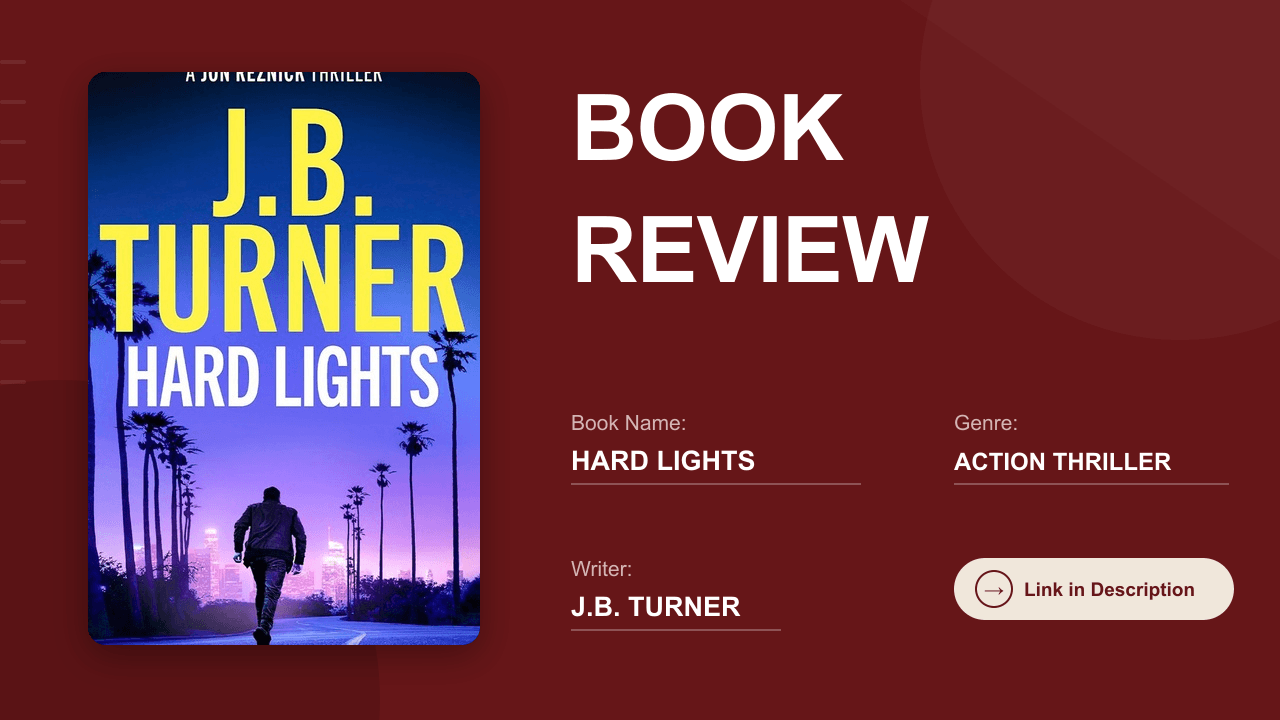
Hard Lights Review: Reznick Goes to Hollywood, and It's More Investigation Than Firefight
- Sajjad
- Book Reviews
- 14 Sep, 2026
Fourteen books into a series built on a black-ops "ghost" operative eliminating national security threats with brutal efficiency, changing the formula is a real risk. Hard Lights takes that risk deliberately, pulling Jon Reznick out of his usual government-conspiracy machinery and dropping him into something closer to a missing-persons investigation with organized crime circling the edges. J.B. Turner clearly knows exactly what he's doing here, and whether it pays off depends almost entirely on what you came to this series expecting.
I went into "Hard Lights" as a long-running entry in the Reznick series, and it delivers a genuinely personal mission, no FBI handler assigning the job, no shadowy government conspiracy driving the plot, just a man hunting down whoever tortured and murdered his oldest friend. What I found was a book more interested in Reznick working a case, following leads, uncovering corruption, piecing together what actually happened to a missing teenager, than in the sustained action sequences that have defined a lot of the series' earlier entries, and that shift in register is the single most important thing to know before picking this one up.
In this review, I'll walk through Angel Ramos's murder and his daughter Camila's disappearance into Hollywood's underbelly, how Reznick's investigation into both pulls him into conflict with a ruthless Mexican cartel, the specific ways this book departs from the series' usual formula, and where that departure works in the book's favor versus where longtime readers have felt the change most acutely. I'll also talk about where "Hard Lights" fits within Turner's larger Reznick catalog, because context matters a lot for how you'll receive this particular installment.
Overview: What Hard Lights Is About
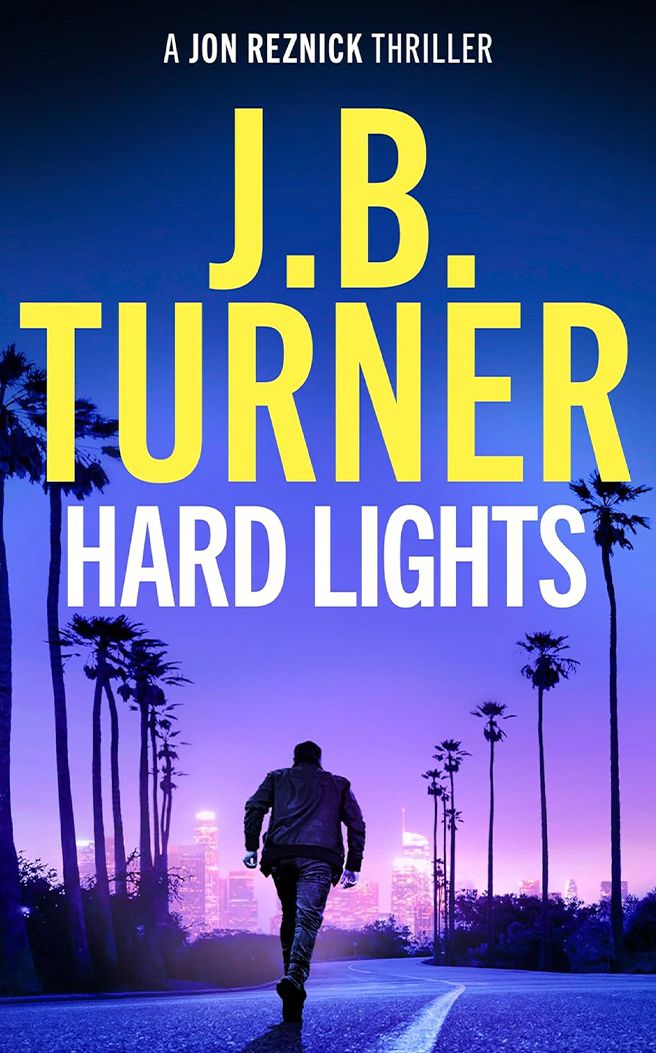
"Hard Lights" opens with news that hits Jon Reznick personally: Angel Ramos, one of his oldest friends from his special forces days, has been found brutally murdered, his body dumped in a Los Angeles alley. Angel had been a recovering addict, working to rebuild his life while desperately trying to locate his missing teenage daughter, Camila, who had vanished into the darker corners of Hollywood. Reznick heads to California not on assignment from FBI Assistant Director Martha Meyerstein or any government handler, but on his own initiative, determined to find out who killed his friend and to finish the search for Camila that Angel never got to complete.
What Reznick finds beneath the city's glamorous surface is a tangle of corruption, criminal networks, and predatory operations exploiting vulnerable people in Hollywood's underbelly. As his investigation deepens and his fearless, direct methods start drawing unwanted attention, he finds himself squarely in the crosshairs of a ruthless Mexican cartel with its own stake in keeping Reznick from finding what he's looking for. What starts as a personal mission to avenge a friend and rescue a missing girl escalates into a genuine fight for survival against people with far more resources and far fewer scruples than Reznick is used to facing alone.
A Personal Mission Without the Usual Government Machinery
The clearest structural choice Turner makes here is stripping away the series' usual institutional scaffolding. Reznick isn't operating as a government ghost following orders from a handler this time; he's a private citizen chasing down his own friend's killers, and that shift changes the texture of the whole book. Without Martha Meyerstein's FBI resources backing him at every turn, Reznick has to work more like an actual investigator, following leads, building a picture of what happened to Angel and Camila piece by piece, rather than being deployed into a mission with institutional intelligence already in hand.
That's a meaningful departure for a series that's built fourteen books on the conspiracy-thriller model of Reznick as a government asset cleaning up national security threats. Here, the stakes are entirely personal, and the absence of a larger geopolitical conspiracy gives the book a tighter, more grounded focus, a missing girl, a murdered friend, a city's rot hiding in plain sight, rather than the international, high-concept threats that have defined a lot of the series' earlier entries.
Camila's Disappearance and Hollywood's Underbelly
The investigation into what happened to Camila gives the book its strongest, most consistently engaging material. Turner renders Hollywood's exploitative underside with real specificity, the gap between the city's glossy public image and the predatory networks operating in its shadows, and Reznick's dogged pursuit of the truth behind Camila's vanishing carries genuine emotional weight given his personal stake in the outcome. This isn't just a case to Reznick; it's the last thing he can do for a friend who spent his final months desperately trying to save his daughter and never got the chance.
That personal urgency keeps the investigative stretches of the book from feeling like padding between action sequences. Readers who've praised the book have specifically noted how well Turner handles this more procedural mode, with one describing the shift toward investigative-type work as "an interesting twist" on the series' usual formula, a genuine strength rather than a concession.
The Cartel Threat: Raising the Stakes Without Losing Focus
Once Reznick's investigation draws the attention of a Mexican cartel with its own interests in the operations he's uncovering, the book's stakes escalate considerably, and Turner is careful to let that threat build organically out of the investigation rather than parachuting in as a separate, disconnected plot thread. The cartel's involvement gives the book's back half real urgency and eventually delivers the kind of direct confrontation longtime Reznick readers expect, even if it arrives later and less frequently than in previous installments.
That structure, patient investigation building toward a more concentrated action-driven conclusion, is a defensible storytelling choice on its own terms. Whether it satisfies you as a reader depends heavily on what you're looking for from a Reznick book specifically.
Where the Pacing Divides Readers
I'd be underselling this review if I didn't address the criticism that surfaces most directly and most consistently: several longtime readers went in expecting the high-octane, action-forward pacing that's defined much of the series and found "Hard Lights" leaning considerably more into investigation, with action concentrated more toward the book's final stretch than distributed throughout. One reader put it plainly, expecting "more of a high-octane thriller like previous novels" and finding instead "more investigation with some action towards the end." A few reviewers specifically noted sections that dragged before the pace picked back up.
That's a fair, representative account of what this book actually is, and it's worth taking seriously before you pick it up expecting business as usual. If you come to the Reznick series primarily for sustained, relentless action sequences, "Hard Lights" will likely feel like a slower entry by comparison. If you're more interested in Reznick as a character working a genuinely personal case with real detective-work texture, the same shift reads as a welcome change of pace rather than a letdown.
J.B. Turner's Craft: Character Depth Over Formula Repetition
None of that undercuts what Turner accomplishes here. Reznick's characterization benefits noticeably from the personal stakes and the absence of his usual institutional support system; readers have specifically praised the character development in this installment, and stripping away Meyerstein's FBI backing forces Reznick to rely more visibly on his own resourcefulness and judgment, giving him more room to actually be a character rather than a government asset executing a mission. Turner's rendering of Los Angeles carries real atmospheric weight throughout, and the audiobook narration by Jeffrey Kafer has drawn consistent praise for how well it captures the book's tone.
Turner, a former journalist whose Reznick series has been favorably compared to Lee Child's Jack Reacher novels, shows real willingness here to test the boundaries of his own established formula fourteen books in, a choice that speaks to genuine confidence in his character beyond the conspiracy-thriller machinery that's usually surrounded him.
How Hard Lights Fits Into the Jon Reznick Series
Fourteen books into a series built around Reznick as a black-ops "ghost" navigating international conspiracies and domestic threats, usually in close coordination with FBI Assistant Director Martha Meyerstein, "Hard Lights" stands out precisely because of how much it strips away. No large-scale conspiracy, no government assignment, just Reznick's personal loyalty to an old friend and the investigation that loyalty demands. Longtime series readers should go in aware that this is a genuine formula shift rather than a typical entry, and that awareness will shape whether the book reads as a refreshing change of pace or a disappointing departure from what's drawn them to the series in the first place.
About Author J.B. Turner
J.B. Turner is a bestselling thriller author and former journalist whose Jon Reznick series has built a substantial, dedicated readership across more than a dozen books, drawing favorable comparisons to Lee Child's Jack Reacher for its blend of paranoid conspiracy elements and relentless action. "Hard Lights," published by Thomas & Mercer in June 2025, shows Turner willing to bend his own established formula in service of a more personal, character-driven story, a choice that reflects real confidence in Reznick as a character capable of carrying a book without the series' usual government-conspiracy scaffolding.
Critical Reception and Reader Response
"Hard Lights" holds an excellent 4.50-star average across more than 4,500 Goodreads ratings and over 100 written reviews, a genuinely strong reception for the fourteenth entry in an established series. Readers have consistently praised Reznick's character development in this installment, the atmospheric Los Angeles setting, and the book's mix of whodunit investigation and eventual action, with several specifically enjoying the more procedural approach as a fresh twist on the established formula.
The criticism that surfaces most consistently centers on pacing relative to reader expectations: multiple reviewers noted the book leans more heavily into investigation than the high-octane action that's defined earlier entries, with some finding certain stretches dragged before the pace picked back up in the final act. That criticism reads less as a flaw in the writing itself and more as a genuine mismatch between what some longtime readers expected and what this particular installment actually delivers.
Key Takeaways from Hard Lights
This is a personal mission, not a government assignment. Reznick operates without his usual FBI backing, giving the book a more grounded, character-driven texture than typical series entries.
The investigation into Camila's disappearance carries real emotional weight. Reznick's personal stake in finding his dead friend's daughter keeps the procedural stretches from feeling like filler.
The cartel threat builds organically and pays off late. Action is concentrated more toward the book's conclusion than distributed throughout, a deliberate structural choice.
The pacing genuinely divides readers. Fans expecting sustained, relentless action will likely find this installment slower; readers open to more investigative work have praised the shift.
Reznick's characterization benefits from the formula change. Stripped of institutional support, he reads as more resourceful and more fully realized as a character.
Conclusion: Is Hard Lights Worth Reading?
"Hard Lights" is a genuine formula shift for the Jon Reznick series, trading the usual government-conspiracy machinery for a personal, investigation-driven mission that gives its protagonist real emotional stakes and room to operate without his typical institutional backing. Reznick's hunt for his friend's killers and his determination to find Camila before it's too late carries the book's procedural stretches with genuine weight, and the eventual cartel confrontation delivers the kind of payoff longtime readers expect, even if it arrives later than usual.
Whether this book works for you depends heavily on what you want from a Reznick thriller specifically. If you're here for the sustained, relentless action that's defined a lot of the series' earlier entries, the more measured investigative pace may test your patience. If you're drawn to Reznick as a character capable of carrying a more grounded, personal story, "Hard Lights" delivers exactly that, more investigation than firefight, but no less compelling for it. You can pick up a copy of "Hard Lights" on Amazon and see whether Reznick's most personal case yet works for you the way it did for most of its readers.