Gravewater Lake Review: No Memory, No Phone Line, No Way to Know If He's Lying
- Sajjad
- Book Reviews
- 14 Sep, 2026
Amnesia is one of the oldest tricks in the thriller playbook, and it works for a simple reason: a narrator who doesn't know her own story is a narrator the reader can't fully trust either. Gravewater Lake leans all the way into that premise, stranding its heroine without a name, a phone line, or a working memory, and pairing her with a rescuer whose every claim about himself she has absolutely no way to check. A.M. Strong and Sonya Sargent build real, sustained paranoia out of that setup, even when the book's later machinery asks you to accept more than its tightly wound opening chapters promise.
I went into "Gravewater Lake" expecting a fairly standard woman-in-peril thriller with an isolated cabin and a suspicious man. What I found was more structurally ambitious than that, a book that layers a second mystery, drawn from fragments its amnesiac heroine can't tell apart from her own memories, on top of the central gaslighting-or-not question, before eventually revealing how the two are actually connected.
In this review, I'll walk through the woman who wakes up on the shore of Gravewater Lake with no memory of who she is, the stranger who takes her in during a winter storm that cuts off any way to verify a word he says, the parallel storyline involving a woman named Adria that turns out to be more entangled with the main plot than it first appears, and where the book's ambitious dual-mystery structure holds together versus where the eventual reveal asks for more than the setup earns. I'll also talk honestly about the ending, because reader opinion on it is genuinely split.
Overview: What Gravewater Lake Is About
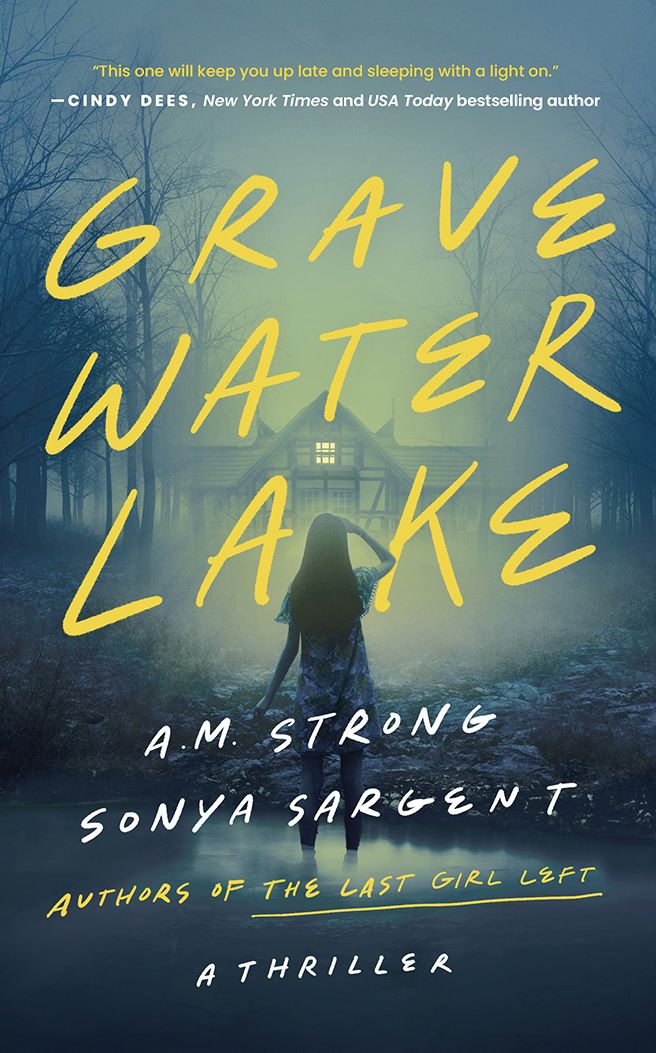
"Gravewater Lake" opens with a woman waking on the frozen shore of a remote Vermont lake in the middle of the night, freezing, injured, and with absolutely no memory of who she is or how she got there. Using the initial "A" from a bracelet she's wearing, she adopts the temporary name Anna and stumbles toward the lights of a nearby house, where a reclusive stranger named Gregg takes her in. A winter storm rolls in almost immediately, cutting off the roads and the phone lines, and Anna finds herself entirely dependent on a man she has no memory of ever meeting, no way to verify anything about, and increasingly good reason to suspect isn't telling her the whole truth.
As Anna recovers, fragments of memory start returning, whispers in the night, phantom footsteps, unsettling details about the house that don't add up, alongside flashes involving a woman named Adria and her husband Peter, whose own story of deception and danger initially reads like a separate plotline running in parallel. It gradually becomes clear that these fragments aren't simply memories in the conventional sense; they're tangled up with a manuscript Anna, actually bestselling author Alex Moore, had been writing before her memory loss, blurring the line between what she's actually lived through and what she's imagined onto the page. Untangling which is which becomes as urgent as figuring out whether Gregg, whose real identity turns out to be considerably more complicated than the widower he claims to be, can actually be trusted.
The Amnesia Premise: Genuinely Effective Paranoia
The book's strongest sustained stretch is exactly what the setup promises: the specific, mounting dread of being entirely dependent on someone you have no way to verify. Strong and Sargent understand that the real horror of this premise isn't the mystery of what happened to Anna before the story starts, it's the present-tense vulnerability of trusting a stranger by necessity, with a storm making escape or outside confirmation impossible. The isolated house itself, complete with details like an abandoned boat and eventually a hidden panic room, becomes as much a character as Gregg does, reinforcing the sense that Anna is trapped inside a space that's keeping secrets right alongside the man living in it.
That paranoia is sustained well across a large portion of the book, and it's the clearest evidence of the authors' skill: making a reader question, right alongside Anna, whether every unsettling detail is evidence of real danger or a byproduct of a traumatized mind trying to make sense of a memory it can't fully access.
Gregg, Michael, and a Rescuer Worth Doubting
Gregg's slow unraveling as a character, eventually revealed to be a man named Michael entangled in his family's criminal activity, is handled with real moral complexity rather than a simple villain reveal. The book resists making him purely predatory or purely heroic; his eventual role protecting Anna during a violent confrontation with his own criminal cousin gives him genuine, if messy, redemptive shading, and that refusal to sort him into an easy category is one of the more thoughtful choices in a genre that often settles for a simpler good-guy-or-monster binary.
That moral ambiguity extends the tension of the book's first half productively into its back half: even once some of Gregg's secrets come to light, the question of exactly how far his loyalty to Anna versus his loyalty to his own family will extend keeps the plot's stakes genuinely uncertain rather than resolving too neatly once the initial gaslighting question is settled.
The Manuscript Twist: Ambitious, and a Little Confusing
The choice to blur Anna's fragmented memories with scenes from her own unpublished novel is the book's most distinctive structural swing, and it's genuinely ambitious for the genre. Rather than a simple parallel-timeline structure, the Adria and Peter thread functions as a kind of metafictional puzzle, forcing Anna, and the reader, to work out which pieces are lived experience and which are invention bleeding through a traumatized, memory-damaged mind. When it lands, it elevates the book well beyond standard thriller conventions, adding real intellectual texture to what could have been a straightforward amnesia plot.
Where it strains is in execution. That same structural ambition means readers have to do real work tracking which thread is which and how they eventually connect, and the payoff, when the two storylines fully converge, doesn't always feel proportionate to the confusion required to get there. It's a genuinely interesting risk that mostly pays off, but it's also exactly the kind of choice that will read as either brilliant or frustrating depending on how much patience you bring to a thriller that asks you to hold two possibly-unreliable narratives in your head at once.
Where the Plot Strains: Coincidence, Convention, and a Left-Field Twist
I'd be underselling this review if I didn't address where "Gravewater Lake" asks more of its reader's suspension of disbelief than its tightly controlled opening promises. The sheer number of overlapping threats, Gregg's family crime, his violent cousin Ricky, Anna's own professional rival Helene turning out to be plotting against her as well, converging around the same isolated location within the same tight window strains credibility in ways multiple readers have flagged directly. Several reviewers specifically described the eventual reveal as coming "out of left field," and a fair number found the amnesia trope itself poorly executed once the full mechanics of what actually happened come into view.
The final act also leans more heavily on familiar genre furniture, hidden panic rooms, surveillance cameras, than the more psychologically distinctive material that defines the book's first half, and that shift has left some readers feeling the ending trades the story's early atmospheric tension for more conventional thriller spectacle. A number of reviewers specifically called the resolution "over-the-top" or "far-fetched," and Anna's own decision-making at key moments has drawn criticism as inexplicable given what she supposedly does and doesn't remember at any given point.
A.M. Strong and Sonya Sargent's Craft: Atmosphere Over Airtight Plotting
None of that undercuts what the writing team does well here. The Vermont winter setting is genuinely atmospheric, rendered with enough specificity that the frozen, isolated landscape functions as real psychological pressure rather than simple backdrop. Their prose sustains tension effectively across the book's considerable length, and their willingness to give even morally compromised characters real interiority, Gregg chief among them, shows a genuine interest in psychological complexity beyond pure plot mechanics.
Strong and Sargent, also known for "The Last Girl Left," clearly have a facility for sustained dread and atmospheric isolation as tools, even where the intricate, multi-threaded plot they build around that atmosphere occasionally asks for more coincidence than it can fully support.
How Gravewater Lake Fits Into the Genre
Readers drawn to amnesia-driven psychological thrillers with an isolated, snowbound setting will recognize familiar DNA here, women-in-peril narratives built around a heroine who can't trust her own mind stacked against a man she has no way to independently verify. What distinguishes "Gravewater Lake" within that crowded subgenre is its willingness to complicate the formula with a metafictional twist most comparable books don't attempt, even if that ambition comes at some cost to narrative clarity and plot plausibility by the book's end.
About the Authors
A.M. Strong and Sonya Sargent are a writing team also known for "The Last Girl Left," and "Gravewater Lake" continues their shared interest in isolated, atmospheric settings and heroines navigating danger they can't fully perceive or trust. Their collaborative approach to sustained psychological tension, paired here with a genuinely ambitious structural gamble around memory and fiction, marks them as writers willing to take real risks within a well-established thriller subgenre.
Critical Reception and Reader Response
"Gravewater Lake" holds a 3.87-star average across more than 15,500 Goodreads ratings and over 1,200 written reviews, a genuinely divided reception that tracks closely with the strengths and weaknesses outlined above. Supporters have praised the "expertly crafted twists" and atmospheric setting, with several readers calling it "unputdownable" and specifically highlighting the metafictional manuscript twist as elevating the book beyond standard genre conventions.
The criticism that surfaces most consistently centers on plausibility and pacing: readers flagged repetitive plotting, a protagonist whose decisions felt inexplicable given her circumstances, and a twist that several described as arriving "out of left field." The amnesia trope itself drew specific criticism for feeling poorly executed by the time all its mechanics are revealed, and the ending's shift toward more conventional thriller spectacle, panic rooms, surveillance cameras, armed confrontations, left a portion of readers feeling the book's early psychological distinctiveness got traded for more familiar genre beats by its conclusion.
Key Takeaways from Gravewater Lake
The core amnesia premise generates real, sustained paranoia. Being entirely dependent on an unverifiable stranger during a storm is the book's most effective sustained tension.
Gregg's moral ambiguity is handled with real nuance. His eventual reveal avoids a simple villain-or-hero binary in favor of genuine complexity.
The manuscript twist is ambitious but occasionally confusing. Blurring memory and fiction elevates the book intellectually while asking real tracking effort of the reader.
The ending leans on convenient coincidence. Multiple converging threats within a tight window strain credibility more than the tightly controlled opening chapters prepare you for.
The final act trades psychological tension for genre convention. Panic rooms and armed confrontations replace some of the book's earlier atmospheric distinctiveness.
Conclusion: Is Gravewater Lake Worth Reading?
"Gravewater Lake" delivers a genuinely effective, atmospheric first half built on one of the more reliable engines in psychological suspense: a heroine who can't trust her own memory, paired with a rescuer she has no way to verify, isolated together by circumstances neither can control. A.M. Strong and Sonya Sargent's willingness to complicate that formula with a metafictional twist about memory and fiction is a genuinely ambitious swing, and Gregg's morally complicated reveal gives the back half real emotional texture.
Where it falls short is in the landing: the convergence of multiple criminal threats asks for more coincidence than the setup earns, and the shift toward familiar thriller conventions in the final act trades away some of what made the opening chapters distinctive. But if you're drawn to amnesia-driven suspense willing to take real structural risks, even ones that don't fully land, "Gravewater Lake" delivers a genuinely unsettling ride. You can pick up a copy of "Gravewater Lake" on Amazon and see whether Anna's fractured memory, and Gregg's buried past, add up the way they did for most of its readers.