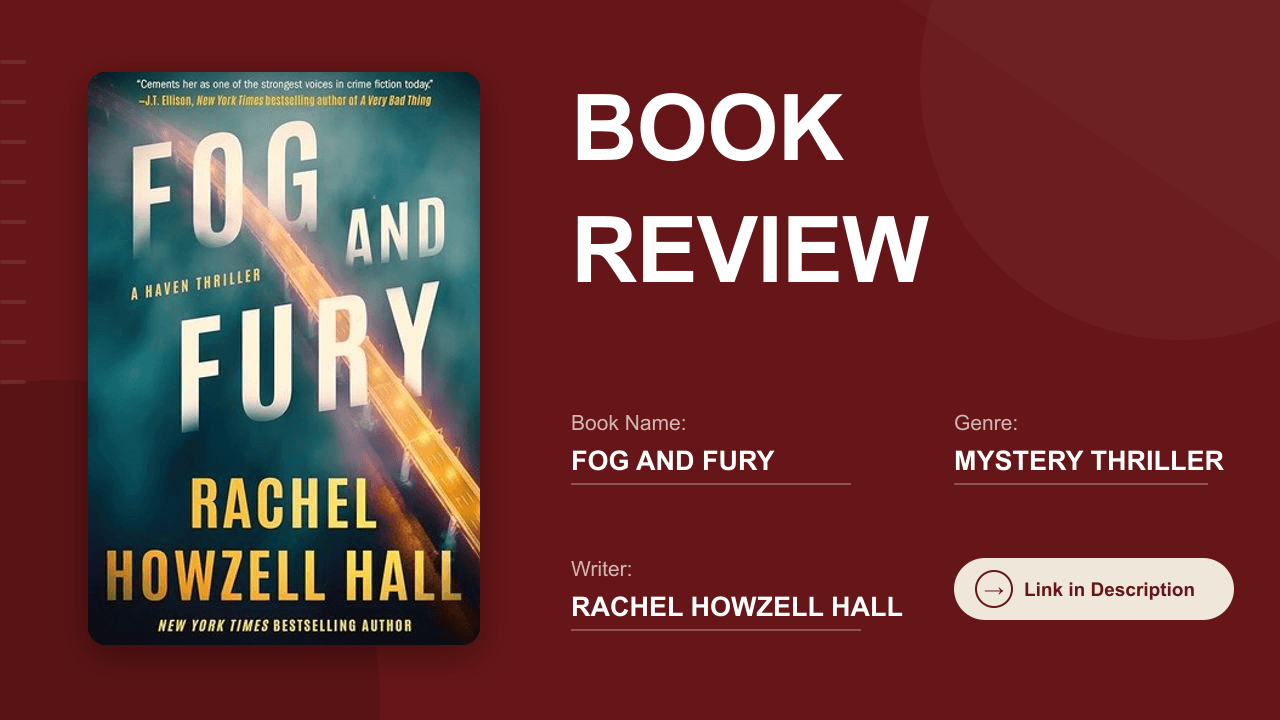
Fog and Fury Review: It Starts With a Missing Goldendoodle and Gets Very Dark
- Sajjad
- Book Reviews
- 14 Sep, 2026
Some thrillers open with a body. Fog and Fury opens with a dog, and that choice tells you almost everything about what Rachel Howzell Hall is doing here. Before anyone dies, before the fog rolls in over the cliffs, before the town's tidy facade starts to crack, the book hands its former-cop protagonist the most low-stakes assignment imaginable: track down a missing Goldendoodle wearing a Versace collar. It's a deliberately soft landing, and Hall spends the rest of the novel making sure you never feel soft again.
I went into "Fog and Fury" expecting a cozy small-town mystery with some bite to it, the kind of book where a missing pet case turns into something bigger almost by accident. What I got instead was a dual-track thriller that uses the goldendoodle search as a way into a much darker investigation, one built around a dead teenager, a note that reads like a threat, and a coastal town whose postcard prettiness is doing a lot of load-bearing work to hide what's actually going on underneath it.
In this review, I'll walk through Sonny Rush's move from LAPD detective to small-town PI, how the missing-dog case and the dead-teenager case end up braided together, the family and romantic entanglements Hall builds around her, and where the book's ambitious mix of mystery plotting and social commentary succeeds and where it strains. I'll also talk about the ending, because this is a series launch with a cliffhanger, and that's exactly the kind of thing you want to know before you start.
Overview: What Fog and Fury Is About
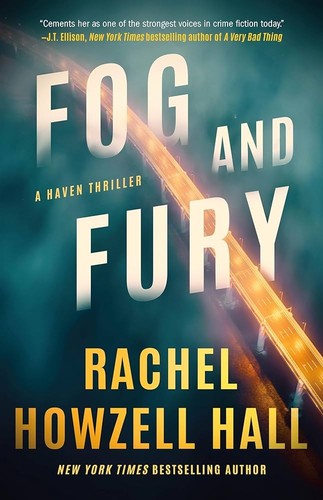
"Fog and Fury" introduces Alyson "Sonny" Rush, a former LAPD detective with a decade on the force, who trades Los Angeles for the fog-wrapped coastal town of Haven, California. She's not chasing a fresh start so much as accepting one that's been handed to her: her godfather Ivan Poole, himself a retired LAPD cop, runs a small PI firm in Haven and needs the help, and Sonny needs a place where she can look after her mother Val, whose memory has started to slip in ways that make independent living in Los Angeles no longer realistic.
Sonny's first assignment as a working PI is about as far from homicide as it gets: locate Figgy, a missing Goldendoodle last seen wearing a Versace collar, for a wealthy client who wants her found fast and quietly. It's the kind of case that's supposed to ease a burned-out detective back into civilian-adjacent work. Instead, it puts Sonny back in contact with Cooper Sutton, an ex-lover who lied to her about being married, and it puts her in exactly the right place at exactly the wrong time when the body of seventeen-year-old Xander Monroe turns up along one of Haven's most popular hiking trails, a note reading "a beautiful place to die" folded in his pocket.
A Goldendoodle Case That Won't Stay Small
What makes the setup work is that Hall never treats the Figgy case as a joke, even though it sounds like one on paper. The missing-dog assignment is Sonny's entry point into Haven's social world, the wealthy families, the gossip networks, the version of the town that presents itself to newcomers with a smile. Chasing down a runaway Goldendoodle means knocking on the right doors, asking the right people the wrong questions, and quietly cataloging who in Haven has something to hide long before anyone in the book realizes a teenager is about to die.
The reappearance of Cooper Sutton complicates things in a way that feels earned rather than bolted on. Sonny isn't just working a case in a town that happens to contain an ex; his lie about his marriage becomes its own small, personal betrayal running alongside the larger institutional ones the book is building toward, and Hall uses it to keep Sonny's guard exactly high enough that she notices things a less wary investigator might miss.
Xander Monroe and the Note That Changes Everything
The moment Xander Monroe's body is found, "Fog and Fury" shifts gears, though it never fully abandons the missing-dog thread, and that's part of the point. Ivan takes the lead on investigating Xander's death, but Sonny is pulled in too, both because Haven is small enough that every case eventually touches every other case, and because the note found on Xander, "a beautiful place to die," reads less like a suicide note and more like a message somebody wanted found. Hall is careful not to tip her hand early about what that note means, and the ambiguity around Xander's death, accident, suicide, or something engineered to look like either, carries real tension through the book's middle stretch.
The Monroe family's grief is handled with more weight than a lot of thrillers bother giving to secondary characters. Xander isn't a plot device who exists to be dead; his parents' reactions, and the community's reaction to them, become one of the ways Hall exposes how Haven actually treats its own people versus how it markets itself to outsiders. The gap between those two things is the engine of the whole book.
Haven, California: A Town Built on Its Own Reflection
If "Fog and Fury" has a main character beyond Sonny, it's Haven itself. Hall renders the town as a place defined by its fog, literally and thematically, a coastal setting where visibility is always partial and everyone seems to know more than they're saying. One line from the book captures the effect precisely: Haven's secrets are described as spiders "spinning more secrets, sticky and obstructive," and that image holds up across the whole novel. The town's idyllic reputation isn't a lie exactly, it's a curated version of the truth, and Sonny's outsider status, someone new enough to not yet owe anyone favors, is what lets her start pulling at the threads.
The novel uses Haven to dig into race and class in ways that are mostly organic to the plot. Sonny's perspective as a Black woman and former big-city cop moving into a wealthier, whiter small town gives Hall room to explore how a place's comfort and safety get distributed unevenly, and how corruption in a town this size tends to protect the people with the most to lose rather than the people who actually need protecting. It's not subtle commentary, and it isn't trying to be, but it mostly earns its place because it's woven into Sonny's actual investigative choices rather than delivered as commentary layered on top of the plot.
Sonny Rush: A Grounded Narrator in an Ungrounded Town
Sonny is the book's clearest strength. Hall writes her as observant, tired in the specific way a decade of LAPD work makes a person tired, and sharp enough to notice the gap between what Haven says about itself and what it actually is. The first-person narration keeps the reader locked to her perceptions, which works well for a mystery built around a town that's actively trying to control what outsiders get to see.
Her home life adds real texture without slowing the plot down more than it should. Val's memory loss gives Sonny a second, quieter pressure running under the investigative one, the sense that she moved to Haven to build a slower, safer life and instead landed in the middle of the same kind of case she left LA to get away from. Ivan Poole, her godfather and new boss, gives the book a mentor figure with his own history in the town, someone who clearly knows more about Haven's undercurrents than he's telling Sonny outright, which is its own small source of tension throughout.
Where the Book Strains: Pacing and an Ending That Doesn't Land Softly
I'd be underselling this review if I didn't flag the two issues that came up most consistently, both from my own read and from how other readers have responded. The pacing is uneven in the back half. Hall is juggling the Figgy case, the Xander Monroe investigation, Sonny's romantic history with Cooper, Val's declining health, and Haven's wider corruption, and while most of those threads pay off, the book sometimes slows to handle one storyline at the expense of momentum in the others.
The bigger issue is the ending. "Fog and Fury" closes on genuine cliffhangers, plural, and doesn't resolve as much as a lot of readers will want from a 400-page mystery. This is clearly intentional, a series launch setting up its sequel rather than a standalone case with a tidy bow on it, but it's worth knowing going in. If you want full closure at the end of a book, this one is going to frustrate you regardless of how much you enjoyed getting there. There are also a few stretches where the social commentary about Haven's class and racial dynamics gets stated a little more directly than the scene around it strictly needs, moments where Hall tells you what the town's hypocrisy means instead of trusting the reader to have already felt it.
Rachel Howzell Hall's Prose and Craft
None of that undercuts what Hall does well here, which is write genuinely atmospheric, propulsive prose. The fog isn't just weather, it's a structural device, showing up at exactly the moments when Sonny's (and the reader's) certainty about a character or a motive starts to waver. The mystery itself is well-layered, with enough red herrings scattered through Haven's cast of wealthy families and long-time residents that guessing the full shape of what happened to Xander before Sonny does is genuinely difficult.
Hall is a bestselling, award-recognized crime novelist, and it shows in how confidently she handles a dual-case structure that could easily have collapsed into two thinner stories instead of one layered one. The Goldendoodle case never feels like filler once you're deep into the book; it's doing real work, tying Sonny to the same social world Xander's death exposes, even when the two cases seem, on the surface, to have nothing to do with each other.
How Fog and Fury Compares to Hall's Other Thrillers
Readers coming to "Fog and Fury" from Hall's other crime fiction, whether it's her Detective Elouise Norton procedurals or her standalone psychological thrillers, will recognize her recurring interests here: a protagonist whose outsider or dual-insider status lets her see a community clearly, a setting that functions almost as its own suspect, and a willingness to let race and class sit at the center of the mystery rather than at its margins. What's different is the format. This is Hall's first swing at a PI series rather than a police procedural or a standalone, and that shift shows in how much more room the book gives Sonny's personal life, her mother, her ex, her new boss, relative to the tighter case-focused structure of a typical procedural.
It's a promising format change. The PI setup gives Hall more flexibility to let Sonny's cases bleed into each other across a whole series rather than resetting with each book, and "Fog and Fury" reads like a first installment that's deliberately building infrastructure (relationships, town history, unresolved threads) for the books that follow it.
About Author Rachel Howzell Hall
Rachel Howzell Hall is a New York Times bestselling author known for crime fiction that pairs tightly plotted mysteries with sharp social observation, and "Fog and Fury" continues that pattern as she launches a new series. Published by Thomas & Mercer in July 2025, the book positions Sonny Rush and Haven as the foundation for the ongoing Haven Thrillers series, and Hall's reputation for centering complicated, capable women navigating institutions (and communities) that weren't built with them in mind carries through clearly in how she writes Sonny.
Critical Reception and Reader Response
"Fog and Fury" holds a 3.86-star average across more than 6,800 Goodreads ratings and over 400 written reviews, a solid reception for a series opener. Publishers Weekly called it a "promising series launch," noting that Hall "draws Sonny, and Haven, with enough nuance and complexity to make things feel fresh," even while acknowledging the book works within familiar thriller territory. Other reviewers have praised the immersive, fast-paced storytelling and singled out the characterization as some of Hall's best work yet.
The criticism tracks closely with what I noticed reading it. Multiple reviewers flagged the pacing in the book's slower stretches and pointed specifically at the ending, several using the word "cliffhanger" and noting real frustration at how much was left unresolved. A smaller number of readers felt the social commentary occasionally read as stated rather than shown. None of that criticism has stopped the book from generating real anticipation for its sequel, which suggests the ending frustrates readers in the way a good series opener is supposed to: by making them want the next one immediately.
Key Takeaways from Fog and Fury
The dual-case structure earns its complexity. The missing-dog case and the Xander Monroe investigation feel connected rather than stitched together, both rooted in the same version of Haven's social world.
Sonny Rush is a genuinely strong series lead. Her LAPD background, her care for her mother, and her wariness around Cooper Sutton give her real dimension beyond "detective with a troubled past."
Haven's fog is doing real thematic work. The town's literal and figurative obscurity is consistent throughout, and it's the book's most effective device.
The pacing sags in places. Juggling five storylines at once, the case, the romance, the family drama, and the town's corruption, means some stretches move slower than the central mystery needs.
The ending is a real cliffhanger, not a soft one. This is a series launch first and a standalone mystery second, and readers who want full resolution should go in knowing that.
Conclusion: Is Fog and Fury Worth Reading?
"Fog and Fury" is a confident, well-atmosphered start to Rachel Howzell Hall's Haven Thrillers series, one that turns a deceptively light missing-dog case into the entry point for a much darker story about a town that's spent years curating exactly what the world gets to see of it. Sonny Rush is a compelling lead, Haven's fog-drenched setting is genuinely well-built, and the mystery around Xander Monroe's death is layered enough to keep you guessing well past the point where a weaker thriller would have shown its hand.
It doesn't wrap up neatly, and it isn't trying to. If you're the kind of reader who wants a case fully closed by the last page, the cliffhanger ending here will test your patience. But if you're willing to sign on for a series rather than a single book, "Fog and Fury" gives you a strong enough opening chapter, and a strong enough reason to want the next one, to make that trade worth it. You can pick up a copy of "Fog and Fury" on Amazon and decide for yourself whether Haven's fog is hiding something you want to keep digging for.