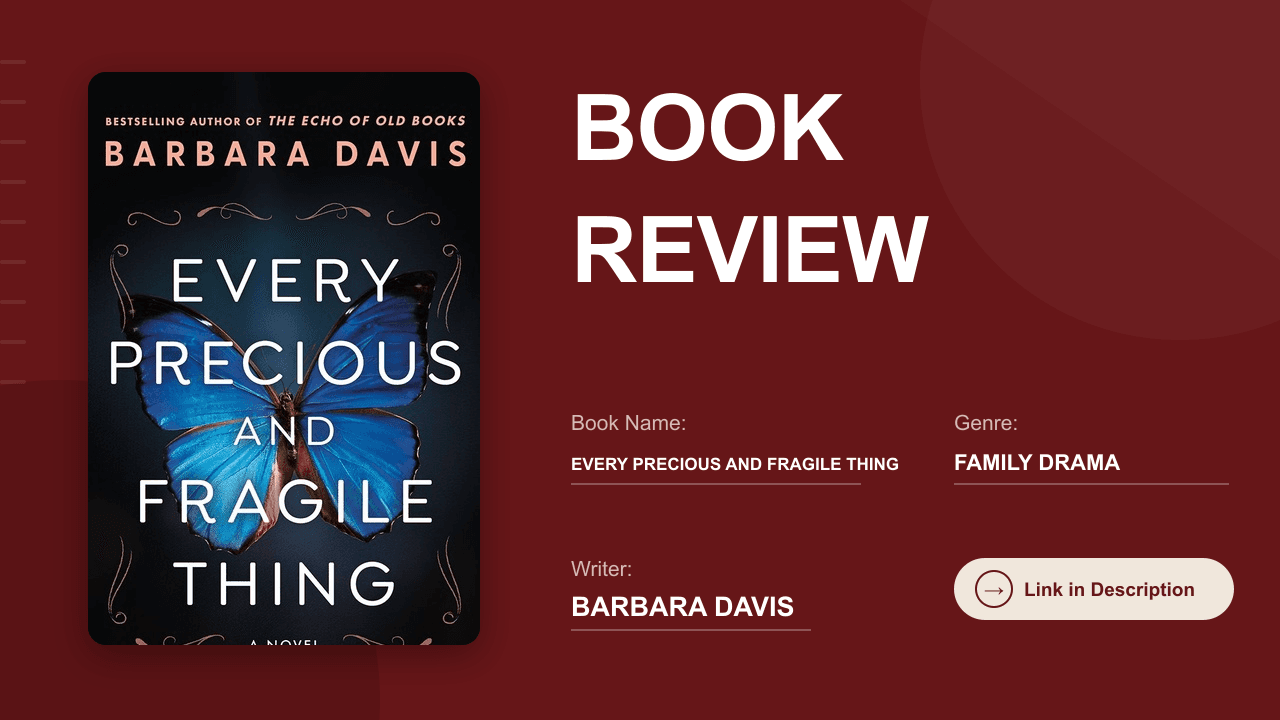
Every Precious and Fragile Thing Review: A Death Doula, Her Daughter, and the Secret in the Keepsakes
- Sajjad
- Book Reviews
- 14 Sep, 2026
There's a particular cruelty in a mother who's extraordinarily good at caring for people, just not the person who needed her most. Every Precious and Fragile Thing builds its entire emotional case around that cruelty, giving Helen Ward, a death doula who's spent decades easing strangers into whatever comes next, a home full of precious keepsakes from the people she's cared for and a daughter who's never once felt like she came first. Barbara Davis doesn't rush the reckoning between them, and by the time it arrives, it's earned in a way that a lot of mother-daughter estrangement novels don't bother working for.
I went into "Every Precious and Fragile Thing" expecting a fairly standard homecoming novel, a grown daughter returning to confront old wounds, a secret from the past that reshapes everything. That's broadly accurate, but Davis complicates the formula in a genuinely interesting way by making Helen's profession itself the thematic engine of the book: a woman whose entire life's work is helping people die with dignity and peace, who has struggled, maybe failed, to give her own daughter the same attention while she was busy tending to everyone else's ending.
In this review, I'll walk through Mallory's return to her mother's Rhode Island home after a client's death, Helen's work as a death doula and the keepsakes that fill her house, the secret buried among those mementos and the twist about Mallory's own parentage that reframes their entire relationship, and where the book's structure, alternating between the present and Helen's past, works against the emotional core it's clearly aiming for. I'll also talk honestly about the murder-investigation subplot, because it's the single most divisive element among readers who've already finished the book.
Overview: What Every Precious and Fragile Thing Is About
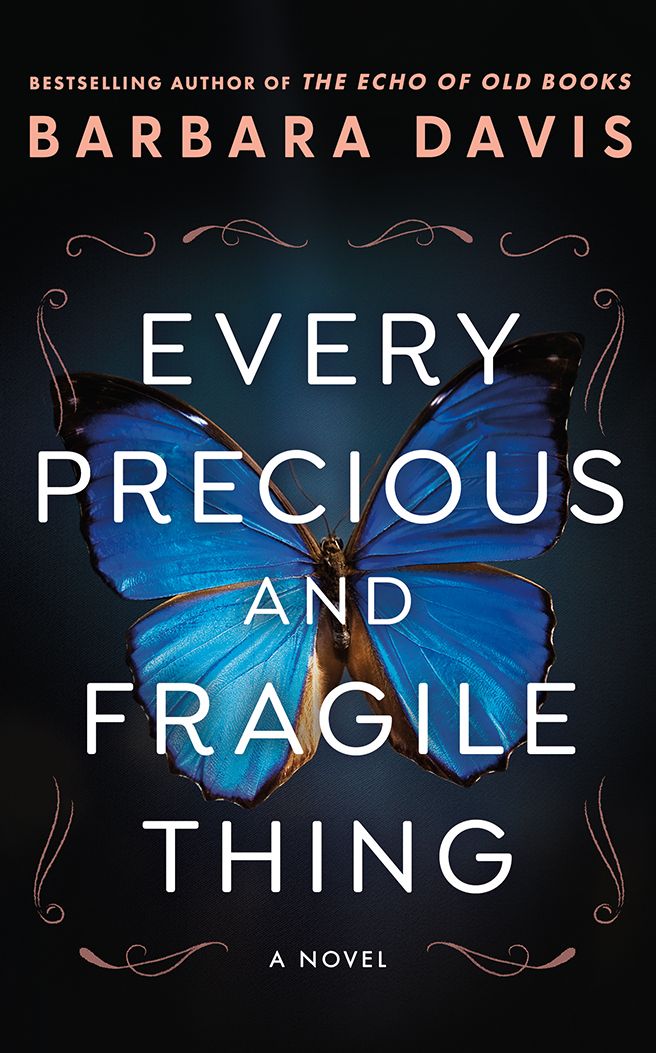
"Every Precious and Fragile Thing" is set in 1999, following Mallory Ward, a social worker in Boston who retreats to her childhood home in Little Harbor, Rhode Island, after a client's tragic death leaves her fragile and unmoored. That retreat means confronting her mother, Helen, a death doula whose life's work caring for the terminally ill has always come first, leaving little room, and even less emotional bandwidth, for the daughter she raised alongside it. Helen's house is filled with mementos left behind by decades of dying patients, a physical testament to a career spent easing other people's endings while her own relationship with Mallory quietly deteriorated in the background.
As Mallory and Helen circle each other, attempting a fragile, uncertain reconciliation, the past keeps intruding on the present. Helen's own history, revealed gradually, and a broken engagement to a man named Aiden who's now unavoidably back in Mallory's life as a neighbor, complicate any clean path toward healing. Hidden among Helen's keepsakes is a secret that threatens to unravel everything the two women are tentatively rebuilding, and as it surfaces, it forces a reckoning not just with Helen's past choices but with the truth of who Mallory actually is.
Helen Ward: A Death Doula's Devotion, and Its Cost
The most compelling idea in "Every Precious and Fragile Thing" is treating Helen's profession as both her greatest strength and her deepest failure simultaneously. Davis doesn't ask the reader to simply condemn Helen for prioritizing her patients over her daughter; she asks something harder, to understand a woman whose genuine gift for presence and compassion somehow never fully extended to the person closest to her. Helen's devotion to the dying isn't performative or hollow, it's clearly real and clearly meaningful to the people she's cared for, and that authenticity is exactly what makes her distance from Mallory sting as much as it does.
That tension gives the book real thematic depth beyond a simple estrangement plot. Helen isn't a villain to be redeemed by a third-act apology; she's a genuinely complicated woman whose capacity for care got distributed in ways that left her own family wanting, and the novel is patient about letting Mallory, and the reader, sit with how difficult it is to reconcile loving someone's work with resenting what that work cost you personally.
Mallory's Grief, Aiden's Return, and a Homecoming That Doesn't Heal Fast
Mallory's arc benefits from Davis refusing to rush her healing. She arrives at her mother's house genuinely fragile, still processing the client's death that sent her fleeing Boston, and her defensiveness toward Helen reads as earned rather than contrived. The reappearance of Aiden, her ex-fiancé and now a neighbor she can't easily avoid, adds real complication to Mallory's homecoming without turning into a simple rekindled-romance subplot; readers have found him a somewhat thin presence relative to the mother-daughter dynamic carrying the book, but his role as a reminder of the life Mallory once planned and walked away from still does real thematic work, even where he doesn't fully register as a character in his own right.
Estelle, Helen's neighbor, has emerged as a genuine reader favorite, providing warmth and a different, more accessible model of care and connection that contrasts meaningfully with Helen's more complicated relationship to intimacy. Her presence gives the book some of its most quietly affecting scenes, and her bond with Helen offers a version of the closeness Mallory has spent her whole life wanting from her mother.
The Keepsakes, the Secret, and a Twist About Mallory's Own Origins
The novel's central mystery, what's actually hidden among Helen's collection of patient mementos, unfolds gradually, and it culminates in a genuine twist regarding Mallory's own parentage, one that several readers have specifically praised as unexpected and handled with real care rather than melodrama. Without spoiling exactly where that revelation lands, it recontextualizes the entire mother-daughter relationship the book has spent its length building, forcing both women to reckon with a truth that changes not just what happened in Helen's past, but what their relationship has actually been built on all along.
That's a genuinely strong structural payoff, and it's the element of the book that consistently draws the most praise, readers who found the middle stretches slow have still singled out the final act, and this reveal specifically, as elevating the whole novel in retrospect.
Where the Structure Strains: Journals, Murder, and a Slow Middle
I'd be underselling this review if I didn't flag where "Every Precious and Fragile Thing" asks more patience of its reader than it always rewards. The dual-timeline structure, present-day tension interwoven with Helen's past revealed through journal entries, is a natural choice for this kind of generational secret story, but several readers found the journal-entry device less effective at actually conveying backstory than a more direct flashback structure might have been, leaving some of Helen's history feeling delivered rather than experienced.
More significantly, the murder investigation subplot connected to Mallory's work as a social worker draws consistent criticism for muddling the book's emotional core rather than deepening it. What should be a tightly focused mother-daughter reckoning gets diluted by plot machinery that doesn't always feel necessary to the story Davis is actually most interested in telling, and the first three-quarters of the book move at a notably slower pace than the strong final act that follows. If you go in expecting a tightly plotted mystery, the pacing will likely frustrate you; if you're reading primarily for the emotional payoff of the mother-daughter relationship, the slower build is more forgivable, especially once the ending arrives.
Barbara Davis's Prose: Genuinely Beautiful, Worth the Patience
None of that undercuts what Davis does well here, which is write with real, quiet elegance about death, memory, and the specific weight of unfinished business between people who love each other imperfectly. Her prose has been singled out repeatedly as the book's most consistent strength, with lines like "the dying keep their own calendars, their own to-do lists" capturing exactly the kind of clear-eyed, compassionate observation that defines Helen's professional worldview and, eventually, Mallory's own growing understanding of her mother.
Davis's skill at creating flawed, genuinely sympathetic characters readers become invested in, even when those characters are actively making things harder for themselves and each other, is the throughline that carries the book through its slower stretches toward a final act that multiple readers describe as transformative for how they felt about everything that came before it.
How Every Precious and Fragile Thing Compares to Davis's Other Work
Barbara Davis has built a career on dual-timeline women's fiction dealing with buried secrets and difficult family histories, and readers of her bestselling "The Echo of Old Books" or "The Keeper of Happy Endings" will recognize her recurring interests here: a present-day protagonist forced to reckon with a hidden past, objects (letters, mementos, in this case a house full of keepsakes) functioning as physical vessels for the secrets being uncovered, and a genuine faith that reconciliation, however difficult, is possible even after decades of damage. "Every Precious and Fragile Thing" pushes that formula into more explicitly difficult territory by centering death and dying as a profession rather than a plot device, and that specificity is what makes it feel distinct within her catalog even when the broader structure will feel familiar to her longtime readers.
About Author Barbara Davis
Barbara Davis is an Amazon Charts bestselling author known for dual-timeline family dramas including "The Last of the Moon Girls," "The Keeper of Happy Endings," and "The Echo of Old Books." Before turning to fiction full-time, she spent more than a decade as an executive in the jewelry business, and her eye for meaningful objects, keepsakes, mementos, the physical residue of a life, clearly informs how central Helen's collection of patient belongings becomes to this novel's structure and emotional weight.
Critical Reception and Reader Response
"Every Precious and Fragile Thing" holds a strong 4.32-star average across more than 10,500 Goodreads ratings, a genuinely well-loved reception for a family drama tackling difficult subject matter. Readers have praised Davis's ability to create characters they "care about" and "feel invested in," with several noting the book's 400-plus pages "flying by" despite its heavier themes, and many singling out the final act's twist as a genuine highlight that recontextualizes everything that came before it.
The criticism that surfaces most consistently centers on pacing and structure: several reviewers found the first three-quarters of the book slow, with the murder investigation subplot drawing specific criticism for overcomplicating a story that works best as a focused mother-daughter reconciliation. Journal entries used to convey Helen's backstory were flagged by some as less effective than a cleaner flashback structure might have been. Even reviewers who found the middle stretches uneven have consistently praised the strong finish, with Estelle's character and the parentage twist specifically cited as elevating the book's back half.
Key Takeaways from Every Precious and Fragile Thing
Helen's profession is the book's thematic core. A woman gifted at caring for dying strangers who struggled to connect with her own daughter gives the estrangement plot real, complicated weight.
The parentage twist is genuinely well-executed. Multiple readers praise it as unexpected and handled with care rather than melodrama.
Estelle steals scenes as a reader favorite. Her warmth offers a meaningful contrast to Helen's more complicated relationship with intimacy.
The murder subplot is the book's clearest structural misstep. It dilutes the emotional focus rather than strengthening it, according to consistent reader feedback.
The ending elevates the whole novel. Even readers who found the middle slow consistently praise the final act as transformative.
Conclusion: Is Every Precious and Fragile Thing Worth Reading?
"Every Precious and Fragile Thing" is a genuinely moving exploration of what it costs to be extraordinarily good at caring for strangers while struggling to show up for the people closest to you. Helen and Mallory's fragile reconciliation earns its emotional payoff, the twist buried among Helen's keepsakes recontextualizes their entire relationship in a way that's been widely praised as unexpected and well-handled, and Barbara Davis's prose brings real elegance to difficult subject matter throughout.
It asks patience of its reader, the middle stretches move slowly, and a murder investigation subplot muddles the book's emotional focus more than it strengthens it. But if you're willing to sit with a slow-building family drama for the sake of a genuinely strong final act, "Every Precious and Fragile Thing" delivers the reconciliation this review's premise promises. You can pick up a copy of "Every Precious and Fragile Thing" on Amazon and see whether Helen and Mallory's secret, once it surfaces, changes how you understand them the way it did for most of its readers.